
A ball valve specification sheet is a structured record of service conditions, configuration, materials, pressure-temperature basis, connections, actuation, standards, and testing for a single valve line item, with a complete sheet letting buyers obtain technically comparable quotations and review vendor compliance [S1].
The minimum field set that makes a record reviewable spans size and class, bore, Cv, body and seat material, CWP/WSP ratings, ISO 5211 mounting pad, end connections, and applicable certifications such as NSF/ANSI 61 for potable water service [S3].
Service conditions and process inputs that drive the spec
The project side of a ball valve datasheet must define the media, operating and design temperature and pressure, flow rate, and installation environment before any configuration is locked in, because pressure rating drops as temperature rises and a 600 WOG body at 100 deg F is not the same valve on a 250 deg F hydronic line [S3][S5].
Cold working pressure (CWP) covers -20 deg F to 100 deg F and is the headline number on most North American markings, while working steam pressure (WSP) or SWP sets the maximum steam envelope at the top of the temperature range, and WOG (water, oil, gas) is the older synonym still printed on legacy bronze bodies [S4].
Forged and cast steel line cards call out ANSI Class 150, 300, 600, 900, 1500, and 2500 per ASME B16.34, while European metric builds use PN6 through PN160 per EN 12516, and a Class 600 carbon steel figure is not dimensionally interchangeable with a PN100 stainless figure even at the same nominal size [S5].
Size, pressure class, bore, and ball support
Size is recorded two ways: NPS in inches for ANSI line pipe and DN in millimetres for DIN/EN builds, with the same valve often arriving as 2 in / DN50 on a cross-region project [S4][S9].
Bore is the field most catalogs still drop, even though standard-port and full-port decisions control Cv, piggability, and slurry behaviour; Anglera's audit of US PVF feeds found bore dimension missing from almost every product page even though every manufacturer datasheet publishes it [S3].
Cv (flow coefficient, US gal/min of water at 60 deg F at 1 psi drop) is published as a per-size table on every OEM datasheet but rarely exposed as a filterable field, so the engineer cannot size the branch from the catalog and the order follows the manufacturer rep instead [S3][S6].
For pipeline service, API 6D defines the obturator geometry: ball valves shall have a spherical obturator that rotates on an axis perpendicular to the direction of flow, and that sentence drives the bore, seat, and stem support choices on the data sheet [S7].
Body construction, end connections, and entry design
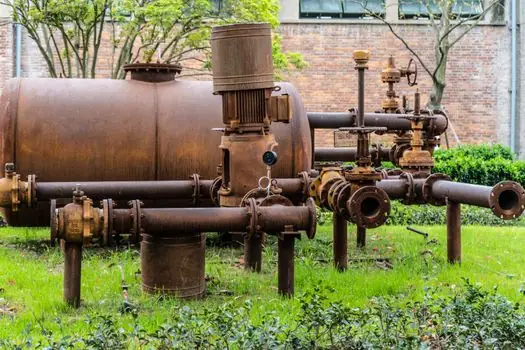
Body construction choices that must be named explicitly are one-piece, two-piece, three-piece, top-entry, and welded body, because each option changes the maintenance path, the number of body seals, and whether the seat can be replaced without removing the valve from the line [S1][S8].
End connections are written in their standard form: flanged (RF or RTJ per ASME B16.5), threaded NPT or BSP, socket weld, butt weld, and press-fit for copper and stainless potable runs, and mixing the unit system on a flanged data sheet (Class 150 RF versus PN16 RF) is the most common cause of a non-comparable quote [S5][S8].
A representative spec sheet for a 2 in to 6 in stainless ball valve line shows 200 psi (14 bar) CWP and 125 psi (9 bar) WSP ratings with threaded or soldered ends, which is the size band where most commercial bronze, lead-free brass, and stainless portfolio entries overlap [S2].
Materials: body, ball, stem, seats, seals, and gaskets
Body material codes on US castings follow common practice, with CFM8 denoting cast 316 stainless steel and CF8M the equivalent wrought grade, and the casting number plus heat code is what the inspector reads first when a traceability query comes in [S4].
Wetted component materials are recorded with the UNS or trade name and the standard they meet: 316SS per ASTM A351 CF8M, brass per ASTM B16 or B283, bronze per ASTM B62, carbon steel per ASTM A216 WCB, and PVC or CPVC where the chemistry allows it [S1][S3].
Seat, seal, and packing compounds (RPTFE, PTFE, PEEK, FKM, EPDM, NBR) are named with the temperature envelope and the chemical service they are rated for, because the seat is the wear part that fails first when a CWP-only rating is pushed onto a hot line [S3][S5].
Lead-free marking is the regulatory flag most often handled as a single Yes/No on a catalog row, but the NSF/ANSI 61 or 372 listing is actually granted per model and per size range, so the data sheet must record the certifying model code and the size range covered rather than a generic "LF" flag [S3][S4].
Pressure-temperature rating, derating, and actuation
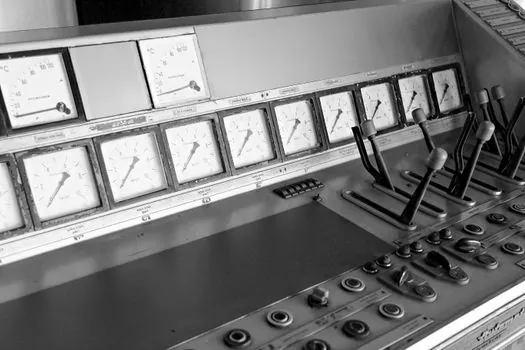
Pressure-temperature rating is recorded as a table, not a single number: the ASME B16.34 class rating at the design temperature, with the CWP at 100 deg F and the WSP at the maximum steam temperature printed alongside, and the seat compound derating curve called out separately because soft seats derate faster than the metal body [S5].
Actuation is recorded as manual (lever, gear operator, lockable handle), pneumatic, hydraulic, or electric, with the ISO 5211 mounting pad code (F03, F04, F05, F07) and stem drive (square, double-D, keyed) on the same row, because automation suppliers filter on the pad code and a missing F-code forces the actuator and valve to be bought together from one house [S3].
An electric-actuated lead-free bronze model such as the Watts LFEMVII-6400SS ships with NEMA 4X enclosure rating on the actuator side, which is the kind of companion spec that has to be on the same row as the valve figure number, not buried in a separate actuator data sheet [S2].
Standards, testing, inspection, and document scope
Applicable standards must be written on the sheet by number and edition, with the most common set being ASME B16.34 for design, ASME B16.5 / B16.25 for flange and butt-weld ends, API 6D for pipeline valves, API 607 or API 6FA for fire-safe where hydrocarbon service demands it, MSS-SP-25 for marking, and NACE MR0175 for sour service [S1][S7].
Test scope is named explicitly: hydrostatic shell test (typically 1.5x the CWP), hydrostatic seat test (typically 1.1x the CWP), low-pressure air seat test, optional helium leak test, and any project-specific hold or cycle count, with the test medium and duration written next to each line [S1][S8].
Required documents on the submittal package are the catalogue cut, the certified dimensional drawing, the material test reports (MTRs) traceable to heat numbers, the pressure test certificate, the NSF/ANSI 61 or 372 certificate where potable water applies, and the deviation list flagged as Compliance, Deviation, Exception, or Missing Data so the reviewer can audit line by line [S1][S3].
Specification responsibility matrix: buyer fields vs manufacturer fields
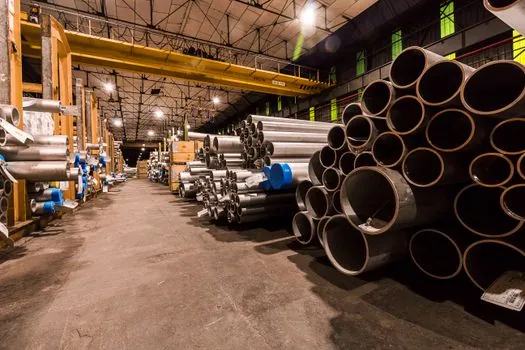
Buyer-provided inputs are the service, line class, quantity, and any project or regulatory constraints (NACE, fire-safe, lead-free, ATEX/IECEx zone), and these are the fields the engineer locks before the RFQ goes out [S1].
Manufacturer-selected fields are the figure number, the exact seat and seal compounds, the pressure-temperature envelope, the Cv table, and the actuator torque at the stated differential pressure, and these are the fields the buyer confirms against the project requirement rather than writes themselves [S1][S3].
Vendor-standard requirements (handle kit, locking device, mounting hardware) are listed separately from required and preferred items, so the quotation reflects the same scope and a low bid is not just a stripped accessory package [S1].
Engineers sizing the upstream pump and the branch circuit can cross-reference Cv and pressure-temperature derating for ball valves once the bore is on the sheet, and the electric actuation and ISO 5211 pad logic is the second page of the same submittal; for ancillary isolation, balancing valve Cv and leak-rate data lives in a different document but follows the same field-by-field review pattern. For piping engineers writing the same project data sheet on the ball bearing or ball screw side of a machine tool, the same buyer-versus-vendor field split applies.
Trackable signals for the next quarter: ANSI Class 150 and 300 lead-free stainless catalog rows gaining NSF/ANSI 61 listings by size range rather than by figure number, and ISO 5211 pad codes appearing as filterable fields on US PVF ecommerce feeds; both shifts are already visible on Anglera's schema audit but not yet universal [S3]. Related reading on actuator-driven component sheets is in working torque versus maximum reverse torque on an air impact wrench, and seal-temperature envelopes for adjacent components are covered in NBR oil seal maximum continuous temperature: 100 deg C baseline, 120 deg C peak.