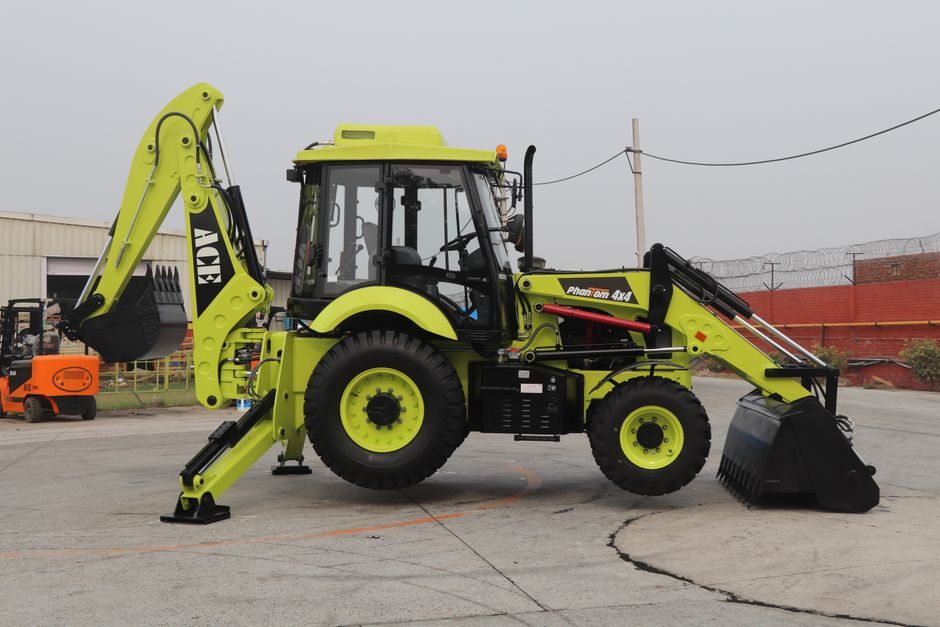
Wheel loader selection for tunnel mucking, scaling cleanup, and shotcrete support cycles is dictated by three hard constraints — section height, breakout force, and articulation geometry — before any bucket-size discussion begins [S3].
Underground duty diverges sharply from open-pit wheel loader work: machines run on diesel particulate-filtered engines with optional aftertreatment, low-profile ROPS/FOPS cabs or canopy configurations, and centre-pivot frames short enough to slew inside a 3.5 m rail envelope [S1][S3].
Operating Class by Tunnel Cross-Section
Tunnel cross-section sets the machine class first: galleries under 25 m² typically accept compact loaders in the 1.0-1.8 t operating-weight band, while 50-100 m² rail tunnels step up to 3-5 t class units with bucket capacities around 0.6-1.0 m³ [S1].
For TBM-backup and NATM heading work, the spec filter becomes machine height — most OEMs offer canopy or fold-down ROPS variants below 2.0 m to clear segmental erector arms and ventilation ducting [S3]. Cut-off cycles for drift enlargement are covered in this tunnel cut-off machine spec map companion reference.
Diesel Aftertreatment and Ventilation Load
Diesel particulate filter and Stage V / EPA Tier 4f exhaust aftertreatment is the baseline in any tunnel-bound loader build, because shaft ventilation design follows the engine's raw emission rate and DPF-soot loading interval [S1].
Engine power scaling stays conservative: a 1.5 t class loader typically carries a 25-35 kW diesel, and a 5 t class climbs to 75-110 kW — anything larger burdens the ventilation circuit and adds heat to the heading without proportionally raising mucking rate [S1][S4]. Compared with the open-pit mining wheel loader spec map, tunnel machines are power-derated but heavily filtered.
Tipping Load, Bucket Match, and Muck Truck Class
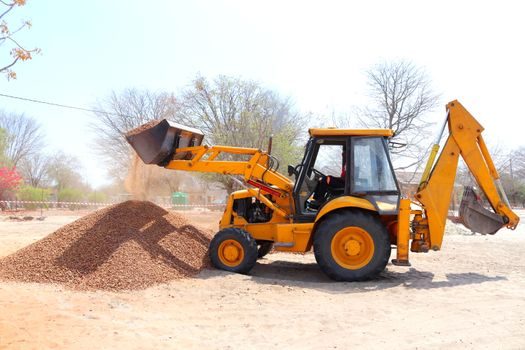
Tipping load at full articulation is the real match number, not operating weight — a 1.8 t machine with a 0.4 m³ bucket typically rates 1,200-1,500 kg tipping load, which dictates a 2-3 m³ articulated dump truck or 10 t rail-bound mucker pairing [S1][S4].
Bucket options diverge by material: rock buckets add a V-edge and wear plates for granite muck, while light-material buckets are wider and shallower for shotcrete rebound and scaling debris [S2][S3]. Quick-coupler hydraulic lines must support both a rock bucket and a side-dump or clamshell for rail-car loading without re-plumbing.
Articulation, Oscillation, and Tyre Geometry
Centre-pivot articulation in the 35-45° range and rear-frame oscillation of ±10-12° lets a compact loader track uneven invert concrete and muck piles without high-centring on a single wheel [S3].
Tyre selection is the second-order filter: solid or foam-filled industrial tyres are standard for tunnel floors with rebar and shotcrete shards, while pneumatic options are restricted to clean haul-road drives [S3][S4]. Compared with skid-steer loader alternatives, an articulated wheel loader wins on ride stability but loses on zero-radius turning inside tight cross-passages.
Teleporter Loaders as a Tunnel Alternative
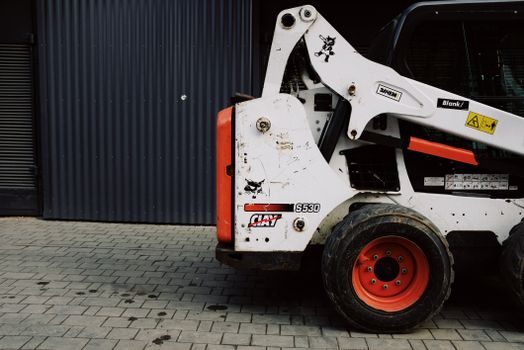
Telescopic wheel loaders (tele-wheel) extend boom reach to 4.5-5.5 m lift height, which lets a single machine load standard-height dump trucks, scale tunnel crowns from the invert, and feed shotcrete robots without repositioning [S3].
The trade-off is mass: a tele-wheel typically adds 800-1,200 kg over a fixed-boom equivalent at the same engine power, which compresses tipping-load margin and may force a smaller bucket [S3]. For tunnels with frequent shotcrete or rock-bolt cycles, the boom reach outweighs the payload penalty; for pure mucking, a fixed-boom compact loader delivers more tonnes per shift.
Vendor Build, Lead Time, and Certification
Chinese OEM build sheets (ZJ, FD, ZL series) cover the compact 1-3 t class with CE-marked structures and Tier 4f engine options, and pricing at the factory-gate tier falls in the US$ 6,200-88,800 / piece range for industrial-class units [S1][S2]. European compact lines (Schaffer, Weidemann territory) target the 2-6 t construction and municipal segment with hydrostatic drives and 25-55 kW diesels [S3].
Lead time and parts-availability decision criteria for tunnel contracts sit on three points: in-country dealer coverage for DPF service, ROPS/FOPS certification documentation in the delivery pack, and hydraulic-coupler compliance with the project's existing attachment fleet [S2][S3][S4]. A backhoe loader hybrid is occasionally tendered on small-diameter drives but loses to a dedicated wheel loader once daily muck tonnage exceeds ~150 m³.
Trackable next signals for tunnel-loader spec work: EU Stage V exemption reviews for small-batch engine builds (under 19 kW) and MSHA / CANMET approval status of low-profile ROPS canopies for rail-bound headings. Confirm engine certification dossier before signing the PO, and lock the DPF service interval to the heading ventilation duty cycle rather than the OEM's default open-pit hours.