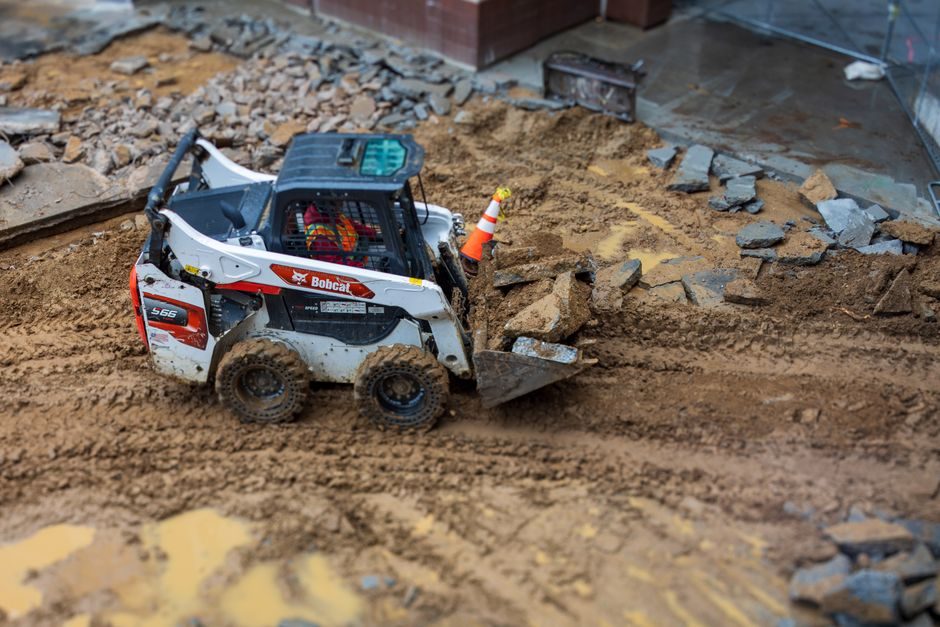
Wheel loader buying decisions in 2026 are driven by four matched numbers: operating weight, rated load, bucket capacity and engine power band, with compact 1.8-3.0 t, mid 3-5 t and heavy 5 t-plus classes now well separated in OEM catalogues [S2][S5].
For a process engineer replacing a single machine, the lowest-risk path is to fix the duty cycle (aggregate rehandling, stockpile loading, truck loading) first, then constrain engine and driveline; Chinese builders now offer 5000 kg rated load, 3 m³ bucket, 55 kW @ 679 rpm packages with ZF-licensed torque converters as a stock configuration [S5]. Used Japanese and domestic 5 t front-discharge units are clearing between US$ 8,000 and US$ 22,000 on China-origin B2B marketplaces as of June 2026 [S9].
Operating-Weight Class Map and Where Each Fits
The compact 1.8-3.0 t class is the workhorse for livestock yards, small quarries and indoor recycling, typically shipped FOB Shanghai on 1-set MOQ with 5,000 set/month line capacity from Chinese OEM lines [S2]. Stockpile and truck-loading operations normally jump to the 3-5 t mid-frame, where the 958 model with Weichai engine, 5 t rated load and 3 m³ rock bucket is a documented stock build [S3]. Above 5 t, the 50-series 5,000 kg / 3 m³ class with 2,920 mm wheelbase, 55 kW @ 679 rpm and minimum diesel consumption of 215 g/kW·h covers aggregate yards and medium mining faces [S5]. For a baseline primer on machine classes and terminology, see the wheel loader encyclopedia entry.
Match class to the load-haul cycle, not to peak demand: a 1.8 t unit feeding a 3 m³ hopper will starve a 30 t articulated truck; conversely, a 5 t loader on a 1 m³ feed bin burns fuel and tears up the yard. Operating weight also governs transport permits — anything above roughly 12-13 t on a tri-axle low-bed typically triggers escort-vehicle rules in most US states and EU member states. The same weight class logic drives skid-steer loader selection when manoeuvrability, not bucket size, is the binding constraint.
Engine, Transmission and Driveline Specs to Lock First
Lock the engine kW/rpm and the torque-converter-plus-gearbox architecture before comparing buckets: the 50-series spec sheet names a Hangzhou Advance Gear Group WG180 torque converter and fixed-shaft gearbox built on ZF technology as a common OEM fitment [S2]. Strengthened axles with built-in free-wheel anti-slip differentials are listed as standard on the same 5,000 kg / 3 m³ package, paired with heavy-duty roller chains and a transmission balance box [S5]. The 1.8-3.0 t compact class typically uses single-lever pilot control and a smaller-displacement engine in the 36-50 kW band; over-speccing the engine on a compact chassis adds dead weight faster than it adds productivity.
Fuel burn is a real discriminator: the SL50WA build publishes a minimum diesel consumption of 215 g/kW·h at rated speed, a useful benchmark for comparing EU Stage V and EPA Tier 4 Final platforms on a like-for-like basis [S5]. On heavy articulated fleets the move to backhoe-loader class machines with factory-fitted telematics is now standard, so specifying an open CAN/J1939 bus on the wheel loader side keeps a mixed fleet on one dashboard. For the driveline bearing logic that lets these axles survive, the deep groove ball bearing cost guide is a useful cross-reference on supplier spread and MOQ economics.
Bucket, Attachments and Hydraulic Interface
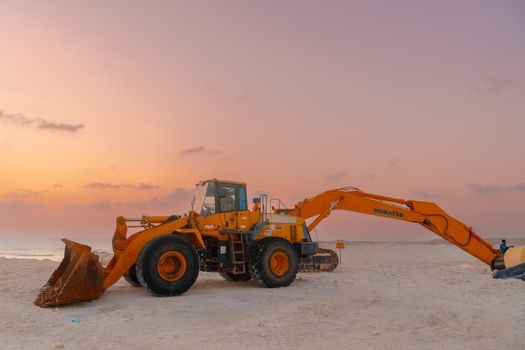
Bucket capacity must move with material density, not just with machine class: 3 m³ is correctly paired with 5,000 kg rated load for aggregates at 1.6-1.8 t/m³, but drops to 2.3-2.5 m³ for iron ore at 2.4-2.6 t/m³ to stay within the loader's tipping-load envelope. Multi-function work — log handling, pallet forks, snow buckets — runs through a quick-coupler hydraulic interface; operators running forestry, aggregate and snow duty from one machine increasingly spec a hydraulic quick-switch plate with auxiliary third-function hydraulics from the factory. Third-party attachments such as grapples, hammers and vibratory compactors are now documented as standard wheel-loader and excavator fits from suppliers like Pemberton and Sandvik's Rammer line carried by major OEM dealer networks [S4].
Attachment supplier credibility is best judged by field history: customer references such as Urlacher Construction's decade-long use of EFI attachments on Volvo excavators in frost-excavation work in north-eastern Alberta illustrate the kind of service-life data buyers should demand from any attachment OEM [S8]. For long-reach demolition or pond-cleaning work, a wheel loader is the wrong primary tool; that duty is better served by long-boom excavators, covered in the long-reach excavator selection guide and its price and total-cost companion piece.
Used vs New Sourcing, Lead Time and Total Cost
Used-equipment pricing on Chinese B2B channels now brackets US$ 8,000-18,000 per unit (1-piece MOQ) for SDLG LG936L-class small compact 3 t stock and US$ 15,000-22,000 for new-build Heli 5 t / 3.0 m³ agricultural-construction units as of June 2026 [S9]. Wolf Wheel Loader (Qingdao Zongjin Engineering Machinery) publishes an average lead time of 15 workdays in both peak and off-season under FOB, CFR, CIF, DDP, FCA and EXW Incoterms, with OEM/ODM service and sample availability on request [S6]. Shandong Sinomtp lists 341 active wheel-loader SKUs alongside 200 hydraulic-crawler-excavator SKUs, evidence that the Shandong cluster is still the densest single source for compact and mid-frame loaders in mid-2026 [S3].
Luyu Machinery (Qingdao) consolidates wheel loader, backhoe loader, mini excavator, crawler excavator, wheel excavator, tractor, forklift and self-loading concrete mixer lines out of one factory, a useful single-vendor pattern for buyers wanting one warranty chain across mixed fleet [S10]. For operations needing both a wheel loader and a backhoe, the backhoe loader entry covers the loader-class overlap. WOLF (Qingdao Zongjin) likewise pairs wheel loaders with excavators and forklifts under a one-stop pre-sale recommendation and after-sale field-repair model, founded 2011 [S1]. The WOLF and Mini Wheel Loader catalogues together confirm the China cluster's continued dominance of the sub-5 t segment, with telescopic-arm compact loaders marketed specifically for agriculture and livestock as a parallel niche [S7].
Sourcing Standards, Incoterms and Quality Signals
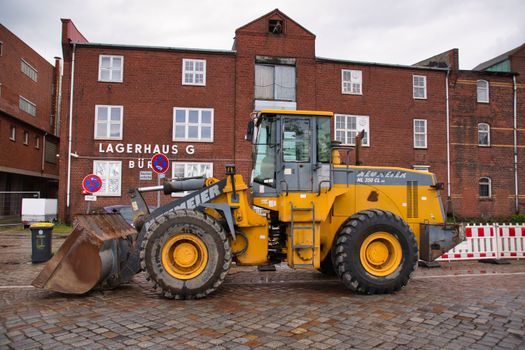
Spec sheets on Chinese OEM portals consistently publish: rated load (kg), bucket capacity (m³), wheelbase (mm), rated power (kW/rpm), minimum fuel consumption (g/kW·h) and driveline architecture — those six numbers are the minimum data set a buying engineer should demand before issuing a PO [S2][S5]. Payment terms on the major platforms run TT or LC, with MOQ at 1 set and supply capability of 5,000 set/month for the compact class, a useful capacity sanity check against the buyer's delivery window [S2].
For risk control, ask for the engine emissions tier (EU Stage V / EPA Tier 4 Final / China NS-IV) in writing and confirm whether the ROPS/FOPS cab carries ISO 12117 certification. Insist on Incoterm clarity — CIF and DDP shift different cost and customs risks to the seller than FOB or EXW, and the Qingdao exporters explicitly list both ends of that range in their commercial terms [S6]. Cross-check the bearing and driveline sub-tier on the supplier's spec sheet, since wheel-loader axles, crossed roller slew rings and final-drive planetary sets are the components that drive mid-life rebuild cost. A useful proxy is the supplier's linear guide and bearing sourcing list, which signals whether the OEM is buying first-tier branded components or commodity replacements. Two trackable signals to watch over the next two quarters: Tier 4 Final compact-loader price stabilisation in the US$ 15,000-22,000 band, and the spread between EXW Qingdao and CIF Rotterdam for the 50-series 5 t class.