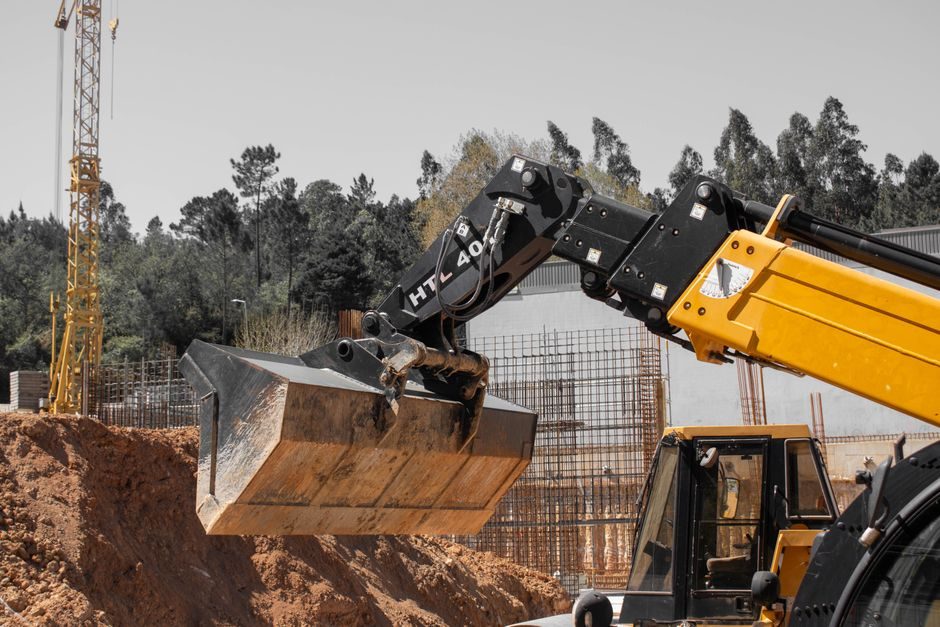
A new long-reach excavator (LRE) configured for 18–25 m horizontal reach in 2026 sits in a USD 220,000–480,000 purchase band, with 25–30 m demolition/harbour-class machines reaching USD 520,000–760,000; the same assets rent at USD 1,100–2,500/day, USD 4,800–9,500/week, or USD 14,000–28,000/month from a 20 t-class base [S2].
The price spread is driven by operating weight, boom-pin geometry and emission tier rather than engine horsepower alone, so spec-first buyers model reach + counterweight + undercarriage before quoting engine kW. Used 5–7-year LREs in 2026 typically transact at 45–60% of original list once verified for boom-wear and pin play, and import duties into the EU add 0–3.7% under HS code 8429.52 [S2].
Operating-Weight Classes and Reach Bands
LREs divide into four operating-weight brackets, each with its own dominant work envelope: 20–25 t / 15–18 m reach (pond cleaning, light slope work), 30–40 t / 18–22 m (river desilting, canal maintenance), 45–55 t / 22–26 m (harbour dredging, deep demolition), and 60–90 t / 25–30 m+ (long-reach demolition, port construction). New 20–25 t class units list at USD 220,000–290,000 in 2026; 30–40 t class at USD 290,000–380,000; 45–55 t class at USD 380,000–520,000; and 60–90 t class at USD 520,000–760,000 [S2].
Operating weight is the single strongest predictor of hourly fuel burn: a 22 t LRE consumes 12–16 L/h under digging load, a 40 t machine 22–28 L/h, and a 70 t+ unit 35–48 L/h, as confirmed by a flow meter on the return line. Buyers should weight fuel cost at roughly USD 18–28 per operating hour (at mid-2026 European diesel of USD 1.45–1.75/L) into any TCO model. For baseline excavator platform comparison, the standard factory boom on a 30 t crawler delivers 10–11 m; the long-reach retrofit is +70–110% in steel mass, which directly explains the price step.
Price Drivers Beyond Sticker
Four specs move list price more than any marketing option: boom section count (2-piece adjustable vs mono vs 3-piece tri-boom), counterweight mass (factory 3–5 t base vs mass-excavation 7–12 t), undercarriage (LC long-carriage for stability vs narrow for transport), and emission tier (EU Stage V / EPA Tier 4 Final vs Stage IIIA used imports). A 3-piece adjustable boom adds USD 35,000–70,000 over mono, and a heavy counterweight package adds USD 12,000–28,000 [S2].
Attachments are the second price lever: tilting ditch-cleaning buckets, rake buckets, hydraulic hammers, and rotating grapples each run USD 8,000–45,000. For dredging or slope trimming, a hydraulic tilt rotator alone (e.g. engcon/Steelwrist pattern) can carry a USD 25,000–55,000 upcharge, so the attachment bill often matches 15–25% of the base machine. Buyers who only need reach, not articulation, can spec a mono boom and hold the attachment budget to under 8% of the chassis price.
New vs Used vs Rental: 2026 Cost Triangulation
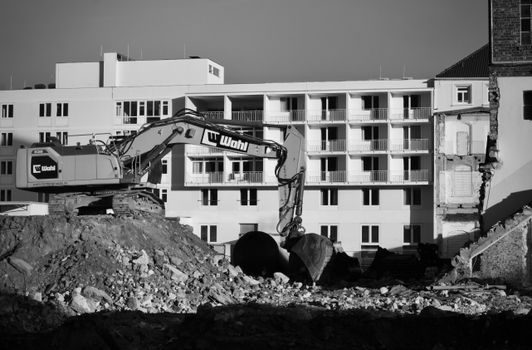
For a 30 t class 20 m-reach LRE, the three sourcing paths look like this in mid-2026: new OEM list USD 290,000–380,000; 5–7-year used with verified boom inspection USD 130,000–200,000; rental at USD 1,600–2,500/day or USD 14,000–22,000/month wet rate (operator + fuel + insurance) [S2].
Break-even math is straightforward: rental at USD 1,800/day × 220 working days/year = USD 396,000/yr, which exceeds annual finance + depreciation on a USD 320,000 new unit (assumed 7-year term, 4% APR, 60% residual) of roughly USD 165,000/yr. The crossover sits near 140–160 days/year of utilisation — below that, rent; above that, own. Short-cycle municipal desilting campaigns (60–90 days) almost always rent; long-term harbour or pipeline projects (12+ months) almost always own or lease.
Options Comparison: When LRE Is and Is Not the Right Tool
A standard excavator with extended boom wins on cost and transport weight for any job where the work face is within 11–12 m of the machine centreline. A long-reach excavator is the correct specification only when (a) the work face is 15 m+ from stable ground, (b) the slope or water depth prohibits undercarriage access, or (c) the operator must reach over an obstruction (road, rail, sheet pile, conveyor) to load or dig. [S1]
For purely horizontal reach below 14 m, a wheeled excavator with a long boom and a tilt rotator is often 25–40% cheaper to buy, 15–20% cheaper to transport, and 30–50% faster to reposition on linear jobs — see the Wheeled Excavator Selection: A Spec-First Buyer's Guide for 2026 reference for the side-by-side. Above 18 m of reach, the crawler LRE has no real alternative; telescopic handlers stop at ~17 m lift, and long-front crawler cranes lack the digging forces.
Total Cost of Ownership: 8–10 Year Horizon
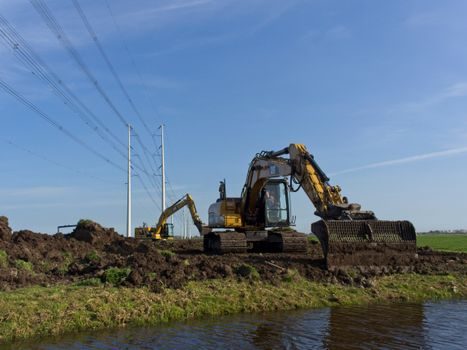
Across an 8–10 year ownership horizon, TCO on a 30 t LRE breaks down roughly as: depreciation 38–45%, fuel 20–25%, operator labour 18–22%, scheduled service and wear parts 8–12%, insurance + financing 4–6%, transport 3–5%. Multiplied together, TCO lands at 1.6–2.1× the purchase price over 8,000–12,000 engine hours [S2].
The single largest controllable TCO lever is the boom-boom-cylinder inspection cycle. Long booms induce higher pin and bushing wear — a 20 m boom should be pin-measured every 1,000–1,500 hours, and a pin-and-bushing refurbishment on a 30 t class LRE runs USD 18,000–32,000 versus USD 60,000–95,000 for a full boom replacement. Skipping the pin cycle is the most common path to a USD 90,000 surprise at year 6.
Standards, Transport and Sourcing Discipline
Long-reach booms raise the transport envelope above standard 4 m bridge clearance on most roads, so EU buyers must plan for low-loader permits at EUR 250–900 per move and reduced night-time travel windows. Counterweight removal is mandatory for road transport on units above 35 t, which adds 2–4 hours of rigging labour at each end of a move. [S2]
Sourcing discipline matters more than sticker negotiation: a 2026 OEM list price is typically negotiable 8–15% on a single unit, 15–22% on a 3-unit fleet buy, and 5–8% on a used machine with documented service history. Independent boom-thickness ultrasonic testing (UT) costs USD 1,200–2,400 and is the cheapest due-diligence line on a used LRE — a single weld repair on a 20 m boom runs USD 8,000–25,000, so UT pays back the first time it finds hidden pitting. Track the Time Relay Price 2026: Coil Voltage, Contact Rating and Sourcing Cost Breakdown and similar B2B spec guides for the cross-equipment sourcing logic that translates to any long-lead capital purchase.
Trackable next node: Q4 2026 EU Stage VI consultation outcome for 37–55 kW engine classes, which could push Tier 4 Final-only imports in 2028 and lift used Tier 4 Final residuals 5–8%; second, USD/EUR and USD/CNY movements through 2026-Q3, since Japanese and Korean OEM list prices reset 90–120 days after a 5%+ FX swing.
For component-level specifications, see reach truck.