The hot spot should occupy at least 3 × 3 detector pixels [S3].
The rule applies to radiometric thermal cameras measuring localized process temperatures, where distance, lens field of view, detector pitch, target size, focus, and emissivity determine measurement integrity [S1][S2][S8].
The 3 × 3 pixel rule controls spatial averaging
Each thermal-camera pixel reports the average temperature of the scene patch that projects onto it, so a target smaller than one pixel is mixed with surrounding surfaces [S2]. A 90°C hot spot on a 35°C panel can therefore read low without producing a visible warning that the measurement is unresolved.
The three-pixel rule requires roughly three pixels across the target and, ideally, three pixels in each direction. This gives at least one pixel whose footprint can be treated as target-only rather than hot-target plus cooler-background [S2]. The same principle applies to practical radiometric validity, where the feature should cover approximately three pixels in each dimension [S6].
IFOV and distance determine whether the rule is met
Instantaneous field of view, or IFOV, defines the angular size represented by one pixel, and pixel footprint can be estimated as IFOV multiplied by target distance [S2]. One milliradian corresponds to a footprint of approximately 1 mm at 1 m and 10 mm at 10 m before applying the actual camera IFOV.
Increasing distance enlarges the projected area per pixel, reducing the precision of localized measurements [S8]. A common approximation is IFOV = field of view in radians divided by the number of pixels across [S2]. In one UNI-T example, a 20 mm hot spot at 1.50 m has an IFOV of 3.05 mrad, a pixel footprint of 4.58 mm, and 4.4 pixels across the target [S2].
Pixel count alone does not guarantee accuracy
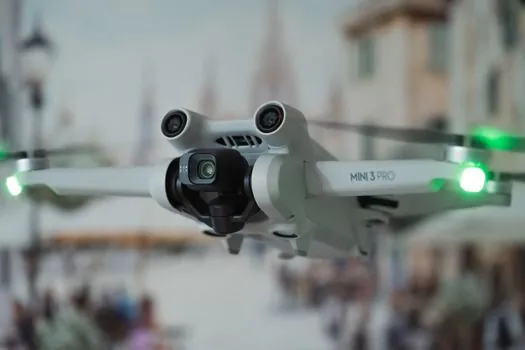
A higher pixel count can therefore improve spatial detail, but lens selection determines how that detail is projected at the target.
Super-resolution modes may double the displayed pixel count by combining shifted frames, but native detector values should govern temperature measurements under the three-pixel rule [S2]. The engineering criterion is therefore not the number displayed on the screen. It is the physical spot footprint at the target, calculated from the detector, lens, and working distance [S1][S8].
Single-pixel detection and 3 × 3 measurement are different jobs
A thermal detector can trigger an alarm from one pixel, but FLIR states that the associated temperature reading may fall outside its rated accuracy unless the hot spot fills at least 3 × 3 pixels [S3]. This distinction matters in fire detection: detecting a changing pixel and measuring its temperature to rated accuracy impose different spatial requirements.
For measurement work, the camera lens and working distance should be selected so that the smallest hot spot of interest covers 3 × 3 pixels [S3]. In thermal validation, a narrow fin or small component may be visible while still producing an unreliable temperature value because the feature does not occupy enough detector pixels [S4].
Optics, focus, emissivity, and alignment still matter

Meeting the pixel-count requirement does not remove the need for correct emissivity settings and a focused target [S3]. Infrared cameras measure surface temperature, and emissivity, distance, and environmental conditions influence the result [S4]. Polished metal can reflect radiation from nearby objects, causing a surface to appear hotter or cooler than its actual temperature [S4].
The target should also be placed perpendicular to the viewing axis so that its projected area remains representative. A tilted surface occupies more projected pixels than its viewed width alone suggests, but the viewing angle still affects emitted radiation and apparent temperature. The comparison between a temperature sensor and a radiometric camera is therefore not simply contact versus non-contact: spatial resolution, emissivity, geometry, and calibration determine which measurement method fits the job.
Compare the main measurement methods
A spot thermometer is suitable for a controlled, localized temperature measurement when its field of view can fit the intended surface area. A thermal camera is better for mapping spatial gradients and identifying multiple hot locations, provided each feature resolves across enough pixels. A contact sensor provides a point measurement at its physical location but does not image an entire surface. [S2]
The decision criteria are coverage, spatial resolution, and measurement integrity. For a spot thermometer, verify that the physical field of view covers the target. For a thermal imager, calculate IFOV and verify 3 × 3 pixel coverage. For a contact instrument, account for thermal mass, contact error, and mounting location. For validation, use temperature recording to retain measured conditions rather than relying on a visually convincing image alone [S4].
Use distance-to-size ratios for installation geometry
The distance-to-size ratio provides a practical installation check: maximum measurement distance equals the D:D ratio multiplied by hot-spot size [S3].
These distances assume correct emissivity settings and a focused target, so the specific camera FOV calculator remains the appropriate check for each installation.
Verify the setup against the smallest critical feature
The controlling feature is the smallest hot spot that matters to the decision, not the largest visible warm area. If that feature does not cover 3 × 3 pixels, the image may still show the fault, but its temperature should not be treated as a rated measurement [S3][S4].
Before accepting a thermal measurement, record the camera model, lens, IFOV, target distance, calculated pixel footprint, and required 3 × 3 coverage. Confirm that the target is in focus and document the emissivity basis; if the surface is reflective, use a suitable high-emissivity reference patch compatible with the assembly and test temperature [S4].