
Industrial wireless modules (e.g., WiFi 5 2x2 MIMO PCIe cards at 21 dBm / 20 dBm output per chain [S7]) and serial device servers (e.g., RS-232/485/422 to Ethernet 1/2/4/8-port boxes [S1]) both bridge serial instrumentation to IP networks, yet they are not interchangeable: the module is a sub-assembly for OEM product design, the server is a finished node for retrofit or cabinet install.
Concrete catalog offerings confirm the split. 3onedata's NP5000 series delivers 1/2 3IN1 DB9 to 10/100Base-T(X) or 4/8 RJ45 RS-485 to dual-Ethernet options with -40 to 75 °C operation and 12 to 48 VDC wide input [S1]; Atop's SW5502 series combines a 10/100/1000 Base-T(X) uplink with two software-selectable RS-232/485/422 ports over 802.11 a/b/g/n with 5 GHz support, FCC/ETSI/NCC certification, and 3 kV serial isolation [S2]. Both target plant-floor retrofit, not OEM embedding.
Decision matrix: criteria the spec engineer actually weighs
Four criteria decide between the two families: integration form factor, radio or wired path, environmental rating, and management protocol stack. A WiFi 5 module such as the MX520VX uses a Mini PCI Express form factor with 2x2 MIMO and 5 GHz backward compatibility to 802.11a/b/g/n [S7] — designed to solder into a host SBC, not to sit on a DIN rail. A serial device server such as the NP5000 ships as a desktop or wall-mount appliance with 1/2/4/8 serial ports, dual power, and -40 to 75 °C tolerance [S1].
Compare the four main options against the four criteria using catalogue data: (a) Industrial wired serial server (3onedata NP5000): TCP/UDP/RFC2217/Telnet/SSH/SNMP, -40 to 75 °C, 12 to 48 VDC, 4 sessions per port [S1]. (b) Industrial wireless serial server (Atop SW5502): 802.11 a/b/g/n with 2x2 MIMO, 3 kV optional serial isolation, 5 GHz band, FCC/ETSI/NCC certified [S2]. (c) Embedded WiFi 5 module (MX520VX-class): Mini PCIe, 21 dBm at 2.4 GHz, 20 dBm at 5 GHz per chain, 2x2 MIMO, 802.11ac [S7]. (d) WiFi-to-serial OEM module (ZLAN family): IEEE 802.11 b/g/n, virtual COM via ZLVircom, targeted at medical/legacy serial migration [S4].
Who a serial device server is for (and who it is not for)
Specifying a serial device server is the right call when the field device already speaks RS-232/485/422 and the project needs to push that data onto an existing plant Ethernet without redesigning the host product. NP5000's redundant mode, dual IP, and RealCom/Reverse RealCom/DRDAS RealCom/DRDAS TCP Server work modes [S1] are written for SCADA polling of PLCs, energy meters, and weighing scales. SW5502's 5 GHz band and dual-antenna design [S2] are written for factory-floor wireless where 2.4 GHz is congested by sensors.
Specifying a serial device server is the wrong call when the host is a new embedded product. The serial server assumes RS-232/485/422 as the upstream interface; an OEM that needs WiFi/BLE/LoRa radio on a custom board should be looking at a wireless module or SoM instead. PUSR's 2026 industrial lineup — 4G LTE/5G cellular routers, LoRa/Swarm device modules, WiFi SOM modules, edge gateways [S5] — and EBYTE's WiFi module family (ESP8266, ESP32, CC3235S, W600) [S3] target that embedded case directly. If the deliverable is a new SKU with WiFi, pick a module; if the deliverable is a cabinet retrofit, pick a server.
Wireless-module options: the embedded designer's shortlist
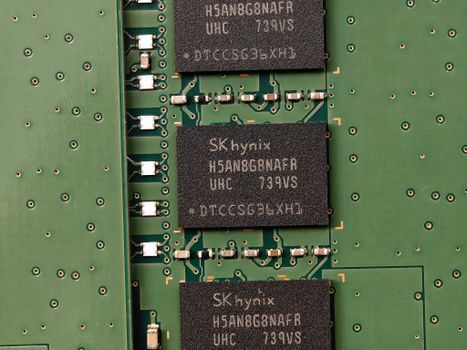
For 2.4 GHz-only, lower-power links the ESP8266 and ESP8285N08 still dominate EBYTE's 2026 module line-up, paired against ESP32 for BLE+WiFi combo designs [S3]. For higher throughput and 5 GHz operation the MX520VX-class part delivers IEEE 802.11ac with 2x2 MIMO at 21 dBm (2.4 GHz) / 20 dBm (5 GHz) per chain [S7]; that is the radio class to anchor a WiFi 5 industrial gateway or an AGV on-board telematics box. Output power in dBm per chain matters for FCC/ETSI link-budget work, since ETSI's 2.4 GHz EIRP cap and 5 GHz band-specific limits require headroom calc when the OEM adds an external antenna [S2].
For TCP/IP-to-serial bridging inside a custom product, ZLAN's WiFi-to-TTL/UART/RS232/RS485/RS422 module family targets the OEM that already has firmware on a UART and just needs the air interface; the vendor ships a virtual COM utility (ZLVircom) so legacy serial software does not have to be rewritten [S4]. This is the right pick when the project is "wrap WiFi around an existing MCU board" rather than "build a DIN-rail appliance." It is not the right pick when the spec demands an IP66 metal enclosure, dual Ethernet, or -40 to 75 °C — those are server-class requirements [S1].
Serial-device-server options: the cabinet designer's shortlist
For cabinet retrofits on wired Ethernet, the 3onedata NP5000 line covers 1/2/4/8-port serial counts with dual 10/100Base-T(X) on the higher-port models and supports 12 to 48 VDC wide-voltage input plus -40 to 75 °C [S1]. For wireless backhaul where running cable is not practical, the Atop SW5502 pairs two software-selectable RS-232/485/422 ports with 802.11 a/b/g/n, 2x2 MIMO, optional 3 kV serial isolation, embedded PCB coating, and 5 GHz operation to dodge 2.4 GHz interference [S2]. Note the SW5502 ships 1 x 10/100/1000 Base-T(X) for config plus the WiFi radio as the data path; there is no wired Ethernet fallback for traffic, so designers should plan for radio-loss behaviour in the SCADA polling logic.
For larger port counts, 3onedata's NP5100 family extends to 16-port and 32-port serial-to-Ethernet [S1], and Atop's SE5916 covers 16-port wired serial server plus the SE8502 and SE5202 ranges for DIN-rail and 2-port fixed configurations [S2]. When the cabinet needs cellular redundancy alongside serial, PUSR lists 4G LTE/5G cellular routers, USR-N580/N540/N520 family devices, and edge gateways under the same 2026 product tree [S6]. A typical 2026 spec will name a serial device server as the field node and a cellular router as the upstream failover — both are managed through the same vendor's cloud platform [S5].
Integration effort, lifecycle, and limits

Wireless modules require RF layout, antenna tuning, and host driver integration; that work is a sunk cost amortised over the OEM's product life, but it does mean FCC/ETSI modular certification is the OEM's responsibility when the module is not pre-certified. The MX520VX is described as a Mini PCIe card exposing 2x2 MIMO chains [S7]; the host board must route two antenna feeds with 50 Ω control. Serial device servers shift that burden to the box vendor — the SW5502 ships FCC, ETSI, and NCC certified as a wireless product [S2], so the system integrator files once.
Operating envelope is where the two paths diverge most. NP5000 is rated -40 to 75 °C with 12 to 48 VDC input and dual power supply support [S1]; SW5502 is targeted at industrial environments with PCB coating for humidity and optional 3 kV serial isolation to protect against ground loops on long RS-485 runs [S2]. Embedded modules are limited by the host enclosure and rarely claim -40 to 75 °C without a heatsink and derating exercise. Harsh-cabinet projects (substations, outdoor NEMA enclosures, chemical-plant cabinets) should default to a server-class spec; indoor IoT gateways and consumer-adjacent industrial products are fine on a module. For longer reference on the serial server category itself, see the serial server encyclopedia entry; for wireless-module integration patterns, the wireless module reference covers form factors, bands, and certification paths in more depth.
Sourcing and standards discipline
For wireless, IEEE 802.11 a/b/g/n is the baseline for 2.4/5 GHz industrial links; IEEE 802.11ac (WiFi 5) adds the 5 GHz-only 2x2 MIMO operation seen in the MX520VX [S7] and the 5 GHz dual-band coverage on the SW5502 [S2]. For serial, EIA/TIA-232, EIA/TIA-485, and EIA/TIA-422 govern the electrical layers, with 3 kV isolation as a typical guard on industrial-grade serial ports [S2]. Regional radio certifications to confirm before shipping: FCC (United States), ETSI (Europe), and NCC (Taiwan) for the SW5502 [S2]; for new regions, plan modular certification through the module vendor rather than re-testing at the box level.
Trackable next signals for July 2026 onward: (1) vendor disclosure of WiFi 6/6E industrial modules with 2x2 MIMO at 5 GHz, which would shift the MX520VX-class 2x2 ac parts [S7] into legacy; (2) serial-server families adding TSN or OPC UA Pub/Sub over the Ethernet uplink as a replacement for legacy TCP/UDP/RFC2217 polling; (3) cross-vendor convergence on a single API surface for serial-server management, since today's NP5000 stack (RealCom/DRDAS/SSH/SNMP) [S1] and Atop's web/utility config [S2] are still vendor-locked. A spec engineer should pin the radio certification and the serial isolation voltage in the datasheet review, not in the marketing brief.
Component reference pages worth checking: industrial adhesive.
Related analysis: Electronic Load Selection: 60 W to 16-Channel Spec-Driven Buyer's Map.