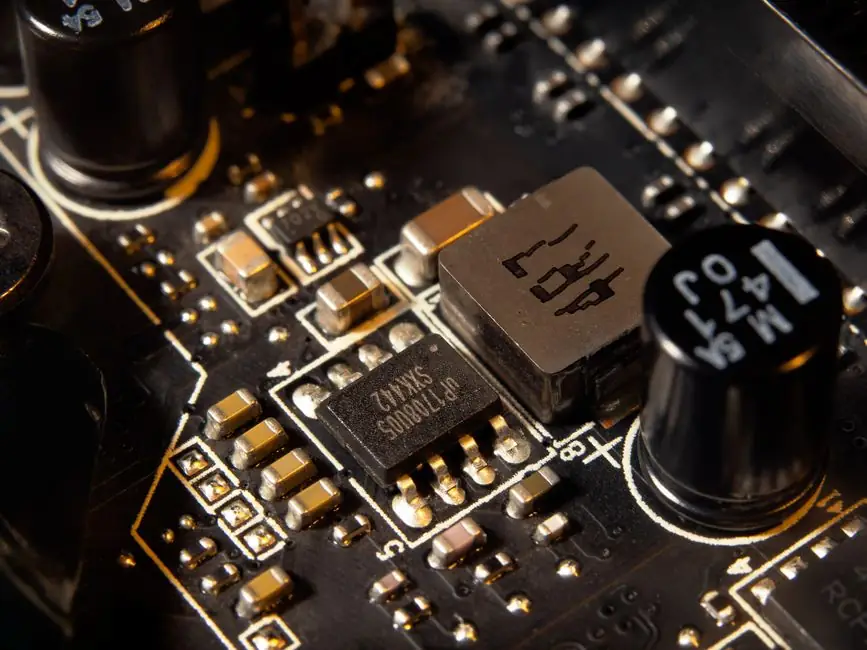
Wirewound decade resistors reach initial tolerances as tight as 0.005% and long-term stability of 15 to 50 ppm/year, while metal film decades hold their own with tolerances to 0.01% and TCR of 10 to 200 ppm/°C [S2][S3].
Both technologies are widely used inside decade resistance box instruments, but the right element type depends on whether the design cares more about power dissipation, frequency response, or absolute precision over years of service [S1][S2].
Construction Differences That Drive the Spec Sheet
A wirewound element is a length of resistive alloy (typically NiCr / Nichrome, Manganin, or Evanohm) wound on a ceramic, fiberglass, or high-temperature plastic former, then coated in vitreous enamel, silicone, or a ceramic sleeve for environmental isolation [S1]. The resistance is set by wire resistivity, cross-section, and total wound length, so values from roughly 1 mΩ to 100 MΩ are reachable in precision parts, with power ratings from 10 mW to 100 W for the average precision wirewound [S1][S3].
A metal film element is built by depositing a thin metallic or metal-oxide film (commonly NiCr with a small amount of other metals) onto a ceramic substrate and laser- or helix-trimming to the final value, which is the standard construction for a metal film resistor section in a commercial decade box [S4][S2]. Because there is no coil, metal film has negligible inductance and is preferred where pulse or RF behavior matters [S2][S6].
Tolerance, TCR, and Long-Term Stability Side by Side
For tolerance and temperature stability, wirewound decades still win on the headline numbers: precision wirewound grades are routinely specified at ±0.005% initial tolerance, with TCR as low as 1 ppm/°C on the best parts and typical TCRs of ±5 ppm/°C, and long-term drift of 15 to 50 ppm/year [S2][S3][S5]. Stability figures from 200 to 600 ppm/year are common for metal film, so over a 5 to 10 year service interval a precision wirewound decade can out-perform a metal film unit by roughly a factor of ten on drift alone [S2][S5].
Direct comparison on the same axes: tolerance 0.005% (wirewound) vs 0.01% (metal film); TCR 1 to 5 ppm/°C (wirewound) vs 10 to 200 ppm/°C (metal film); long-term stability 15 to 50 ppm/year (wirewound) vs 200 to 600 ppm/year (metal film); current noise around -38 dB (wirewound) versus the higher -18 to -10 dB range typical of carbon/thick film, with metal film in between [S1][S2]. This is exactly the trade-off specifiers of a 0.01% decade resistance box are weighing at the design table.
Power, Pulse, and Inductance: Where Each Type Wins
Wirewound decades are the only real option when the box must dissipate serious power, with power wirewound resistors rated up to 2.5 kW in catalogue lines and common decade-box elements in the 1 W to 25 W per-step range [S2]. They also dominate pulse and inrush applications because the wound wire's thermal mass absorbs energy that would crack a thin film, which is why high-energy surge, braking, and brake resistor networks almost universally use wirewound construction [S1][S2].
The penalty is inductance: any coil is an inductor at AC, and wirewound decades are typically limited to DC and low-frequency use, with non-inductive windings (bifilar, Ayrton-Perry) reducing but not eliminating the issue above a few kHz [S1][S3]. Metal film decades are essentially non-inductive, so they are the default for AC calibration work, audio, and RF test setups, and MELF-style metal film parts are specifically noted for superior reliability, moisture resistance, and pulse load compared to standard chip metal film [S6].
Resistance Range, Decade Box Wiring, and Practical Limits
Wirewound precision parts span roughly 1 mΩ to 100 MΩ with power ratings from 10 mW to 100 W, while a typical 1 Ω to 1 MΩ metal film decade can hit that range with seven-decade resolution and tighter per-step tolerance than the wirewound version [S1][S3]. Carbon composition, the historical low-cost option, maxes out near ±5% tolerance and 1000 ppm/°C TCR, so it is no longer a serious contender for a new precision decade box [S2].
When you stack these elements into an actual instrument, switch contact resistance and thermal EMF become the next constraints, which is why discussion of a decade resistance box as an adjustable precision reference inevitably returns to the element choice as the dominant error source after the switch stack itself [S2].
Application Fit: Who Should Spec Which Element
Spec wirewound decades for: high-power load testing, traction and motor drive brake circuits, calibration standards where 0.005% tolerance and sub-10 ppm/°C TCR are required, and any DC measurement where 10 to 20 year stability matters more than cost or frequency response [S1][S2][S3]. Spec metal film decades for: general bench calibration, audio and RF work above 10 kHz, production-line test where parts cost and consistency dominate, and any application needing low self-inductance in a small PCB-mount format [S2][S6].
Realistic use cases line up with those numbers: a 7-decade 0.01% wirewound box is common in national-lab metrology, while 0.1% metal film decades dominate field service kits; a hybrid box with wirewound low-ohm decades (1 Ω to 1 kΩ) and metal film high-ohm decades (10 kΩ to 10 MΩ) is a frequent compromise for general metrology [S2][S3].
Failure Modes and Limits to Watch in Service
Wirewound decades fail mainly by open-circuit: wire fracture from thermal cycling, corrosion at the weld between wire and end cap, or insulation breakdown in the enamel coating under sustained overload, with inductance and parasitic capacitance as the second-order effects above a few kHz [S1][S3]. Bifilar and Ayrton-Perry windings reduce L and C but increase inter-wire capacitance, so the winding choice is itself a spec decision [S3].
Metal film decades degrade by drift and noise rather than catastrophic opens, with long-term stability limited to 200 to 600 ppm/year and noticeably worse pulse-withstand than a wirewound of the same size; humidity, ESD, and laser-trim instability on very high-ohm values (above 10 MΩ) are the common service complaints [S2][S6]. The element type you pick fixes those failure modes well before you get to the stretch film packaging or shipping crate around the instrument.
Track these signals as the spec evolves: tighter wirewound TCR claims below 1 ppm/°C on Manganin/Evanohm cores, new low-ohmic metal film decades (down to 1 mΩ) using bulk-metal foil, and growing use of MELF metal film elements in high-reliability decade boxes for railway and aerospace qualification work [S2][S6].
This topic is covered further in Crankshaft Balancing Machine Bob Weight Specs and Workflow.