
Flow wrappers (also called horizontal form-fill-seal, or HFFS) commonly run pharmaceutical SKUs such as unit-dose sachets, medical-device blister cards and disposable diagnostic strips, with published output figures in the dozens-to-over-one-hundred packs-per-minute band [S1].
Pharmaceutical distribution lines demand higher validation discipline than food or print: FDA 21 CFR Parts 210-211 (CGMP) governs every packing operation touching a drug, and recall analyses attribute up to 50% of drug recalls to packaging or labeling mistakes [S2]. That single ratio is why machine selection criteria for pharma diverge from generic FMCG wrapping specs.
Primary vs Secondary Wrapping: Different Machines, Different Validation
Primary wrapping touches the product (blister foil lidding, sachet film, sterile barrier overwrap); secondary wrapping groups primary packs into shippers, trays and bundles. The two layers map to different machine classes. A flow wrapper doing unit-dose powder sachets is primary equipment; a shrink wrapping machine bundling ten cartons into a transit pack is secondary. Validation effort scales accordingly: IQ/OQ/PQ documentation, change-control and traceability on the primary side usually requires serialised film registration, lot-coded seals and in-process control of seal temperature, dwell time and jaw pressure, while secondary bundlers can typically be qualified against a narrower parameter set. [S1]
For unit-dose oral solids, blisters remain the workhorse, but for sachets, stick packs and medical-device flow-wraps, HFFS dominates. A typical HFFS forms a tube of film around the product via a forming box, longitudinally seals with heated rollers, then end-seals and cuts with rotating jaws [S1]. On a pharma line this same geometry must be executed inside a documented clean-control envelope, with reject stations feeding a documented non-conformance workflow.
Selection Criteria: Throughput, Film, Compliance, Integration
Four axes actually move a pharma-wrapping PO. (1) Output: published flow-wrapper rates run from roughly 40 packs/min on compact units to over 100 packs/min on high-speed continuous-motion machines [S1]. (2) Film specification: pharma SKUs typically use laminate structures such as PET/Aluminium/PE or paper/PE/Foil/PE for moisture and light barrier, with seal initiation temperatures tuned to the chosen web. (3) Compliance stack: 21 CFR 210-211, USP <659> packaging storage and EU GMP Annex 1 (for sterile claims) all land on the equipment file, plus serialisation under DSCSA for the US market. (4) Line integration: upstream feeders (counters, conveyors, robots), vision inspection, checkweighing and serialisation aggregators must be specified together with the wrapper, not after it.
Compared with general consumer-goods wrapping, a pharma wrapper selection should weight serialisation readiness and validation support more heavily than a marginal speed gain. Industry guidance recommends evaluating "GMP compliance capabilities, validation readiness, and long-term operational reliability" before chasing quoted peak rates [S2]. The cheapest €/pack number on a quote often excludes the qualification hours and the serialisation retrofit that a regulated line will require before the first commercial batch is released.
Options Lined Up: HFFS, Shrink Bundler, Stretch, Sleeve
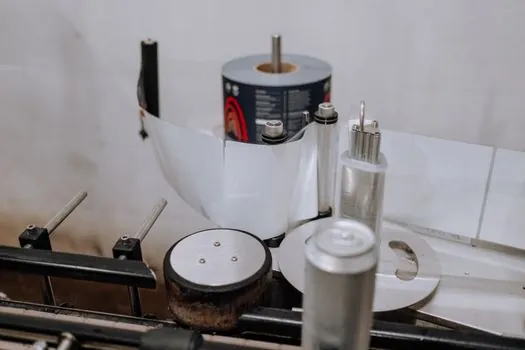
For pharmaceutical distribution, four wrapping technologies compete for the budget. <strong>Flow wrapper (HFFS):</strong> best for unit-dose sachets, strip packs, single medical devices, single-device flow-wraps; 40-100+ packs/min; highest validation cost per SKU because the film is the primary pack. <strong>Shrink bundler / side sealer:</strong> best for multi-pack cartons, bottle trays, kit bundles; typical outputs in the hundreds of bundles per hour range; uses a shrink wrapping machine tunnel with controlled heat distribution to shrink the film [S3]. <strong>Stretch wrapping:</strong> dominant only for pallet unitisation at the warehouse end of the line, not for individual pharma packs. <strong>Sleeve wrapper / overwrapper:</strong> common for tamper-evident bundle wraps around bottle trays, using either shrink or clear film bundling depending on retailer requirements.
A practical decision rule: if the film touches the dosage form, the machine is a primary-packaging asset and must be qualified under CGMP; if the film groups already-labelled primary packs, it is secondary packaging and the qualification scope is lighter, but serialisation and aggregation rules still apply. The selection is also informed by what the wrapper's film path will do to the existing infeed; for example, gentle book-style side sealers handle delicate cartons without crushing, while rotary shrink bundlers push harder on rigid packs [S3].
Use Cases Mapped to Specific Wrapping Machines
Three real use cases show the split. <strong>Case A, unit-dose sachet line:</strong> a contract packer running 5-30 million sachets/year of an OTC powder typically lands on a continuous-motion HFFS with servo-driven film registration and a vision-based code reader; the wrapping machine spec is driven by web width, sachet length range and seal-bar configuration, not by raw packs/min. <strong>Case B, secondary bundle of 6-12 cartons:</strong> a pharma distribution centre feeding retail totes will use a side-seal or sleeve bundler paired with a shrink tunnel, prioritising bundle format changeover time and film-cost-per-bundle over unit speed. <strong>Case C, kit assembly:</strong> a medical-device kit (device, IFU, desiccant, blister card) is often flow-wrapped as a single primary pack; here dust ingress, seal integrity and particulate control during the film-forming step are the gating specs, while throughput is secondary. [S1]
Across these cases the wrapper does not stand alone: end-of-line checkweighers, label applicators, vision systems and serialisation stations sit on the same control platform, and their reject logic must be documented in the same validation package as the wrapper itself. Skipping that integration is the most common route to a 483 observation at the next FDA inspection.
Failure Modes and Constraints Buyers Should Pre-empt
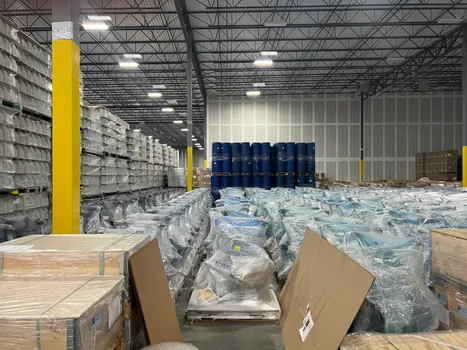
Three failure modes recur on pharma wrapping lines. <strong>Seal failure:</strong> a 0.5-2°C drift in jaw temperature, or a worn seal bar, pushes seal-strength below the documented limit; in-process seal-peel testing must be scheduled into the batch record, not left to annual revalidation. <strong>Film registration drift:</strong> misprinted lot or expiry codes, missed perforations, or off-centre packs typically trace back to worn draw belts or encoder slip on the film web; pharma-grade HFFS lines mitigate with servo drives and absolute encoders. <strong>Cross-contamination during changeover:</strong> cleaning validation time on shared lines (e.g. beta-lactam to non-beta-lactam product) often dominates real OEE, and a semi-automatic wrapper that "looks cheaper" can cost more in lost batch time than a fully automatic unit that is faster to clean. [S1]
Two non-obvious constraints also shape selection. First, available floor height and HVAC class: a flow wrapper with a long film path may not fit under existing cleanroom ceiling grids or laminar-flow hoods, forcing the line into a less-controlled room classification. Second, the serialisation upgrade path: a 2026-era wrapper should ship with OPC-UA or PackML on the controller, so a DSCSA or FMD aggregation module can be dropped in without replacing the PLC.
Vendors, Refurbished Market, and the Sourcing Path
The used and refurbished market for pharmaceutical wrapping equipment is active, with resellers listing both flow-wrapping and bundle-wrapping categories alongside each other on the same platform, which makes side-by-side comparison easier but also means condition reporting must be checked line by line [S4]. OEM programmes for major flow-wrapper brands emphasise multi-industry flexibility (food, medical, pharmaceutical, industrial) rather than pharma-only, and lifetime support commitments on certain OEM channels are a real differentiator versus short-warranty resellers [S1].
For a 2026 procurement cycle, the path that minimises audit risk is: write a URS (user requirements specification) that cites 21 CFR 210-211, EU GMP Annex 1 and any market-specific serialisation rule; score vendors on validation documentation depth, not just on price; demand a factory acceptance test that includes a documented seal-strength study; and budget serialisation and aggregation from day one. Buyers that follow this sequence consistently avoid the recall-driven 50% failure mode highlighted in the recall data, and they end up with a wrapper whose throughput number on the data sheet actually translates into releasable commercial batches.
For adjacent selection work on the same line, the gear and drive spec behind a wrapper is as consequential as the film spec, and the cold-chain and food-beverage selections share enough structure to cross-check: see the food and beverage wrapping machine selection map and the cold chain wrapping spec map for comparable criteria applied to temperature-controlled and FMCG environments.
The underlying component specifications are covered under distribution cabinet.