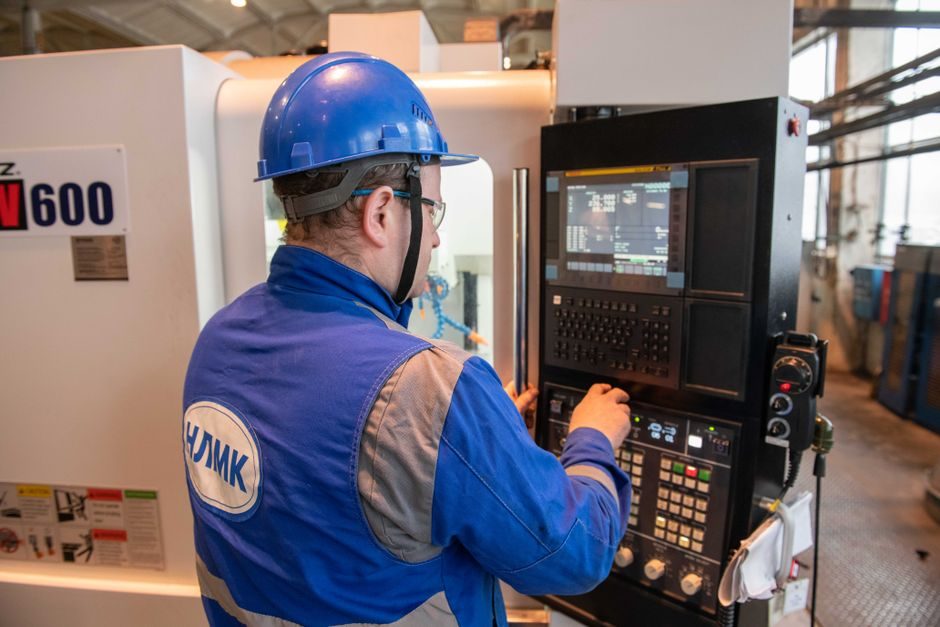
A zinc die casting machine for production work is a hot-chamber unit with a 5-125 ton closing force, a 400x600 mm die mounting surface, and a Z410 (GD-ZNAL4CU1) melt bath kept above 410 °C; part weight is capped at approximately 700 g per shot on standard European cells [S6].
Correct installation covers six engineering checkpoints: foundation flatness, machine levelling, hydraulic and cooling hookup, die rail alignment, dry-cycle validation, and alloy-tempered first shot. Each step has an acceptance value a process engineer can measure, not a vague checklist item.
Foundation, Levelling, and Anchor Specs
A cold-chamber or hot-chamber zinc die casting machine on uneven pad will rack the platen within the first 100 cycles and crack the die-set locating ring; the foundation must be a 150-200 mm reinforced concrete pad with compressive strength ≥ 25 MPa (≈ 3,625 psi) and a flatness of ≤ 0.5 mm/m across the full machine footprint [S6].
Anchor the bed to the pad through chemical or mechanical anchors (M16-M24 grade 8.8) torqued to the OEM value, then re-check platen-to-platen parallelism with a dial indicator at four points after grout cures 72 hours. A typical 50-125 ton clamping cell has a footprint of roughly 4 m x 1.5 m and a mass of 4,000-8,000 kg, so pad area must carry ≥ 1,500 kg/m² without resonance above 25 Hz. Vibration isolation pads (10-15 mm natural rubber, 50-70 Shore A) decouple the cell from the structural slab and cut measured vibration at the operator station by roughly 30-50 % on cells in the 50-100 ton class.
Hydraulic, Cooling, and Lubrication Hookup
Zinc hot-chamber cells run the intensifier and die-close hydraulics at 60-80 bar (≈ 870-1,160 psi) with a 60-80 L/min flow at 1,500-1,800 rpm, and a separate low-pressure circulation loop at 4-6 bar for die-spray and die-cooling water; supply water hardness must be ≤ 8 °dH to keep nozzle scaling under 0.5 mm/year [S6].
Cool the fixed and moving platen with closed-loop water at 20-28 °C inlet, ΔT 4-6 °C under load, sized to roughly 30-50 L/min per platen on a 100 ton cell. The die-spray lube system feeds water-soluble release agent at 3-5 % concentration, mixed through a 100-200 L stainless tank; install a 100 µm in-line filter and a 25 µm pre-filter to protect the dosing pump. Hydraulic return-line filtration is specified at 10 µm (ISO 4406 18/16/13 or cleaner) on servo-proportional machines, and reservoir temperature should be held at 45-55 °C with a 1.5-3 kW immersion heater to keep moisture out of the fluid.
Die Mounting, Clamp Alignment, and Tie-Bar Verification
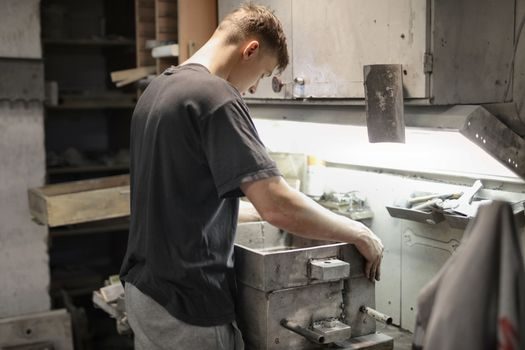
Die mounting plates on a 50-125 ton zinc die casting machine typically measure 600 x 600 mm to 900 x 900 mm, with T-slots at 100-160 mm pitch; align the die to the platen within 0.05 mm/m on the parting-line axis and verify tie-bar stretch under full tonnage with a dial bore gauge before locking the die clamps [S6].
Set clamp force first by pressure, then re-confirm by strain: a 100 ton cell at 1,600 psi (110 bar) hydraulic should read 95-105 ton on a load cell mounted platen pin, and tie-bar elongation at full clamp should be 0.15-0.30 mm per metre bar length. Bolt the die with grade 12.9 socket-head cap screws, M20-M30, torqued in a star sequence to 60-70 % of nominal first, then 100 % in a second pass. Misalignment past 0.10 mm/m across the parting line is the single biggest cause of zinc flash and burr at the trim die on the next operation; do not proceed to first shot until the indicator sweep is recorded.
First Shot Procedure: Dry Cycle, Leak Test, and Alloy Pour
The first shot sequence on a newly installed zinc die casting machine runs three dry cycles at low pressure (10-20 bar), then a leak-test cycle at 50 % of nominal clamp, and only then a slow-fill at 25-50 % injection velocity before ramping to production parameters; the entire sequence takes 30-60 minutes on a 50-125 ton cell [S6].
Zinc alloy Z410 (GD-ZNAL4CU1) melts at 380-386 °C and is held in the hot-chamber gooseneck at 410-440 °C during the first pour; preheat the cold-chamber sleeve (if fitted) to 150-200 °C with external heaters before any metal touches the shot cylinder. First-shot acceptance: part weight within ±2 % of nominal, no cold-shut or misrun at the gating junction, and a flatness of ≤ 0.05 mm on a 50 mm witness coupon. Log platen parallelism, shot velocity (1.5-3.0 m/s typical for zinc), intensification pressure, and cycle time on the first 50 shots; cycle time on a 50 ton hot-chamber cell should stabilise at 8-12 seconds (4-5 shots per minute) within the first hour of run-in [S2][S6].
Safety, Ventilation, and Common Installation Failures
Zinc die casting releases zinc oxide fume at pour temperatures above 420 °C; install a capture hood at the gooseneck with 0.5-1.0 m/s face velocity, ducted to a HEPA-after-filter unit, and keep the operator station outside the plume envelope; OSHA PEL for zinc oxide fume is 5 mg/m³ as an 8-hour TWA, and the EU indicator value is 2 mg/m³ (respirable) under the indicative limit for the workplace [S2].
Common first-month failures tracked across installed cells: hydraulic hose fatigue at the platen pivot (replace every 2,000 hours or 12 months), gooseneck iron pickup above 0.05 wt% (recheck at 5,000-shot intervals), and die-spray nozzle clogging when in-line filtration drifts past 100 µm. Where the cell sits beside an aluminum die casting machine, a 1.5-2.0 m physical barrier plus separate ventilation prevents cross-contamination of zinc pot iron pickup, which otherwise drives the alloy above the 0.10 wt% Fe rejection limit for finishing-grade parts. If the foundation flatness cannot be brought under 0.5 mm/m, do not shim the machine to compensate; re-pour the pad, since shimmed installations fail platen-parallelism checks within the first 500 hours under load.
Side-by-Side: Hot-Chamber vs Cold-Chamber Zinc Cells
Zinc hot-chamber cells dominate below 125 ton clamp and 700 g part weight, while cold-chamber setups appear only when a process spec excludes iron pickup from a steel gooseneck; the table lines them up on the four criteria an installer needs before pouring concrete [S2][S6].
Criterion 1 (clamp force): hot-chamber 5-125 ton, cold-chamber 100-800 ton. Criterion 2 (cycle time): hot-chamber 8-12 s (4-5 shots/min), cold-chamber 30-90 s due to ladle transfer. Criterion 3 (alloy purity risk): hot-chamber gooseneck can add 0.02-0.05 wt% Fe over 10,000 shots, cold-chamber avoids this and is preferred when Zn-Fe must stay below 0.03 wt%. Criterion 4 (suitable die footprint): hot-chamber 400 x 600 mm to 700 x 700 mm, cold-chamber 600 x 600 mm to 1,200 x 1,200 mm for the larger shot weights. A shop running more than 50,000 zinc parts per month is a candidate for hot-chamber automation; below 5,000 parts per month, a small hot-chamber manual cell returns footprint cost faster than a cold-chamber unit [S2][S6].
Acceptance Sign-Off and First-Month Tracking

Before sign-off, run a 500-shot production test on the installed zinc die casting machine and record: clamp tonnage at peak (within ±5 % of setpoint), part weight Cpk ≥ 1.33, cycle time Cpk ≥ 1.33, hydraulic oil temperature ≤ 55 °C, and coolant ΔT 4-6 °C; any parameter outside the band means the commissioning is incomplete [S6].
Trackable signals to watch over the first 30 days: gooseneck Fe pickup (sample every 5,000 shots, reject at 0.10 wt%), die-spray nozzle flow drift (recalibrate at 250 hours), and tie-bar nut re-torque check at 100, 500, and 2,000 hours. ISO 9001:2015-certified shops such as Bardane Manufacturing and Innovacasts typically require this log as part of the install handover packet, with calibration records keyed to the machine serial number [S2][S9]. Two install-related reads worth pairing with this guide: Aluminum Die Casting Machine: Pros, Cons, Spec Boundaries for cells that may share floor space, and Vertical Lift Module Installation: Site Survey to Commissioning Reference for stores that feed the cell with die sets and inserts.