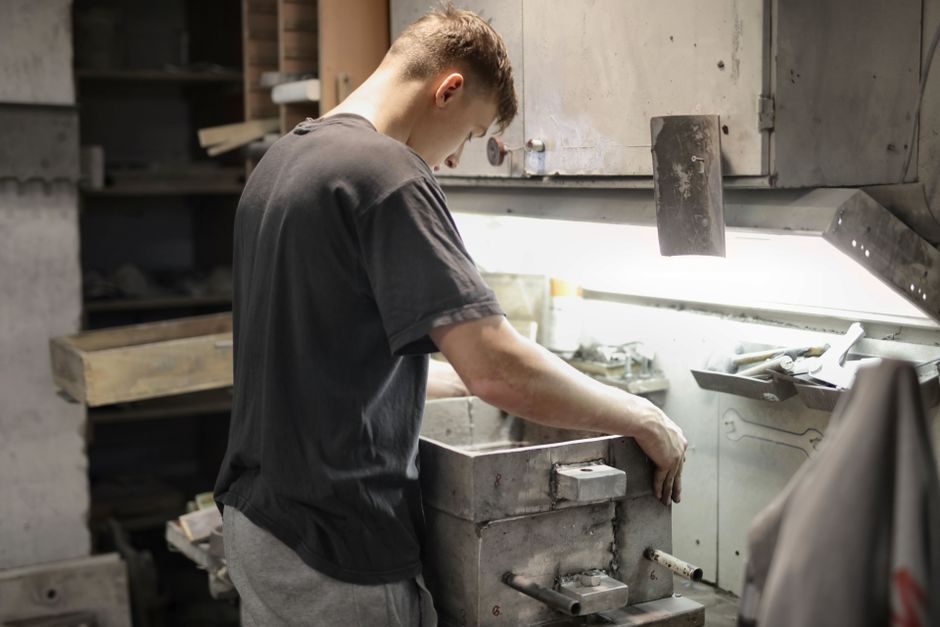
Zinc die casting is dominated by hot-chamber high-pressure cell layouts supplied across China, India and the wider Asian OEM base, with China's trading-platform directories listing 557 products under the "Zinc Die Casting Mould" tag and 1,282 manufacturers under the broader "Zinc Castings" tag as of mid-2026 [S2][S9].
Lead sourcing regions inside China remain Zhejiang (Ningbo), Shandong, Guangdong, Fujian and Hunan; the made-in-china supplier index lists Shandong with the heaviest concentration at 430 mould-tagged suppliers, followed by Zhejiang at 85, Hunan at 14 and Guangdong at 8 [S2]. A parallel Ningbo supplier index carries multiple pages of high-pressure zinc, magnesium and aluminium die-cast part listings, with materials declared against stainless cast equivalents CF8 and CF8M for downstream comparison [S8].
Verified Supplier Profile: Xiamen Stick Industry (Fujian)
Xiamen Stick Industry Co., Ltd., based at Unit 05c, 5th Floor, Hai Fu Business Center, 597 Si Shui Road, Xiamen, Fujian, was established 2007-04-06 and reports annual export revenue of 11,061,208.44 RMB with 4 foreign-trading staff and an average response time of ≤15 h on the platform [S1]. The factory is a Diamond Member and Audited Supplier on made-in-china.com, with main products spanning zinc die casting, aluminium die casting, plastic injection moulding, rubber moulding, CNC machined parts and stamping, and main export markets stated as North America and Europe [S1]. For a primer on how the casting cell itself is configured, the die casting machine reference sets out the hot-chamber vs cold-chamber distinction that governs zinc vs aluminium cell selection.
Verified Supplier Profile: Ningbo Laishun Metalwork (Zhejiang)
Ningbo Laishun Metalwork Co., Ltd ("L&L"), founded in 2000, is an ISO 9001:2008- and SGS-audited manufacturer operating its own foundry plus machining, heat-treatment and surface-finishing lines, and explicitly markets combined aluminium, zinc and metal-processing-machinery-part output [S10]. The factory is positioned as a one-stop casting-to-finished-part shop — a structure that matters when buyers want to collapse the supply chain rather than manage four separate vendors.
India-Side Supply: DST Tech (ISO 9001, OEM-Focused)
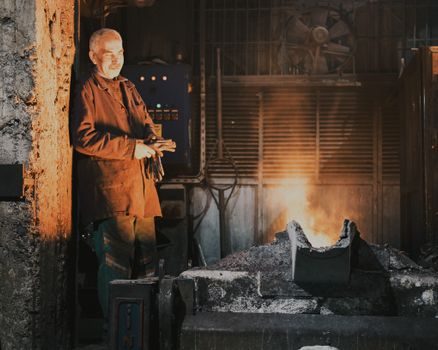
DST Tech Private Limited markets itself as an ISO 9001-certified die caster focused on OEM-grade zinc die castings, with declared end-use segments covering sanitary/bathware (faucet handles, urinal face plates, actuators), automotive two- and four-wheeler hardware, and architectural/kitchen hardware [S3]. The company's listed process flow is hot-chamber die casting — die prep and lubrication, melt-and-inject, controlled cool-down, then trim — which is the standard zinc-alloy route owing to the alloy's low melting point [S3]. Secondary operations listed in-house include CNC machining, electroplating, powder coating, polishing and assembly, so the supplier is positioned to ship finished, plated components rather than raw castings [S3].
Cell Type, Alloys and Process Boundary
Zinc's low melting point makes it the canonical hot-chamber die-casting alloy, and modern zinc-alloy cells typically pair with a zinc die casting machine running an integrated hot-chamber gooseneck and injection sleeve to keep the melt inside the machine. By contrast, aluminium and magnesium alloys are processed in cold-chamber cells because their higher melt temperatures would attack the gooseneck; the aluminum die casting machine reference describes the cold-chamber layout that dominates those alloys. Magnesium occupies its own narrow band — addressed separately under magnesium die casting machine — because of the combustion risk and the protective gas cover that magnesium cells require. Buyers who still want gravity-fill zinc hardware (heavier section, lower volume) should weigh a gravity die casting machine cell instead of a high-pressure hot-chamber machine, accepting longer cycle times in exchange for simpler tooling. [S2]
Selection Criteria: How to Shortlist a Zinc Die Casting Supplier
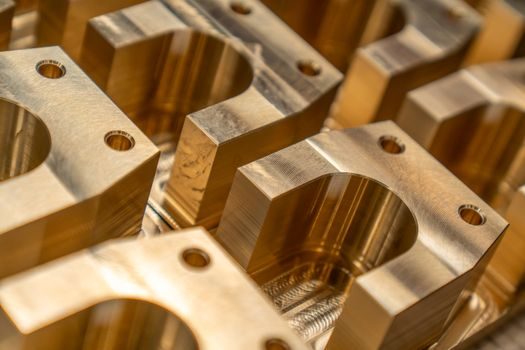
Three filters consistently separate a usable zinc-die-casting partner from a catalog reseller on the trading platforms. First, audit status and certification: prefer Diamond Member + Audited Supplier entries with a named ISO 9001 certificate (Xiamen Stick Industry and Laishun both clear that bar; DST Tech declares ISO 9001 on its own site) [S1][S3][S10]. Second, in-house tool build: a supplier with its own die-casting die and mould workshop collapses lead time and gives tolerance control — the die casting die reference covers what that in-house capability should look like. Third, vertical integration: factories that own casting, machining, heat treatment and surface finish (Laishun's stack of casting → machining → heat-treating → surface-finishing is a worked example) can hold PPAP-level documentation in one hand, which matters for automotive and sanitary buyers [S10].
Price, MOQ and Sourcing-Channel Reality
Indicative pricing scraped from the live trading-platform listings puts Chinese zinc die castings in a US$1–10/kg-or-piece band, with Ningbo V-King Metal Technology showing a US$2.00–10.00 per-piece range at 1,000-piece MOQ and QS Machinery showing US$2.10–2.50 for high-pressure zinc casting pieces [S4][S6]. MOQs on the mould-tagged category cluster at 10 pieces for short-run sample SKUs and step up to 1,000 pieces for production runs, with response times of ≤3 h on the most responsive listings [S7]. The broader made-in-china search returns 2,000+ manufacturers and 6,000+ products for the "die casting design" tag, indicating that zinc is one option inside a much larger mixed-metal design market rather than a standalone supply base [S7].
Where the 2026 Sourcing Map Is Moving

Two directional signals are visible in the July-2026 listings. First, the supplier base is consolidating on the platform side: a single search returns 557 mould products and 1,282 zinc-casting factories, with Shandong alone hosting 430 mould suppliers — concentration that gives buyers leverage on price but raises the cost of a quality escape if a single shipment fails [S2][S9]. Second, end-use diversification is widening: the India-side OEM is moving into sanitary/bathware and architectural hardware on top of automotive hardware, while Chinese suppliers are pushing into "customized steel casting" and bronze-casting extensions of their zinc product lines [S3][S6]. For further reading on the alloy-and-application boundary that defines which jobs should go to zinc versus aluminium versus magnesium, the Zinc Die Casting Types, Alloys, and Industrial Application Map piece maps the cell-and-alloy decision, and the How to Choose an Aluminum Die Casting Machine: 2026 Spec Map article covers the cold-chamber alternative for buyers whose section thickness or strength requirement rules out zinc.
Track the next update node by watching the made-in-china Ningbo high-pressure zinc listings for new V-King / QS Machinery entries and by re-pulling the DST Tech capability list — both have shown active edits inside the past 30 days on 2026-07-14 to 2026-07-27 [S3][S4][S6][S10].