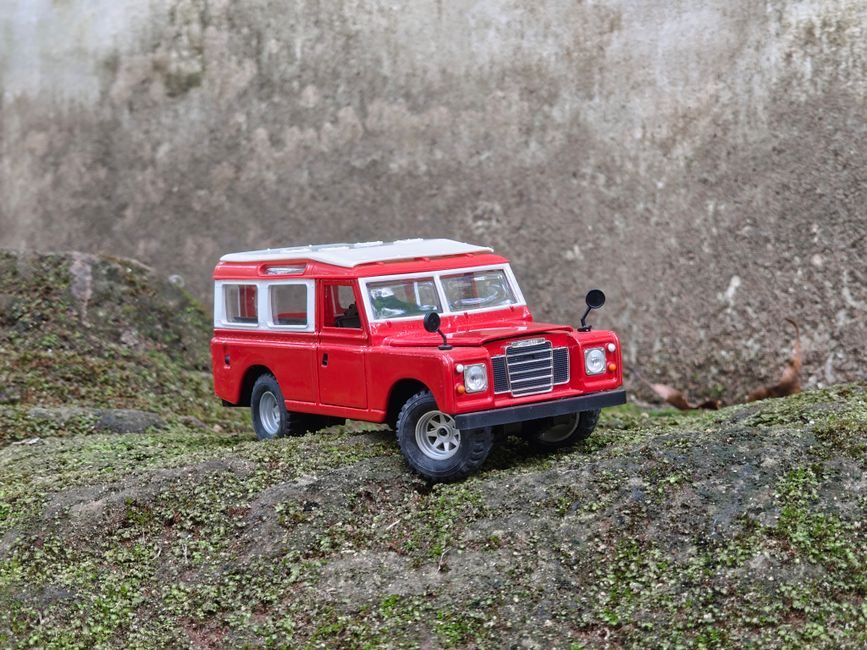
Zinc die casting produced more than 60 years of service at suppliers like Miniature Casting Corporation, with a documented part-weight envelope of 0.5 g to 0.5 lb on miniature-class zinc die casting machines [S1].
Across the global supplier base, the dominant cell is hot-chamber high-pressure die casting on Zamak 3, 5, 7 and ZA-8/12 alloys, complemented by gravity and miniature-cell routes; major 2026 manufacturing clusters sit in mainland China, Taiwan, India, and the United States [S2][S3][S5][S9].
Three Process Routes: Hot-Chamber HPDC, Gravity, and Miniature
Hot-chamber die casting machines using Zamak-family alloys account for the bulk of commercial zinc casting volume, per the IZA-licensed trade site describing zinc's "superior casting fluidity, strength and stiffness" that permits thin-wall sections [S7].
Gravity casting of zinc and brass is offered alongside HPDC at Indian exporters such as Asia Products, whose service menu pairs product design, tool manufacturing, zinc die casting, CNC machining, surface finishing, and mechanical assembly on a single factory floor [S3]. Shaoxing shangyu huixin die casting factory in Zhejiang publishes a four-axis capability list — zinc and aluminum HPDC, gravity casting, and proprietary die development — illustrating the typical Chinese tier-2 supplier's process spread [S9].
Miniature and sub-miniature zinc die casting is a distinct sub-segment: Miniature Casting Corporation runs cells producing parts from 0.5 g to 0.5 lb, with tapping, plating, special packaging, and assembly as in-house value-adds, and 100% US-made positioning for sectors that demand tight tolerance [S1].
Alloy Family: Zamak 3, 5, 7, 8 and ZA-8 / ZA-12
Zinc ingot feedstock must exceed 90% purity for die-casting-alloy use; commercial zinc alloys are sold into die casting, battery, printing, dyeing, medicine, rubber, and chemical industries, with metallic zinc and other metal alloys as the secondary end-uses [S4].
The IZA trade publication frames Zamak as the default zinc die casting material and credits the alloy with casting fluidity, strength, stiffness, and bearing/wear properties that let designers "eliminate bearings and bushings" in favour of as-cast features [S7]. ZA-8 and ZA-12 are the higher-aluminum zinc alloys that enter the same process cells when creep resistance or wear performance is required above Zamak's envelope.
For sourcing engineers, the alloy question usually comes down to four practical levers: tensile strength target, dimensional stability under thermal cycling, plating or coating compatibility, and cost per kilogram relative to aluminum — all of which the IZA trade publication positions as Zamak's home territory [S7].
Where Zinc Die Castings Are Specified: Sector-by-Sector Use

Automotive, locks and security, window hardware, defense, medical devices, electronics and electrical, industrial products, and consumer goods appear as the served-market list at Miniature Casting, which has run the same family-owned US zinc cell for 60+ years [S1].
Door and window fittings and zinc faucet handles are listed as finished-product categories at Asia Products, demonstrating the building-hardware end of the market [S3]. Made-in-China and ECVV list zinc alongside aluminum die casting, die casting alloys, die casting moulds, and precision die casting in the standard supplier catalogue, confirming hardware and precision-instrumental clustering [S2][S6].
Los Angeles-based DieCastingZinc publishes a separate "pot metal" zinc casting service line alongside precision zinc parts, which signals that legacy "pot metal" repair and replacement remains a distinct sub-market for vintage automotive and hardware restoration [S10]. For a related read on how the aluminum-HPDC cell is sized and selected, see the aluminum die casting decision map.
Process Comparison: Hot-Chamber HPDC vs Gravity vs Miniature
Across four decision criteria the routes line up as follows. (1) Production volume: hot-chamber HPDC scales to the highest annual part count; miniature cells serve low-to-mid volume with rapid changeover; gravity sits between with lower tool cost. (2) Part weight: hot-chamber HPDC covers grams to several pounds; miniature is sub-1 g to 0.5 lb per the supplier's published envelope [S1]; gravity handles heavier architectural hardware such as faucet bodies [S3]. (3) Tolerances and surface finish: HPDC is the tightest, supporting thin walls and as-cast bearing surfaces that eliminate bushings per IZA [S7]; gravity requires more machining allowance. (4) Tooling economics: hot-chamber dies and miniature dies carry the highest upfront tool cost amortised across large runs, while gravity tooling is comparatively modest — a relevant comparison when weighing aluminum die casting vs die casting machine selection.
Surface Finishing and Value-Added Operations
"When a finish is properly selected and applied to cast zinc, almost any desired aesthetic characteristic and coating durability can be achieved," per the IZA-licensed trade guidance, with plating, painting, powder coat, and chrome-style finishes all listed as compatible [S7].
The India-based Asia Products service line pairs the casting cell with in-house CNC machining, surface finishing, and mechanical assembly, so a single PO can take a part from raw casting to finished assembly [S3]. Miniature Casting's domestic US cell adds tapping, plating, special packaging, and assembly, with ISO certification governing process control and risk management [S1].
Zinc's cast surface also accepts post-machining of bearing journals and threads more cleanly than aluminum because the alloy is softer and cuts cleanly with HSS tools, which is why the trade guidance highlights the elimination of separately fabricated bushings [S7].
Limitations, Failure Modes, and Sourcing Constraints
Zamak-family alloys are limited in upper service temperature relative to aluminum and magnesium die castings, and they are not selected where sustained exposure above roughly 100–120 °C is required — a threshold that pushes high-heat under-hood applications to aluminum HPDC or even gravity cast iron [S7].
"Pot metal" zinc castings are a separate restoration market at shops such as DieCastingZinc, but modern Zamak is metallurgically distinct from legacy pot metal and should not be cross-quoted on the same mechanical or chemical basis [S10]. For miniature cells, the published part-weight envelope of 0.5 g to 0.5 lb is the supplier's own working window, and design outside it requires moving to standard hot-chamber HPDC [S1].
Cross-process substitution also breaks down: HPDC zinc is not interchangeable with aluminum HPDC on a strength-to-weight basis, and substituting zinc gravity into a hot-chamber HPDC die will not fill the cavity to the same density — a practical reason that the sourcing map for zinc die casting keeps each process on its own decision branch.
Standards, Certification, and What Buyers Should Ask For

Miniature Casting publishes ISO certification covering its US zinc cell, with documented process and risk controls across the operation; the supplier's own positioning is "100% made in the USA" with family-owned management [S1].
International supplier catalogues (ECVV, Made-in-China, CENS) and the Asia Products export site publish full process lists — zinc HPDC, aluminum HPDC, gravity, tooling, machining, finishing — but rarely publish material certificates or test reports on the public page, so inbound RFQs should explicitly request alloy lot certificates, mechanical test data, and surface-finish specifications per the relevant buyer-side standard (e.g. ISO 9001 QMS scope, or industry-specific standards such as ASTM B240 for zinc casting alloys) [S2][S6][S8][S9].
Trackable signals to watch: (1) whether your shortlisted supplier publishes a per-alloy mechanical-property data sheet tied to ASTM/ISO test methods, and (2) whether the same supplier carries in-house CNC machining and finishing — single-PO integration is the leading indicator of competitive lead-time at the tier-2 China and India exporters surveyed in July 2026 [S3][S9].
The underlying component specifications are covered under die casting die.