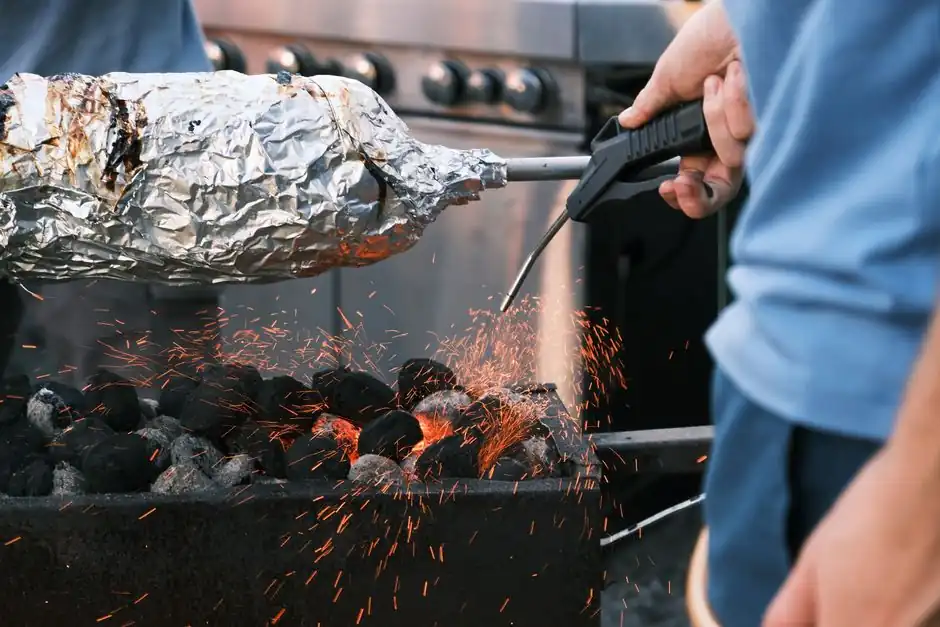
Zinc holding and pouring temperatures are typically 410–430°C, while common aluminum die-casting grades are held at 640–680°C [S1].
The comparison covers high-pressure die casting, with separate limits for molten metal, mold preheat, wall thickness, and the 20–60°C metal-temperature loss before cavity entry [S1].
Zinc and aluminum setpoint ranges at a glance
S1 identifies aluminum and zinc die-casting temperature ranges as topics but the supplied excerpt does not provide alloy-specific melting or holding values for Zamak 3, Zamak 5, ADC12, or A380. These are general process references, not universal setpoints, because alloy grade, wall thickness, furnace configuration, and transfer losses change the required value [S1].
The practical starting points are therefore 420°C for zinc and 660°C for aluminum, followed by adjustment using actual metal temperature, fill behavior, and defect data. Zinc is roughly 240°C below aluminum at the starting setpoint, but the furnace, refractory, and instrumentation requirements are not interchangeable [S1][S2].
How alloy behavior changes the setpoint
The supplied excerpts do not provide zinc melting-point or freezing-interval values, and S5 is a bot-verification page rather than usable casting reference data. That narrow interval supports careful control, but it does not mean the furnace should run at 387°C: the published holding range is 410–430°C for the stated die-casting grades [S1].
S1 discusses aluminum die-casting temperature ranges but the supplied excerpt does not state the ADC12 or A380 melting range or an aluminum holding band. Aluminum also transfers heat differently from zinc: zinc is described as the better heat conductor, and its 787.2°F melting point contrasts with aluminum at 1,221°F [S6]. Furnace sizing and heat balance must follow the actual metal, not a shared setpoint.
S3 lists gas and electric melting and holding furnaces for aluminum and zinc but does not establish metal-specific operating bands or furnace requirements for oxidation and fume control.
Metal temperature is not mold temperature
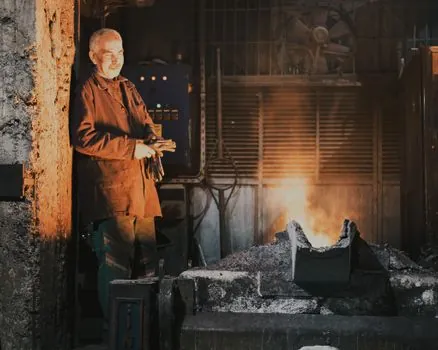
S2 explains that mold preheating controls the thermal environment for molten-metal flow and solidification in zinc and aluminum applications but does not provide the stated mold-temperature ranges. These mold values must not be substituted for the zinc metal setpoint of 410–430°C.
S1 distinguishes metal temperature from mold temperature, but the supplied excerpt does not provide numeric ranges for either aluminum die-casting control loop. S1 discusses thermal balance and the effects of incorrect temperature control, but the supplied excerpt does not quantify temperature loss during transfer into the cavity.
The quoted process requirement is direct: “Set Metal Temp by Alloy Spec” and “Log per Shot, Not per Day” [S1]. Record metal temperature and mold temperature separately, then correlate both with fill, cold shut, porosity, soldering, and dimensional results rather than treating a furnace display as proof of cavity-entry temperature.
Comparison by temperature, response, and operating risk
S1 identifies zinc and aluminum die-casting temperature ranges as topics but the supplied excerpt does not state comparable starting temperatures or holding bands for the two metals. S2 notes that zinc and aluminum behave differently under heat and discusses mold preheating for both, but it does not provide the stated numeric preheat comparison. On thermal energy, zinc melts at a lower absolute level than aluminum, while aluminum’s higher liquid-metal temperature requires different furnace heat capacity and loss calculations [S3][S6].
On defect sensitivity, low or unstable zinc temperature is associated with cold shuts and incomplete fills, while aluminum has a wider process window in absolute terms but cannot be set by copying the zinc control logic [S1][S2].
Which setpoint fits the casting
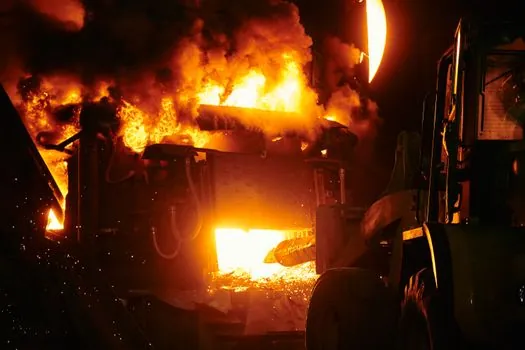
Use 410–430°C for the listed zinc die-casting grades as the initial holding band, with 420°C as a practical commissioning target; use 640–680°C for the listed aluminum grades, with 660°C as the corresponding starting target [S1]. For thin zinc sections, retain enough superheat to preserve fluidity and inspect for cold shuts or incomplete filling; the published mold preheat range of 150–250°C supports this approach [S2].
This approach suits high-pressure die casting of intricate, thin-walled zinc parts and conventional ADC12 or A380 aluminum castings [S1][S2]. It is not a universal specification for gravity casting, continuous slab casting, wrought-alloy melting, or alloys outside the listed grades. Zinc should not be selected for a 120°C dimensional-stability requirement merely because its furnace setpoint is lower; elevated-temperature dimensional behavior requires separate alloy and part assessment [S4].
Commissioning and failure checks
Verify the furnace control loop before production, then confirm the actual liquid-metal temperature rather than relying only on a setpoint. Control overshoot, failed heating elements, poor circulation, and sensor placement therefore require investigation before increasing the setpoint.
For aluminum, account for the difference between the 660–740°C melting range and the 640–680°C holding range [S1]. A reading below the melting behavior of the specified grade can cause incomplete filling, while excessive temperature can increase oxidation, melt loss, or reaction with furnace and mold materials [S1]. Zinc faults require a similar review of oxide formation, fumes, and the effect of contamination on a nominal 420°C setpoint [S3].
Calibrate the thermocouple or pyrometer used for molten-metal measurement, document calibration status, and repeat the check according to the plant’s instrument program; the die-casting guide identifies thermocouples and infrared pyrometers as instruments requiring calibration and discusses real-time temperature display and per-shot records [S1]. For furnace construction and operating limits, use the applicable aluminum alloy and alloy steel material requirements rather than treating generic steel specifications as sufficient for submerged molten-metal contact.
Decision rule for furnace procurement and tuning
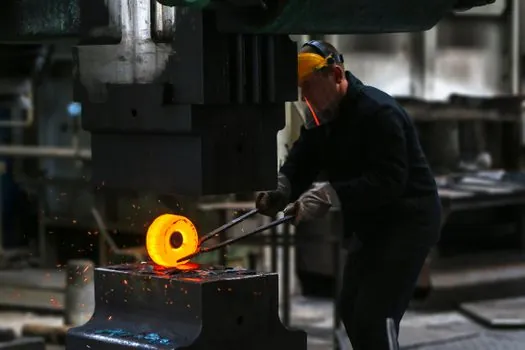
A zinc holding furnace should be commissioned around 420°C and controlled within the 410–430°C band for the grades covered by the reference, while an aluminum holding furnace should be commissioned around 660°C and controlled within 640–680°C [S1]. The comparison also supports zinc mold preheat of 150–250°C and aluminum mold preheat of 200–300°C, but these remain separate loops [S2].
The next controllable verification points are furnace soak stability at the selected setpoint, calibrated molten-metal measurement, and first-shot correlation between metal temperature, mold temperature, fill weight, and defects. If fill defects track low zinc temperature or low aluminum temperature, verify alloy grade and transfer loss before raising the setpoint; if results vary by shot, inspect circulation, measurement placement, dosing consistency, and recording practice [S1].