Absolute vs Gauge vs Differential Pressure Transmitter Selection
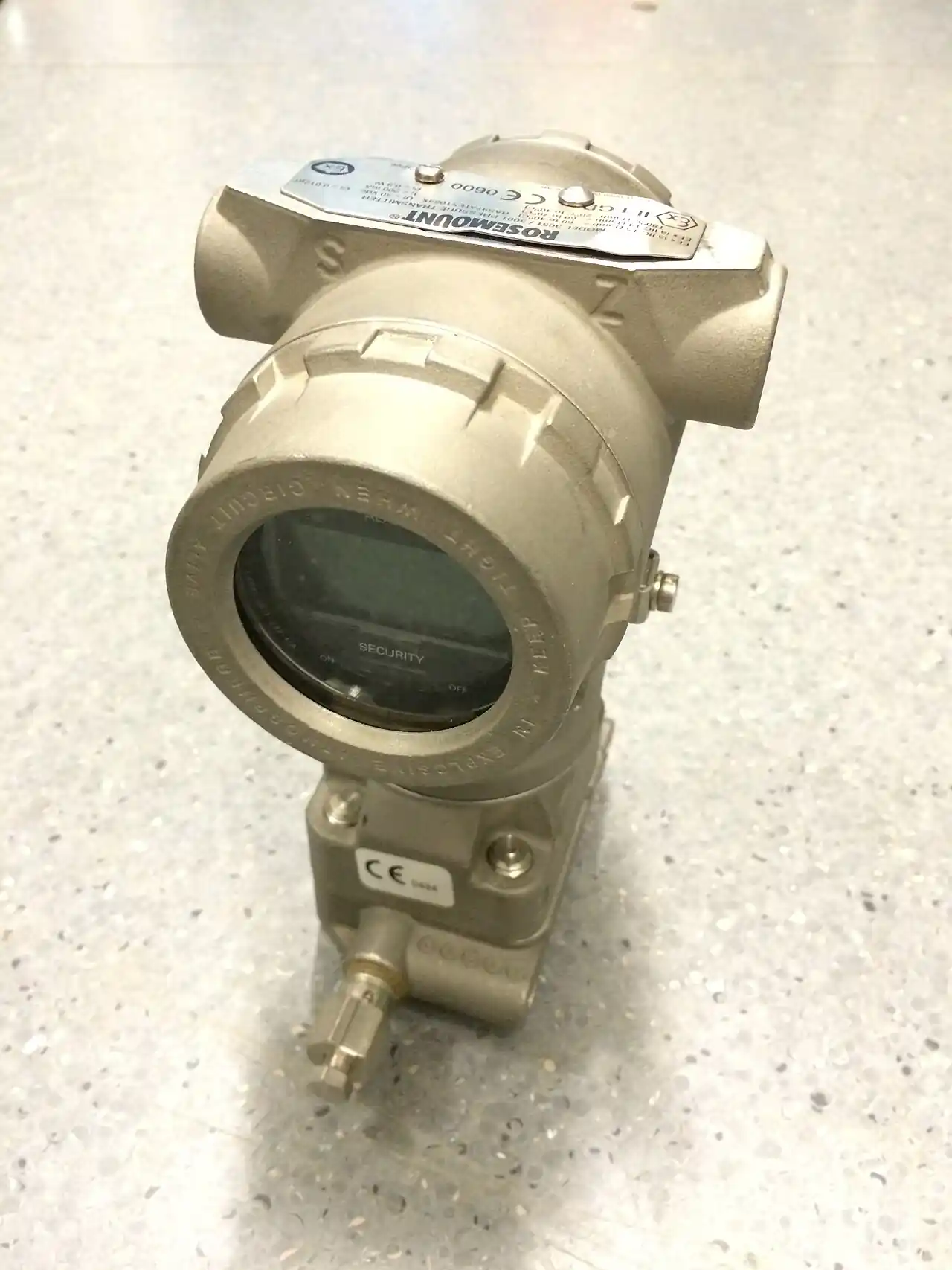
Absolute, gauge, and differential pressure transmitters often share a product family, yet they answer different questions because their references differ. Absolute measures against vacuum. Gauge measures against local atmosphere. Differential measures between two process ports. Choosing the wrong reference is a frequent RFQ error: vacuum control on a gauge transmitter drifts with weather, and fake DP from two gauge transmitters in a PLC stacks uncertainty a true Differential Pressure Transmitter avoids.
This guide is aimed at industrial purchasing and design engineers. It covers 6 chapters from the selection problem through field practice, with 7 selection FAQs.
Chapter 1 / 06
The Selection Problem
The first decision is the reference, not the brand. Absolute is required when vacuum quality or barometric independence matters. Gauge is required when the process is meaningfully relative to atmosphere, such as pump discharge or utility air. Differential is required when the quantity is a difference: filter loading, pressurized-tank level head, orifice flow primaries, or HVAC cross-zone DP. SPECIFIER DEPTH: Revalidate duty inputs against asbuilt conditions after installation. Loads, temperatures, cleanliness, and control setpoints often differ from RFQ assumptions. If asbuilt conditions exceed the selected rating basis, derate throughput or upgrade. Keep the original RFQ package alongside asbuilt redlines. Include nameplate photos in the turnover package. Require identical units across bids. Trend baselines on a defined cadence.
Subtracting two gauge transmitters in a PLC is a false economy. Impulse lengths, temperatures, and calibrations differ, and uncertainty stacks. A Differential Pressure Transmitter with one capsule and a three-valve or five-valve manifold exists to avoid that pattern. SPECIFIER DEPTH: Revalidate duty inputs against asbuilt conditions after installation. Loads, temperatures, cleanliness, and control setpoints often differ from RFQ assumptions. If asbuilt conditions exceed the selected rating basis, derate throughput or upgrade. Keep the original RFQ package alongside asbuilt redlines. Include nameplate photos in the turnover package. Require identical units across bids. Trend baselines on a defined cadence.
Duty family
Needed quantity
Reference type
Deciding constraint
Vacuum dryer / condenser
Pressure vs vacuum
Absolute
Barometer independence
Pump discharge / utility air
Pressure vs atmosphere
Gauge
Local atmospheric reference
Filter / strainer loading
Delta-P
Differential
Single capsule, manifold
Pressurized tank level
Head DP
Differential
Static pressure rating
Orifice flow element
DP plus static
Differential plus static tap
Flow computation inputs
Sealed tank vapor space
Often absolute or sealed gauge
Absolute / sealed gauge
Whether atmosphere is meaningful
Sealed gauge is not absolute. It references a sealed near-atmospheric chamber and can drift. DP transmitters also need a maximum working static pressure rating even when the DP span is small. SPECIFIER DEPTH: Revalidate duty inputs against asbuilt conditions after installation. Loads, temperatures, cleanliness, and control setpoints often differ from RFQ assumptions. If asbuilt conditions exceed the selected rating basis, derate throughput or upgrade. Keep the original RFQ package alongside asbuilt redlines. Include nameplate photos in the turnover package. Require identical units across bids. Trend baselines on a defined cadence.
On pressure transmitter selection, impulse line length and slope change lag and condensation error, Specifiers should capture the numeric limits, the acceptance test, and the spare identity before award so the field team inherits a decision rather than a debate. SPECIFIER DEPTH: Revalidate duty inputs against asbuilt conditions after installation. Loads, temperatures, cleanliness, and control setpoints often differ from RFQ assumptions. If asbuilt conditions exceed the selected rating basis, derate throughput or upgrade. Keep the original RFQ package alongside asbuilt redlines. Include nameplate photos in the turnover package. Require identical units across bids. Trend baselines on a defined cadence.
Document the interface to adjacent equipment and to the control narrative so commissioning does not rediscover missing interlocks. Keep units consistent across the datasheet, the PLC tag, and the operator display. SPECIFIER DEPTH: Revalidate duty inputs against asbuilt conditions after installation. Loads, temperatures, cleanliness, and control setpoints often differ from RFQ assumptions. If asbuilt conditions exceed the selected rating basis, derate throughput or upgrade. Keep the original RFQ package alongside asbuilt redlines. Include nameplate photos in the turnover package. Require identical units across bids. Trend baselines on a defined cadence.
On pressure transmitter selection, static pressure on a DP capsule can exceed flange ratings if ignored, Specifiers should capture the numeric limits, the acceptance test, and the spare identity before award so the field team inherits a decision rather than a debate. SPECIFIER DEPTH: Revalidate duty inputs against asbuilt conditions after installation. Loads, temperatures, cleanliness, and control setpoints often differ from RFQ assumptions. If asbuilt conditions exceed the selected rating basis, derate throughput or upgrade. Keep the original RFQ package alongside asbuilt redlines. Include nameplate photos in the turnover package. Require identical units across bids. Trend baselines on a defined cadence.
Document the interface to adjacent equipment and to the control narrative so commissioning does not rediscover missing interlocks. Keep units consistent across the datasheet, the PLC tag, and the operator display. SPECIFIER DEPTH: Revalidate duty inputs against asbuilt conditions after installation. Loads, temperatures, cleanliness, and control setpoints often differ from RFQ assumptions. If asbuilt conditions exceed the selected rating basis, derate throughput or upgrade. Keep the original RFQ package alongside asbuilt redlines. Include nameplate photos in the turnover package. Require identical units across bids. Trend baselines on a defined cadence.
On pressure transmitter selection, operator displays must label bara versus barg clearly, Specifiers should capture the numeric limits, the acceptance test, and the spare identity before award so the field team inherits a decision rather than a debate. SPECIFIER DEPTH: Revalidate duty inputs against asbuilt conditions after installation. Loads, temperatures, cleanliness, and control setpoints often differ from RFQ assumptions. If asbuilt conditions exceed the selected rating basis, derate throughput or upgrade. Keep the original RFQ package alongside asbuilt redlines. Include nameplate photos in the turnover package. Require identical units across bids. Trend baselines on a defined cadence.
Document the interface to adjacent equipment and to the control narrative so commissioning does not rediscover missing interlocks. Keep units consistent across the datasheet, the PLC tag, and the operator display. SPECIFIER DEPTH: Revalidate duty inputs against asbuilt conditions after installation. Loads, temperatures, cleanliness, and control setpoints often differ from RFQ assumptions. If asbuilt conditions exceed the selected rating basis, derate throughput or upgrade. Keep the original RFQ package alongside asbuilt redlines. Include nameplate photos in the turnover package. Require identical units across bids. Trend baselines on a defined cadence.
On pressure transmitter selection, remote seals change temperature effects and response time, Specifiers should capture the numeric limits, the acceptance test, and the spare identity before award so the field team inherits a decision rather than a debate. SPECIFIER DEPTH: Revalidate duty inputs against asbuilt conditions after installation. Loads, temperatures, cleanliness, and control setpoints often differ from RFQ assumptions. If asbuilt conditions exceed the selected rating basis, derate throughput or upgrade. Keep the original RFQ package alongside asbuilt redlines. Include nameplate photos in the turnover package. Require identical units across bids. Trend baselines on a defined cadence.
Document the interface to adjacent equipment and to the control narrative so commissioning does not rediscover missing interlocks. Keep units consistent across the datasheet, the PLC tag, and the operator display. SPECIFIER DEPTH: Revalidate duty inputs against asbuilt conditions after installation. Loads, temperatures, cleanliness, and control setpoints often differ from RFQ assumptions. If asbuilt conditions exceed the selected rating basis, derate throughput or upgrade. Keep the original RFQ package alongside asbuilt redlines. Include nameplate photos in the turnover package. Require identical units across bids. Trend baselines on a defined cadence.
Decision ownership and data sheet freeze. Assign a single process owner for the duty inputs before commercial comparison starts. When sales, design, and maintenance each silently assume different duty cycles, every architecture can be made to look like a winner. Freeze the data sheet revision in the RFQ and require bidders to echo that revision number on their proposal cover. SPECIFIER DEPTH: Revalidate duty inputs against asbuilt conditions after installation. Loads, temperatures, cleanliness, and control setpoints often differ from RFQ assumptions. If asbuilt conditions exceed the selected rating basis, derate throughput or upgrade. Keep the original RFQ package alongside asbuilt redlines. Include nameplate photos in the turnover package. Require identical units across bids. Trend baselines on a defined cadence.
Define what success looks like in the first ninety days: availability target, energy or media budget, scrap or rework limit, and maintenance hours. Those metrics become the SAT and early-operation acceptance lens, not only a factory nameplate check. SPECIFIER DEPTH: Revalidate duty inputs against asbuilt conditions after installation. Loads, temperatures, cleanliness, and control setpoints often differ from RFQ assumptions. If asbuilt conditions exceed the selected rating basis, derate throughput or upgrade. Keep the original RFQ package alongside asbuilt redlines. Include nameplate photos in the turnover package. Require identical units across bids. Trend baselines on a defined cadence.
Map related equipment that can invalidate a selection even when the core device is correct: upstream drivers, downstream mechanisms, piping or fixtures, and control system scan times. Write interfaces as shall statements. SPECIFIER DEPTH: Revalidate duty inputs against asbuilt conditions after installation. Loads, temperatures, cleanliness, and control setpoints often differ from RFQ assumptions. If asbuilt conditions exceed the selected rating basis, derate throughput or upgrade. Keep the original RFQ package alongside asbuilt redlines. Include nameplate photos in the turnover package. Require identical units across bids. Trend baselines on a defined cadence.
Capture the cost of delay. If lead time differences between architectures affect a shutdown window, lead time becomes a scored technical factor, not only a commercial footnote. SPECIFIER DEPTH: Revalidate duty inputs against asbuilt conditions after installation. Loads, temperatures, cleanliness, and control setpoints often differ from RFQ assumptions. If asbuilt conditions exceed the selected rating basis, derate throughput or upgrade. Keep the original RFQ package alongside asbuilt redlines. Include nameplate photos in the turnover package. Require identical units across bids. Trend baselines on a defined cadence.
Chapter 2 / 06
How Each Reference Type Measures Pressure
A gauge Pressure Sensor vents the reference side to atmosphere, so output is process minus local air pressure. An Absolute Pressure Transmitter seals a vacuum reference so barometric weather does not move the reading. A Differential Pressure Transmitter connects two process ports across one sensor and reports high minus low while still seeing common-mode static pressure on the assembly. SPECIFIER DEPTH: Revalidate duty inputs against asbuilt conditions after installation. Loads, temperatures, cleanliness, and control setpoints often differ from RFQ assumptions. If asbuilt conditions exceed the selected rating basis, derate throughput or upgrade. Keep the original RFQ package alongside asbuilt redlines. Include nameplate photos in the turnover package. Require identical units across bids. Trend baselines on a defined cadence.
Attribute
Gauge
Absolute
Differential
Reference
Local atmosphere
Vacuum capsule
Second process port
Barometer effect
Yes
No
N/A
Typical uses
Discharge, utilities
Vacuum, absolute recipes
Filters, level, flow primaries
Manifold
Block and bleed
Block and bleed
3-valve or 5-valve
Key extra rating
Overpressure
Overpressure
Static pressure plus overpressure
Flow computers often combine a DP primary with a static Absolute Pressure Transmitter and a Temperature Transmitter into a PLC. One DP device does not replace the static absolute input when the equation needs it. SPECIFIER DEPTH: Revalidate duty inputs against asbuilt conditions after installation. Loads, temperatures, cleanliness, and control setpoints often differ from RFQ assumptions. If asbuilt conditions exceed the selected rating basis, derate throughput or upgrade. Keep the original RFQ package alongside asbuilt redlines. Include nameplate photos in the turnover package. Require identical units across bids. Trend baselines on a defined cadence.
On sensing physics, sensor turndown still needs the normal reading in a healthy span fraction, Specifiers should capture the numeric limits, the acceptance test, and the spare identity before award so the field team inherits a decision rather than a debate. SPECIFIER DEPTH: Revalidate duty inputs against asbuilt conditions after installation. Loads, temperatures, cleanliness, and control setpoints often differ from RFQ assumptions. If asbuilt conditions exceed the selected rating basis, derate throughput or upgrade. Keep the original RFQ package alongside asbuilt redlines. Include nameplate photos in the turnover package. Require identical units across bids. Trend baselines on a defined cadence.
Document the interface to adjacent equipment and to the control narrative so commissioning does not rediscover missing interlocks. Keep units consistent across the datasheet, the PLC tag, and the operator display. SPECIFIER DEPTH: Revalidate duty inputs against asbuilt conditions after installation. Loads, temperatures, cleanliness, and control setpoints often differ from RFQ assumptions. If asbuilt conditions exceed the selected rating basis, derate throughput or upgrade. Keep the original RFQ package alongside asbuilt redlines. Include nameplate photos in the turnover package. Require identical units across bids. Trend baselines on a defined cadence.
On sensing physics, damping must match process time constants without hiding real faults, Specifiers should capture the numeric limits, the acceptance test, and the spare identity before award so the field team inherits a decision rather than a debate. SPECIFIER DEPTH: Revalidate duty inputs against asbuilt conditions after installation. Loads, temperatures, cleanliness, and control setpoints often differ from RFQ assumptions. If asbuilt conditions exceed the selected rating basis, derate throughput or upgrade. Keep the original RFQ package alongside asbuilt redlines. Include nameplate photos in the turnover package. Require identical units across bids. Trend baselines on a defined cadence.
Document the interface to adjacent equipment and to the control narrative so commissioning does not rediscover missing interlocks. Keep units consistent across the datasheet, the PLC tag, and the operator display. SPECIFIER DEPTH: Revalidate duty inputs against asbuilt conditions after installation. Loads, temperatures, cleanliness, and control setpoints often differ from RFQ assumptions. If asbuilt conditions exceed the selected rating basis, derate throughput or upgrade. Keep the original RFQ package alongside asbuilt redlines. Include nameplate photos in the turnover package. Require identical units across bids. Trend baselines on a defined cadence.
On sensing physics, fill-fluid thermal expansion on remote seals biases readings if capillaries differ, Specifiers should capture the numeric limits, the acceptance test, and the spare identity before award so the field team inherits a decision rather than a debate.
Document the interface to adjacent equipment and to the control narrative so commissioning does not rediscover missing interlocks. Keep units consistent across the datasheet, the PLC tag, and the operator display.
Operating envelope table. Build a three-column envelope for minimum, normal, and maximum conditions covering load, speed, temperature, and media properties. Evaluate both options at all three columns. Architectures that only win at the brochure nominal point and fail at the maximum column are not qualified.
Separate continuous ratings from intermittent ratings in the comparison. Marketing sheets often blend them. Your duty cycle decides which column is binding.
Quantify uncertainty. If efficiency, accuracy, or torque is stated without a tolerance, ask for it. Design margins evaporate when the adverse tolerance stack is ignored.
Include transient events explicitly: starts, stops, reversals, emergency stops, clean-in-place, and warm-up. Transients drive fatigue and thermal peaks that steady-state tables miss.
Chapter 3 / 06
Construction, Manifolds, and Duty Boundaries
Wetted materials start at 316L and move to Alloy C-276, tantalum, or coated diaphragms for corrosives. Fill fluids must be risk-assessed for diaphragm rupture. Hygienic and remote-seal systems relocate the transmitter via capillary when heat, sanitation, or plugging demands it.
Manifolds mate to Flange connections with a specified Gasket. Orient vents and drains for gas or liquid service. Isolation with a Ball Valve or Globe Valve belongs on impulse lines. Centrifugal Pump pulsation can false-trip DP alarms when impulse design is lazy.
Gauge stops when absolute vacuum accuracy is required. Absolute is unnecessary cost on simple atmospheric pump discharge. Differential stops when there is no meaningful second port or when static pressure exceeds available DP ratings.
On construction boundaries, gasket crush and flange finish decide leak paths more often than sensor electronics, Specifiers should capture the numeric limits, the acceptance test, and the spare identity before award so the field team inherits a decision rather than a debate.
Document the interface to adjacent equipment and to the control narrative so commissioning does not rediscover missing interlocks. Keep units consistent across the datasheet, the PLC tag, and the operator display.
On construction boundaries, manifold equalizing valves must seat or zeroing becomes fiction, Specifiers should capture the numeric limits, the acceptance test, and the spare identity before award so the field team inherits a decision rather than a debate.
Document the interface to adjacent equipment and to the control narrative so commissioning does not rediscover missing interlocks. Keep units consistent across the datasheet, the PLC tag, and the operator display.
On construction boundaries, hazardous-area certificates must match the classification drawing, Specifiers should capture the numeric limits, the acceptance test, and the spare identity before award so the field team inherits a decision rather than a debate.
Document the interface to adjacent equipment and to the control narrative so commissioning does not rediscover missing interlocks. Keep units consistent across the datasheet, the PLC tag, and the operator display.
Site and packaging constraints. Envelope drawings must include service access for seals, brushes, probes, lubricators, and terminal boxes. A technically perfect device that cannot be maintained in the installed position becomes a reliability problem within a year.
State cleaning chemistry, blast levels, and hose-down pressures when washdown applies. Seals and nameplates that survive the process can still fail under sanitation.
Hazardous-area and functional-safety requirements belong in chapter-level boundaries, not in a late commercial email. Certificates must match the area classification drawing and the safety performance level required by the risk assessment.
Prefer designs with replaceable wear modules when the plant stores limited spares. Monolithic assemblies with long exotic lead times need an explicit spare on the shelf or a dual-source plan.
Chapter 4 / 06
Key Specification Parameters
Decode every datasheet against the process variable and static line conditions.
Parameter
Gauge
Absolute
Differential
Calibrated range
URV/LRV gauge units
URV/LRV absolute units
DP URV/LRV
Reference code
Gauge / sealed gauge
Absolute
DP
Overpressure
Mandatory
Mandatory
Per side plus static P
Accuracy / turndown
Percent of span or reading
Same; watch vacuum class
Same; watch high turndown
Process connection
Thread/flange/sanitary
Same
Flange/manifold
Fill / seals
If remote seal
If remote seal
Often on hot/dirty DP
Output
4-20 mA, HART, fieldbus
Same
Same
Diagnostics
Sensor, electronics
Sensor, electronics
Plus plugged-leg clues
Operating forever at 2 percent of URL makes noisy loops. Resize URL near process maximum with margin. Protocol must match the plant PLC standard.
On parameter decoding, as-found calibration tolerances belong on the purchase file, Specifiers should capture the numeric limits, the acceptance test, and the spare identity before award so the field team inherits a decision rather than a debate.
Document the interface to adjacent equipment and to the control narrative so commissioning does not rediscover missing interlocks. Keep units consistent across the datasheet, the PLC tag, and the operator display.
On parameter decoding, model codes must freeze diaphragm material and fill fluid, Specifiers should capture the numeric limits, the acceptance test, and the spare identity before award so the field team inherits a decision rather than a debate.
Document the interface to adjacent equipment and to the control narrative so commissioning does not rediscover missing interlocks. Keep units consistent across the datasheet, the PLC tag, and the operator display.
On parameter decoding, password locks and write protection prevent casual span changes, Specifiers should capture the numeric limits, the acceptance test, and the spare identity before award so the field team inherits a decision rather than a debate.
Document the interface to adjacent equipment and to the control narrative so commissioning does not rediscover missing interlocks. Keep units consistent across the datasheet, the PLC tag, and the operator display.
Parameter crosswalk worksheet. Create a one-page crosswalk that lists each critical datasheet parameter, the process need, the quoted value, and the acceptance test method. Attach that crosswalk to the purchase order. It prevents shipping a catalog cousin that almost matches.
Normalize units and test standards before ranking price. A torque rating under one standard can be incomparable to another without conversion and duty definitions.
Require curve data where a single point is misleading: pump curves, gearbox thermal curves, meter accuracy versus flow, actuator torque versus angle, enclosure derating versus temperature.
Electronics and firmware options (protocols, diagnostics, password locks) should be frozen as configured model codes, not as vague capable language.
Chapter 5 / 06
Selection Decision Factors
Is the quantity a difference between two process points? Yes: Differential Pressure Transmitter. No: continue.
Must the reading ignore barometric pressure? Yes: Absolute. No: Gauge.
What are min/normal/max and overpressure? Size URL; confirm overpressure and static ratings.
Are remote seals required? Specify type, capillary length, fill fluid.
What manifold and impulse materials? Include Flange rating and Gasket material.
What PLC/PID integration is required? Freeze protocol and alarm bits.
Cost line
Gauge
Absolute
Differential
Transmitter
Baseline
Slight premium often
Higher; two ports
Manifold / seals
Block-bleed
Block-bleed
3/5 valve plus seals
Impulse fab
One line
One line
Two lines
Calibration
Gauge calibrator
Absolute calibrator
DP calibrator
Process fluid and reference type
Range, static pressure, temperature
Materials, connection, manifold, seals
Protocol, area class, damping, tag list
Ban PLC subtraction of two gauges unless engineering signs an exception
On selection economics, training on bara versus barg prevents operator setpoint mistakes, Specifiers should capture the numeric limits, the acceptance test, and the spare identity before award so the field team inherits a decision rather than a debate.
Document the interface to adjacent equipment and to the control narrative so commissioning does not rediscover missing interlocks. Keep units consistent across the datasheet, the PLC tag, and the operator display.
On selection economics, spares should match diaphragm and fill options exactly, Specifiers should capture the numeric limits, the acceptance test, and the spare identity before award so the field team inherits a decision rather than a debate.
Document the interface to adjacent equipment and to the control narrative so commissioning does not rediscover missing interlocks. Keep units consistent across the datasheet, the PLC tag, and the operator display.
On selection economics, lead time for exotic diaphragms can dominate shutdown planning, Specifiers should capture the numeric limits, the acceptance test, and the spare identity before award so the field team inherits a decision rather than a debate.
Document the interface to adjacent equipment and to the control narrative so commissioning does not rediscover missing interlocks. Keep units consistent across the datasheet, the PLC tag, and the operator display.
Scoring model. Use a weighted score: technical fit, risk, lead time, energy or media cost, maintainability, and price. Publish weights in the RFQ. Vendors then optimize the right function, and internal stakeholders cannot silently reweight after seeing the numbers.
Keep a written reject log for the architectures not chosen, citing the duty fact that eliminated them. That log is the fastest way to answer the next audit or the next project reuse question.
Negotiate spares and training as part of award, not after installation when leverage is gone. Critical wear parts and a commissioning engineer-day package are cheaper in the bid than in an emergency PO.
Confirm that installation contractors receive the same data sheet revision and wiring diagrams used for award. Field improvisation is a top source of early failures blamed on the product.
Chapter 6 / 06
Field Practice: Zeroing, Impulse Lines, and Failures
Zero DP with the manifold equalizing path after isolating both sides. Never zero under unequal trapped pressures. Keep impulse lines short, supported, and correctly sloped; heat-trace where needed.
A plugged low leg on DP level reads high; a plugged high leg reads low. Teach that signature. Map transmitter status bits to the PLC. After Centrifugal Pump starts, expect DP spikes; use damping without hiding filter loading.
Failure modes include diaphragm corrosion, fill loss, gauge vent blockage, absolute reference leakage, manifold seat leaks, and wrong Gasket crush on Flange faces.
On field practice, baseline as-commissioned readings enable later drift detection, Specifiers should capture the numeric limits, the acceptance test, and the spare identity before award so the field team inherits a decision rather than a debate.
Document the interface to adjacent equipment and to the control narrative so commissioning does not rediscover missing interlocks. Keep units consistent across the datasheet, the PLC tag, and the operator display.
On field practice, photo records of manifold orientation reduce reverse-port mistakes, Specifiers should capture the numeric limits, the acceptance test, and the spare identity before award so the field team inherits a decision rather than a debate.
Document the interface to adjacent equipment and to the control narrative so commissioning does not rediscover missing interlocks. Keep units consistent across the datasheet, the PLC tag, and the operator display.
On field practice, critical loops need spare transmitters configured and tagged, Specifiers should capture the numeric limits, the acceptance test, and the spare identity before award so the field team inherits a decision rather than a debate.
Document the interface to adjacent equipment and to the control narrative so commissioning does not rediscover missing interlocks. Keep units consistent across the datasheet, the PLC tag, and the operator display.
Baseline and trend monitoring. Record as-commissioned diagnostics, temperatures, currents, accuracies, or cycle times. Trend against those baselines on a defined cadence. Absolute alarm limits without baselines either nuisance-trip or miss slow degradation.
Write the troubleshooting tree into the maintenance system: first checks, probable causes, and spare identities. Relying on tribal knowledge fails on night shifts.
After any process change (new fluid, new speed, new recipe), re-qualify the device against the original selection assumptions. Many mysterious failures are duty changes that nobody re-ran through the decision sequence.
Close the loop with suppliers on chronic defects using evidence packs (trends, photos, nameplates, oil samples). Specification discipline works only if field evidence returns into the next RFQ.
Plan end-of-life. Controllers, transmitters, and firmware age out before housings wear out. Demand a support horizon statement and a migration path that reuses wet or mechanical parts where possible.
Turnover package contents. Nameplate photos, as-built wiring, final configuration files, spare parts list with OEM numbers, lubrication chart, alarm list mapped to the PLC tags, and the signed SAT data. Store the package with the P&ID and quality records so the next outage team does not start from a blank search.
FAQ
Can I use a gauge transmitter for vacuum control?
Not if absolute vacuum quality matters. Gauge readings move with weather. Use an Absolute Pressure Transmitter for vacuum dryers and absolute recipes.
Why not subtract two gauges in the PLC to get DP?
Uncertainties and impulse delays add. A Differential Pressure Transmitter measures on one capsule and zeros with a manifold.
What is sealed gauge?
A sensor referenced to a sealed near-atmospheric chamber. It is not true absolute and can drift.
Does a DP transmitter need a static pressure rating?
Yes. A small DP span on a high-pressure line must still survive that static pressure.
When do I need remote seals?
High temperature, sanitary connections, plugging fluids, or remote mounting. Specify capillary length and fill fluid.
How often should transmitters be calibrated?
Follow criticality and the quality system. Many plants use 12-month intervals with interim zero checks.
Which protocol should I specify?
Match the plant PLC standard and freeze it in the model code so spares match.