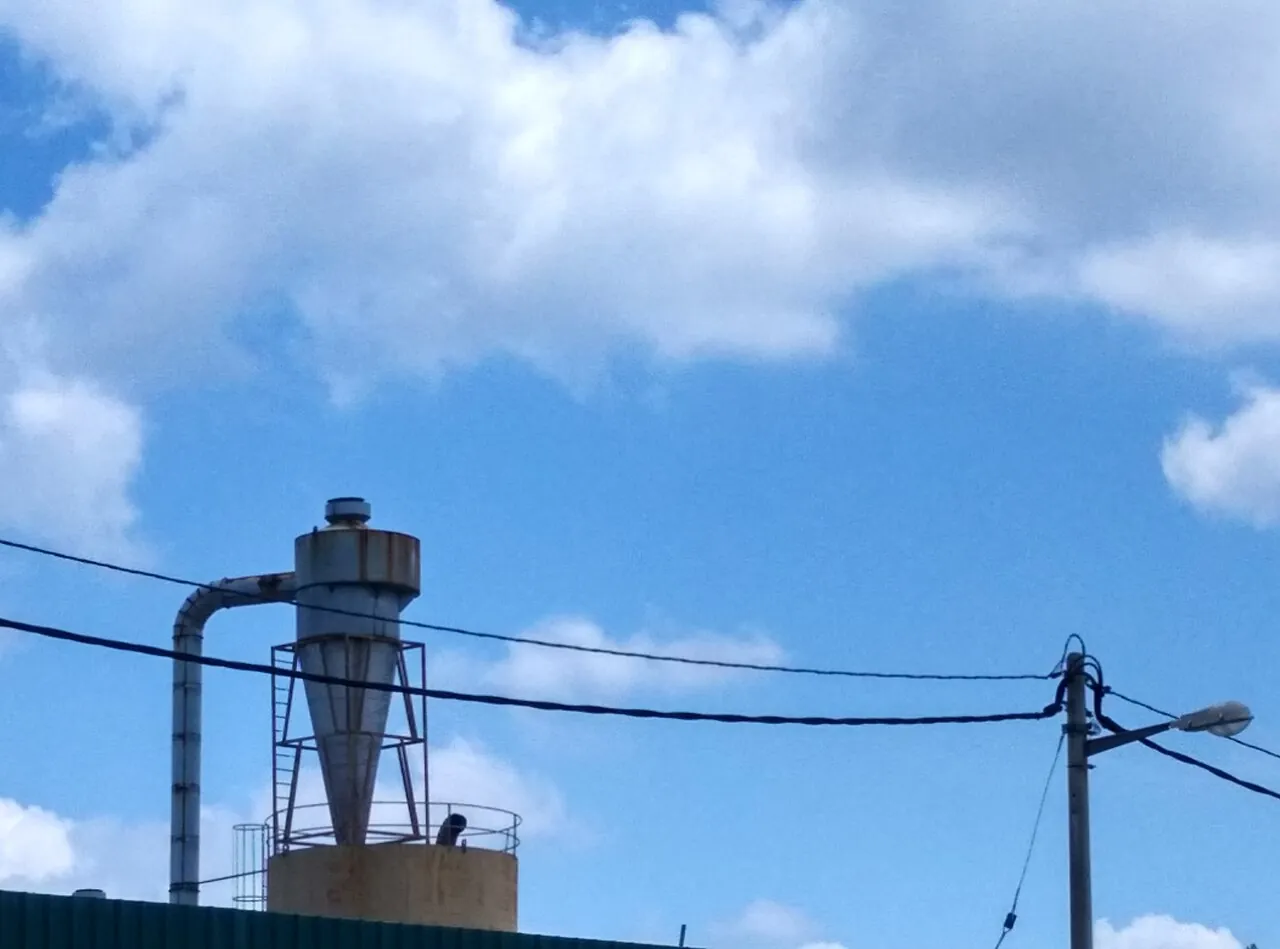
An electrostatic precipitator, ESP, is an air pollution control machine that charges entrained dust, smoke, and mist particles in a flue gas or process gas stream and collects them on grounded plates or tube walls under a high voltage field, typically 40 to 80 kV DC, then removes the accumulated layer by mechanical rapping in dry designs or by water washing in wet designs. Collection happens with only a few hundred pascals of gas pressure drop and at gas temperatures from 150 to 400 deg C in dry service, which is why ESPs dominate utility boiler, cement kiln, steel plant, and incinerator fly ash duty at gas volumes from 100,000 to several million cubic meters per hour. Collection efficiencies above 99.5 percent are routine for well-conditioned ash.
Procurement engineers meet this machine at the back end of combustion and process trains where particulate emission permits are written in mg per normal cubic meter and opacity percentages, and where the choice between an ESP, a bag filter, and a wet scrubber decides a decade of operating cost. The decision this page settles is narrow and practical: whether the electrostatic mechanism fits the ash chemistry and emission target, what specific collection area the guarantee implies, how dry plate and wet tube builds divide the duty, and what the fields, rapping, power supply, and ash handling lines of an RFQ must say so the guaranteed outlet emission survives the performance test and the first fuel switch.
This page treats the electrostatic precipitator as a purchasing object: how corona charging and plate collection actually work, what specific collection area and migration velocity hide inside a guarantee, why ash resistivity decides more than any hardware choice, how dry plate, dry wire-pipe, and wet builds divide the market, and how fields, rapping, transformer-rectifier sets, and ash handling combine into a defensible RFQ. It is written for engineers who write emission guarantees into purchase orders, not for readers who want a brochure summary.
Chapter 1 / 06
What an Electrostatic Precipitator Is and What Is Being Decided
The machine has three working parts and no moving parts in the gas stream. Discharge electrodes, wires, rigid frames, or spiked strips, hang between or down the centers of collector surfaces and carry the negative high voltage that generates a corona, a faint ionizing glow that floods the passage with ions. Particles entering the field collide with ions and acquire charge within the first fraction of a second. Charged particles then migrate across the gas flow toward the grounded collector, positive plate or tube wall, where the electric field drives them at a drift velocity that depends on particle size, field strength, and gas viscosity. Collected dust builds a layer, and the layer is removed, rapped into hoppers in dry machines, washed to a drain in wet machines, which is where the two great ESP families diverge.
What is being decided in this purchase is an emission guarantee with a physics argument behind it. The vendor promises an outlet concentration or collection efficiency at a stated gas volume, temperature, inlet loading, and ash analysis. The buyer's protection is knowing what hardware sits behind the number: how many fields in series, how much plate area, what power supply rating, what rapping or wash regime. Two ESPs quoting the same efficiency can differ by a whole field of plate area, and the difference surfaces the first time the fuel sulfur drops or the gas temperature rises. The purpose of this page is that the reader can audit the sizing basis, called specific collection area, and the operating windows, resistivity and conditioning, before the contract, not at the stack test.
The competitive frame is three machines. The bag filter, including the baghouse configurations its own leaf covers in depth, filters gas through fabric and wins very high efficiency on fine particulate at the cost of pressure drop, bag life, and temperature limits. The wet scrubber, covered by its own recently published leaf, absorbs gas and liquid pollutants in liquid contact and wins where acid gas co-control is required at the price of a wastewater stream. The cyclone separator is the inertial pre-cleaner, cheap and coarse, that removes the 10-micron-and-above fraction ahead of either. The ESP takes the territory where gas volume is huge, pressure drop budget is thin, temperatures are high, and the ash is conditionable: coal-fired boilers, cement kilns and coolers, steel sinter plants and blast furnace cast houses, glass furnaces, municipal incinerators, and pulp mill recovery and power boilers.
Two neighbors need explicit disentangling because the names collide. A mist eliminator is a vessel internal, chevron or mesh demister vanes that drain entrained droplets, not a complete charging machine; wet ESPs and scrubber towers both use mist eliminators at their gas exits. And a dry scrubber is an acid gas device that feeds alkaline sorbent into flue gas; its companion leaf today covers that chemistry, while this page covers only the electrostatic collection of particulate and condensed mist. An ESP can be, and often is, the downstream particulate collector for a dry scrubber system; that is a train arrangement, not an identity.
The equipment scale is worth stating because it explains the purchasing pattern. A 600 MW coal unit ESP passes roughly 2 million cubic meters per hour of gas through a casing a hundred meters of plate length long, four to six fields in series, with several thousand tonnes of steel and dozens of transformer-rectifier sets. At that scale ESPs are site-erected, engineered-to-order machines with 12 to 18 month lead times, and the purchase is closer to buying a building with electrical equipment inside than buying a catalog product. Even the smaller process ESPs, an acid mist tube unit or a cast house plate machine, are engineered packages, which is why the RFQ discipline in chapter 5 carries commercial weight measured in whole fields of plate.
Chapter 2 / 06
How Charging and Collection Physics Set the Size
Charging is fast and collection is slow, and the whole machine exists to give the second process distance. A particle in a corona field picks up its saturation charge in tens of milliseconds by ion bombardment for particles above about a micron, and by diffusion charging below that, where random thermal ion motion does the work that field drift cannot. The collection step is the bottleneck: the charged particle must drift to the wall against gas drag, and the drift velocity, called the migration velocity or effective drift velocity in sizing practice, runs a few centimeters per second for fly ash in a healthy field, more for coarse dust, less for the finest submicron fraction that carries the visible plume.
The sizing law is the Deutsch equation, and every ESP quotation descends from it. In words: collection efficiency equals one minus the natural exponential of minus the plate area times the effective migration velocity divided by the gas flow. Rearranged, the required plate area equals gas flow divided by migration velocity times the logarithm of inlet over outlet loading. The industry's working number is the specific collection area, SCA, plate area per unit gas volume flow, expressed in square meters per cubic meter per second, or its imperial twin in square feet per thousand actual cubic feet per minute. An aggressive high efficiency dry ESP on good ash runs 120 to 180 square meters per cubic meter per second; moderate duty machines run 60 to 100; wet ESPs on acid mist can size smaller because washing keeps the collecting surface perpetually clean, sustaining a higher effective velocity.
Resistivity is the ash property that decides whether the field can actually push current, and it deserves its pricing weight in every bid evaluation. Fly ash resistivity follows a bathtub curve with temperature: high below 120 deg C from surface conduction absence, minimum around 150 to 180 deg C, then rising steeply as volume conduction takes over and the gas dries. High resistivity ash, above roughly 10 to the eleventh power ohm centimeters, accumulates charge on the collected layer, and the layer voltage builds until it sparks back to the electrode or produces reverse corona, positive corona on the dust surface that re-entrains particles and collapses efficiency. Low resistivity ash, below about 10 to the fourth, discharges so readily that it lets go of the plate and re-entrains mechanically. The workable band in between is created, not found: gas temperature control, fuel sulfur content, and flue gas conditioning with sulfur trioxide or ammonia tune the ash into the band.
Conditioning is therefore part of the process design, not an admission of defeat. Sulfur trioxide conditioning, injected at 10 to 40 ppm, forms sulfuric acid films on ash surfaces and drops resistivity by one to three orders of magnitude on low sulfur coals; ammonia conditioning moderates both extremes and improves fine particle agglomeration; moisture and temperature manipulation do the same work in process applications. The purchase question is who owns the conditioning risk: an ESP guaranteed at 30 mg per normal cubic meter on conditioned ash must state the conditioning regime in the guarantee conditions, or the guarantee is weather written against the fuel market. The ash analysis line in the RFQ is thus not a formality, it is the whole sizing basis.
The electrical system is the muscle behind the physics. Each field, or bus section, is powered by its own transformer-rectifier set, T-R set, stepping line voltage to 40 to 80 kV DC rectified, with automatic voltage control that rides the spark rate, typically 50 to 100 sparks per minute at the optimum point where field strength is maximum without collapse. Modern supplies add high frequency switching rectifiers with faster arc quenching and measurable efficiency gains on difficult ash. Sectionalization is the reliability argument: more bus sections mean a single electrical failure costs a fraction of the machine instead of a stack test. The power consumption of a large ESP is real but modest against its gas volume, on the order of 0.1 to 0.3 kW per thousand cubic meters per hour, plus fan power for the few hundred pascals of pressure drop, which is the ESP's standing economic card against fabric filtration at 1,000 to 2,000 pascals.
The emission measurement closes the loop between physics and permit. Outlet compliance is read by continuous systems, opacity as a percent, or particulate monitors calibrated against manual reference method tests, and the gas analysis train around the ESP, oxygen trim from a zirconia oxygen analyzer, sampling through a sample conditioning system, feeds the corrections that convert readings to standard conditions. A guarantee that names the reference method, the averaging period, and the oxygen basis is enforceable; a promise of 99.9 percent efficiency with none of those is arithmetic, not compliance.
Chapter 3 / 06
Types, Construction, and Duty Boundaries
The dry plate ESP is the market's center of gravity. Gas flows horizontally through parallel passages formed by rows of collector plates 10 to 15 m tall, with discharge electrodes suspended between them; the casing is welded steel with inlet and outlet transition ducts, distribution perforated plates to even the gas profile, and pyramidal hoppers beneath each field to receive rapped ash. Rapping systems clear both collectors and discharge electrodes: collectors by shear hammers on driven shafts striking the plate side, discharge electrodes by vibrating frames or magnetic impulse heads. Ash leaves the hoppers through rotary airlock feeders into conveyors, and the whole ash path, hopper heaters to avoid caking, level probes, and the downstream handling, is part of the ESP purchase boundary even when the contracts are separate.
The wet ESP, WESP, replaces rapping with irrigation. Collecting surfaces are vertical tubes or plates continuously or periodically washed with water films, so the collected layer never builds, reverse corona and re-entrainment largely disappear, and the effective migration velocity rises. Wet ESPs collect acid mist, submicron condensables, and sticky particulate that would blind rapping: sulfuric acid mist behind wet scrubber trains and smelter converters, coke oven gas and fiberglass furnace emissions, wood and biomass combustion condensables, and the fine sticky fraction downstream of semi-dry desulfurization. The price is the water: a blowdown stream that must be treated, materials that survive acid condensation, 316L to C276 alloy or lead-lined and FRP constructions by chemistry, and a mist eliminator at the exit. Wet ESPs are vertical tube or vertical plate machines, often modular, and size smaller in SCA terms than their dry cousins for the same efficiency.
Two-Stage and wire-pipe geometries serve the specialist corners. Two-stage precipitators charge in a short ionizing section and collect in a low voltage plate section, the architecture of mist and smoke control in small industrial ventilation, electronic air cleaner scale, and some oil mist service. Wire-pipe tubular ESPs, vertical tubes with a wire on the tube axis, are the classic acid mist and tar capture machine and the geometry most wet ESPs use. Within dry plate machines, the discharge electrode family divides into weighted wire, hanging wires kept taut by weights, economical but wire-breakage prone, and rigid frame or rigid electrode designs, mast or frame structures carrying spiked or barbed strips, which dominate modern utility practice precisely because an electrode failure inside an operating field is a maintenance event and a broken wire shorting a field is an outage.
Field count is sectionalization made hardware. Dry ESPs ship in three to six or more fields in series along the gas path; each field removes a fraction of what reaches it, so the last field polishes a light load and its power and rapping tune differently than the first. The commercial logic runs: a four field machine guaranteed at 30 mg per normal cubic meter has a spare field of margin inside it against fuel sulfur swings, ash changes, and aging; a three field machine at the same guarantee has none, and every operating upset spends compliance directly. Hot-side versus cold-side placement, ESP ahead of versus behind the air preheater, was the classic utility fork, with hot side buying lower resistivity on low sulfur coal at the cost of casing size and higher maintenance, and modern practice and fuel changes have retired most hot-side economics.
Duty boundaries, stated bluntly. An ESP is not an acid gas device: SO2 and HCl removal belongs to the wet scrubber or the dry scrubber family, with the ESP as their downstream collector. It is not a fabric filter: where submicron particulate must fall below about 10 mg per normal cubic meter regardless of ash chemistry, the bag filter is the safer guarantee, and the hybrid arrangements that put a short fabric field after plate fields exist precisely to buy that certainty. It is not a pre-cleaner: the cyclone separator takes the coarse load ahead of it where inlet loading is brutal. And it cannot collect what it cannot charge and hold, which is why the resistivity and conditioning discussion in chapter 2 is the first boundary of the machine, decided before any hardware line. The table below compresses the duty map.
Guarantee tied to ash analysis and conditioning regime
Cement kiln and clinker cooler
Dry plate, high temperature design, rugged rapping
Raw meal and alkali dust resistivity varies with chemistry
Steel sinter and blast furnace cast house
Dry plate, abrasion allowance, hopper heating
Coarse load may need cyclone pre-separation
Sulfuric acid mist, metallurgical acid plants
Wet tubular ESP, lead or high alloy, water treatment
Acid dew point corrosion through the whole casing
Biomass and waste incineration
Dry or wet ESP behind acid gas train, condensable load
Dioxin and heavy metal policy may force fabric end stage
Coke oven gas, tar and mist
Wet tubular, heated shells, flush system
Tar fouling kills dry machines; washing is mandatory
Small oil or welding mist, ventilation scale
Two-stage plate ESP, washable cells
Not a flue gas machine; different market and standards
Chapter 4 / 06
Key Specification Parameters
The datasheet rows below decide whether a quoted ESP matches the service. Each row is a purchase defining parameter; the paragraphs after the table explain what to demand and what a weak answer looks like.
Attribute
Typical range or options
What it decides
Gas volume flow, actual at ESP inlet
100,000 to 4,000,000 m3/h
Casing size, SCA arithmetic, and fan duty
Gas temperature at inlet
120 to 400 deg C dry; near dew point wet
Resistivity placement and casing expansion design
Inlet dust loading and size distribution
1 to 50 g/Nm3 typical boiler range
Field loading split and hopper and rapping duty
Required outlet emission
10 to 50 mg/Nm3 common permits; lower on special
The whole guarantee and its test basis
Specific collection area
60 to 180 m2 per m3/s dry; smaller wet
The plate area actually bought behind the promise
Number of fields and bus sections
3 to 6 fields; one T-R set per section
Sectionalization and compliance margin
Design migration velocity
4 to 16 cm/s by ash and service
The physics assumption the sizing stands on
Power supply rating
40 to 80 kV, 300 to 1,800 mA per T-R set
Field strength headroom on difficult ash
Electrode system
Weighted wire, rigid frame, spiked strip
Failure mode and maintenance class
Ash removal
Rapping dry with hoppers and airlocks; washing wet
Uninterrupted collection and residue route
Corrosion allowance, wet service
316L, 904L, C276, lead, FRP by acid
Casing and tube life against acid dew point
Emission monitoring
Opacity, PM CEMS with reference method tie
Enforceability of the guarantee
The SCA row is the one to interrogate hardest, because it is where two quotations of the same efficiency reveal themselves. Ask each bidder to state plate area, design migration velocity, and gas volume used, and check that the three multiply into the quoted efficiency under the Deutsch relationship at the stated inlet and outlet loadings. A bid resting on a migration velocity well above what the ash class supports is a bet on conditioning and good weather; a bid with a whole extra field of plate is slower, heavier, more expensive, and honest. On permits near 10 mg per normal cubic meter, the difference decides whether the plant meets its limit on the first fuel switch.
The resistivity and conditioning rows convert fuel risk into contract language. The RFQ must attach the ash analysis, or the design coal suite with sulfur range, and require the vendor to state the resistivity band assumed, the conditioning, if any, included in the guarantee, and the efficiency expected outside that band. Buyers at low sulfur coal plants should treat sulfur trioxide or ammonia conditioning as part of the machine, priced and guaranteed with it, because retrofit conditioning on a failed guarantee costs more than a fifth field bought up front. The parallel table below converts the physics into a materials and construction map for the wet end of the market.
Wet ESP service condition
Materials to specify
Watch items
Dilute sulfuric acid mist, under 20 percent
316L or 904L tubes and shell, FRP option small units
Chloride content even at trace levels shifts alloy choice
Blowdown treatment capacity sized for full capture
Gypsum and sticky process dust
Wet plate with aggressive irrigation
Scaling control in wash water chemistry
The monitoring row makes the guarantee money. Continuous opacity or particulate measurement with a stated reference method, averaging period, and oxygen correction basis turns an efficiency promise into a compliance instrument; gas analyzers and the sample conditioning system that keeps them alive are small purchases inside the ESP package that decide whether the big machine's performance is visible. The pressure transmitter rows across casing and ducting, simple instruments, catch hopper pluggage and distribution plate fouling early, and rapping and T-R set telemetry, per-section current and voltage trends, are the operating window into the machine's electrical health. An ESP quoted without instrumentation and telemetry scope is a machine the plant cannot see.
Chapter 5 / 06
Selection Decision Factors and RFQ Language
The decision sequence runs as a checklist, and each step eliminates a class of bids before price comparison begins.
Fix the gas basis: volume at actual conditions, temperature, moisture, and the full gas analysis, because sizing and materials both hang on it.
Fix the dust basis: inlet loading, particle size distribution, and a resistivity-relevant ash or dust analysis, with the fuel or process range stated, not a single lucky sample.
Write the permit line: outlet mg per normal cubic meter or opacity, with reference method, averaging period, and oxygen basis named.
Decide dry versus wet by the chemistry: dry plate for conditionable dry ash above about 150 deg C, wet for acid mist, condensables, and sticky fractions near saturation.
Audit the sizing: demand SCA, plate area, design migration velocity, and field count per bid, and check the Deutsch arithmetic behind the guarantee.
Assign conditioning risk: whoever guarantees the emission owns the conditioning regime that makes the ash collectable, in writing.
Specify the power and sectionalization: T-R set count and rating, electrode system class, and the compliance margin implied by field count.
Close the ash and water paths: hopper heating and airlocks, conveyors, or wash water and blowdown treatment, so collection never stops at the plate.
Against the neighboring control machines, the comparison a specifier actually runs is the following, and it belongs here rather than in the page title. Against the bag filter, the ESP wins on pressure drop and temperature ceiling, a few hundred pascals against 1,500, and on bag-life-exempt service at 350 deg C, while the baghouse wins sub-10 mg guarantees that do not depend on ash chemistry and wins outright on difficult low sulfur ash. Against the wet scrubber, the machines co-exist rather than compete: the scrubber takes acid gas and adds a wastewater stream, the wet ESP takes mist and fine particulate without adding one, and many trains order them scrubber then wet ESP. Against the cyclone separator, the ESP is the polish stage; the cyclone is the guard. On the hybrid path, dry ESP followed by a fabric polishing field, or a dry scrubber followed by this machine, the train order follows chemistry: sorbent or acid gas stage first, electrostatic collection last. Choose the train the chemistry demands, not the machine a supplier has on promotion.
The application map below turns those choices into a table the project file can carry into bid evaluation.
Application
Construction to specify
Check before order
Coal utility, 30 mg/Nm3 permit
Dry plate 4 to 5 fields, rigid electrodes, conditioning ready
Migration velocity basis; field margin on low sulfur coal
Cement kiln bypass and main stack
Dry plate, hot design, alkali dust allowance
Raw meal resistivity swings; rapping intensity field by field
Acid plant tail gas
Wet tubular ESP, lead or C276, two stages in series
Acid concentration and chloride; mist eliminator grade
Municipal incinerator, post SCR train
Dry ESP behind sorbent or wet ESP at saturation
Condensable and dioxin policy; end stage may be fabric
Batch swings in loading; fast AVC response on T-R sets
The RFQ block should be written once and reused. A complete block reads: gas flow at actual conditions with temperature, moisture, pressure, and analysis; inlet loading with particle size distribution and ash analysis including sulfur, alkali, and moisture; required outlet emission with reference method and correction basis; dry or wet selection with temperature profile and dew points; plate area, SCA, migration velocity, and field count demanded per bid; electrode system class; T-R set count, voltage and current class, and control type; rapping or washing regime with intensity control; casing and materials with corrosion allowance, insulated and hopper heated where cold-side; ash handling interface, hoppers, airlocks, conveyors, or wash water and blowdown treatment; gas distribution requirement with model test or CFD evidence; instrumentation and telemetry, opacity or PM monitor, pressure and temperature points; performance test protocol with penalty structure; and the documentation pack, arrangement drawings, electrical schematics, and the sizing calculation the buyer is entitled to audit. A quotation returned without the sizing calculation or the guarantee conditions is incomplete at any price.
Chapter 6 / 06
Installation, Standards, Failure Modes, and Maintenance
Installation is erection engineering. The casing goes up in sections on site with field welding controlled for airtightness, because air in-leakage at the casing dilutes the gas, distorts the measurement basis, and quenches temperature; distribution perforated plates at inlet and outlet are set and then verified, by physical model or CFD, so that gas velocity across the first field is uniform within roughly plus or minus 10 to 15 percent, since a maldistributed field collects like its worst lane. Electrode alignment tolerances are millimeter-class at 12 m heights, and the high voltage buswork, insulators, and supports are set with the cleanliness of substation practice because one contaminated insulator compartment is one intermittent ground fault. Expansion provisions, slide pads and bellows, absorb the casing growth between cold startup and 350 deg C operation.
Commissioning proves the electrical machine before the process needs it. Insulator and hopper heaters run days ahead of gas to keep every high voltage surface dry; the fields are energized section by section on air, checking voltage-current curves against factory data; rapping systems are timed and their force verified; and the ash path is proven end to end with the conveyor and airlock train before the first dust arrives. On first gas, the automatic voltage control is tuned per field to ride its spark rate, and the opacity or PM monitor is calibrated against a reference method test series. The performance acceptance test then runs at stated load and gas conditions, and the result enters the permit file.
The standards and regulatory frame is the compliance spine. In the United States the EPA monitoring guidance for ESPs frames the parametric and opacity monitoring expectations under the air emissions monitoring knowledge base, and state permits convert that into enforceable numbers; the EU and other jurisdictions run equivalent BAT-reference frameworks with their own test methods, and ISO particulate test methods govern the reference measurements themselves. Process-side standards, duct design, structural codes on the casing, and electrical codes on the T-R installations, complete the frame. None of these is optional in an engineered package purchase, and the specification should name the applicable set by jurisdiction.
Failure modes follow a short, predictable list. Sparking and reverse corona from high resistivity ash: field voltage sags, current rises, efficiency drops; the remedies are conditioning, temperature trim, or accepting a lower setpoint with the extra field bought up front. Rapping system wear and mistimed rapping: the layer grows past optimum thickness, re-entrainment rises at each blow, and the symptom is a periodic opacity sawtooth; hammers, shafts, and bearings are the wear parts with a planned renewal cycle. Electrode breakage, the weighted wire obituary: a fallen wire shorts a bus section until the outage that retrieves it, which is why rigid frames own modern practice. Hopper pluggage from cold ash caking: hopper heaters and level alarms exist to prevent it, and the downstream airlock and conveyor must never become the weak link. Corrosion at the cold end and anywhere acid condenses, the wet ESP's whole design problem: alloy selection and temperature control are the cure, paint is not. Re-entrainment in the outlet field, gas sweep lifting rapped dust back: gas velocity limits, rapping sequencing, and outlet field power tuning address it. Every one of these modes announces itself in telemetry before it announces itself at the stack.
Maintenance economics scale with sectionalization and telemetry. Daily: scan T-R set voltage and current trends and opacity signature; a field quietly riding at low voltage is a field with a problem. Weekly: verify rapping operation by cycle counts or acoustic checks. Monthly: inspect accessible insulator compartments and hopper heater circuits. At outages: internal inspection per field, electrode alignment spot checks, rapping hardware renewal where wear is measured, and hopper and airlock overhaul; wet machines add wash nozzle and demister attention, and the wash water treatment train is maintained as process plant, because the ESP's cleanliness depends on it. The archives matter: an ESP with five years of per-field electrical history and ash analysis trend is a machine whose next RFQ can be sized on its own life data, which is how a purchasing file gets smarter instead of just older.
FAQ
How does an electrostatic precipitator collect particles with so little pressure drop?
Because the separating force is electrical, not mechanical. The corona charges particles in tens of milliseconds, and the field drifts them to grounded plates at a few centimeters per second while the gas moves essentially straight through wide passages, so the machine's resistance is only a few hundred pascals of distribution and friction losses. A fabric filter doing the same collection must push gas through cloth at 1,000 to 2,000 pascals, which is the standing fan-power argument for the ESP on huge gas volumes.
What is specific collection area and why do bids live or die on it?
SCA is collector plate area per unit of actual gas flow, in square meters per cubic meter per second. The Deutsch sizing relationship ties efficiency to SCA times the effective migration velocity, so for the same efficiency the bid with more SCA is assuming a lower, safer migration velocity, and the bid with less SCA is assuming aggressive physics. Demand plate area, SCA, migration velocity, and gas volume from every bidder and check that they multiply into the quoted efficiency at your loadings.
When do I need a wet ESP instead of a dry one?
Whenever the collected material cannot survive as a dry layer: sulfuric acid mist and other condensable acid aerosols, coke oven tar, sticky biomass condensables, and submicron mist near gas saturation. Washing keeps the collecting surface perpetually clean, which sustains a higher effective migration velocity, kills reverse corona and rapping re-entrainment, and enables sub-10 mg guarantees on mist. The price is wash water, blowdown treatment, and acid-grade materials of construction.
Why does ash resistivity decide ESP performance more than hardware?
Resistivity sets how much field current the collected layer passes. High resistivity ash charges the layer until it sparks back or produces reverse corona, collapsing efficiency; low resistivity ash releases from the plate and re-entrains. The workable band is created by gas temperature, fuel sulfur, and conditioning with sulfur trioxide or ammonia, which is why the ash analysis and conditioning regime belong inside the guarantee conditions and not in a brochure footnote.
Should I buy an electrostatic precipitator or a bag filter?
Buy the ESP where gas volumes are huge, pressure drop budget is thin, temperatures run high, and the ash is conditionable: utility and industrial boilers, cement, steel. Buy the bag filter where sub-10 mg per normal cubic meter must be guaranteed regardless of ash chemistry, where temperatures are moderate, and where acid dew points suit fabric. Hybrids, plate fields followed by a short fabric field, buy both behaviors where permits are tight and gas volumes large. The ash analysis and the permit number, not supplier preference, make the call.
How many fields should a dry ESP have for compliance margin?
Treat fields as insurance in series. Each field removes a fraction of what reaches it, so a fourth field on a 30 mg guarantee polishes an already light load and holds the permit through fuel sulfur swings, ash changes, and aging, while a three-field machine at the same number spends every upset directly at the stack. Sectionalization also buys electrical reliability: more bus sections mean one T-R set failure costs a fraction of the machine instead of a stack test.
What monitoring makes an ESP guarantee enforceable?
Continuous opacity or a calibrated particulate CEMS with the reference method, averaging period, and oxygen correction basis written into the guarantee, fed by a gas analysis train with proper sample conditioning. Inside the machine, per-section T-R set voltage and current trends and rapping telemetry are the parametric record that explains every opacity excursion. A guarantee without a named measurement basis is arithmetic; the same guarantee with a reference method and a data historian behind it is a contract.