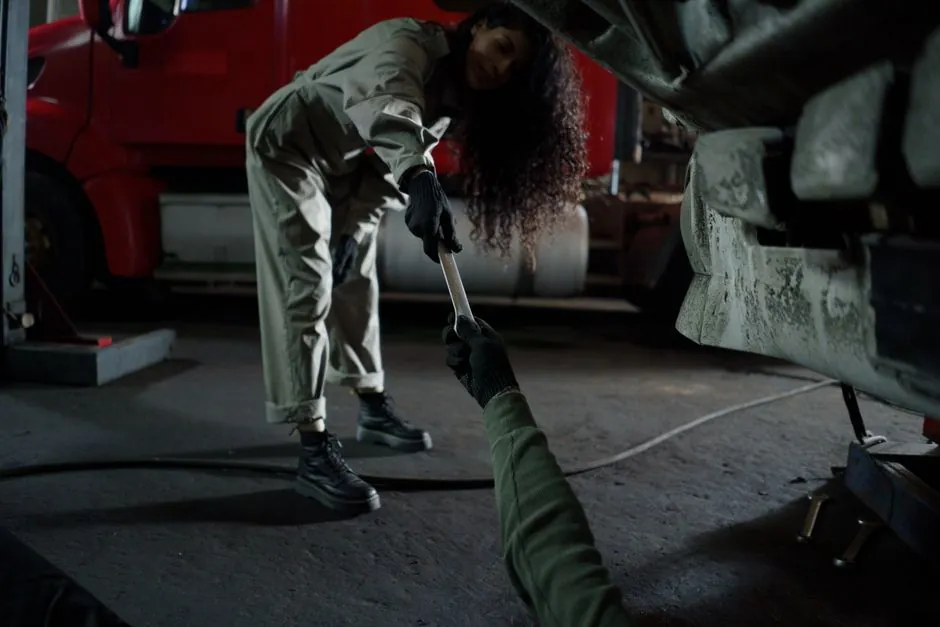
On Class 6 to 8 trucks with lug nuts in the 1 1/8 to 1 1/2 inch range, a 3/4 inch square drive air impact wrench covers roughly 90% of road calls without the ergonomic penalty of 1 inch tools [S1][S3].
Drive size is the socket-coupling dimension on the front of the wrench, not the fastener size: 1/2 inch drive equals 12.7 mm, 3/4 inch drive equals 19.05 mm, and 1 inch drive equals 25.4 mm square, and it controls what socket will physically engage the anvil [S5][S2].
Drive Size, Torque Class, and What Each Tool Will Actually Break Loose
1/2 inch impact wrenches top out around 1100 Nm maximum loosening torque in current cordless models, with fastening torque around 850 Nm, which is the bracket most fleets consider the ceiling for cars, SUVs, and light pickup lug service [S5].
3/4 inch pneumatic guns are positioned for heavy-duty truck, tractor, and machinery work where fasteners sit at the upper end of the 1/2 inch drive's range, and they accept larger impact sockets and impact extensions without cracking [S1][S5].
1 inch drive impacts add the option of an extended anvil "D-handle" or "chainsaw" configuration, which lets a tech rest the tool on the leg when wrestling with Budd-style truck wheels; that ergonomic gain is the single most cited reason professional drivers and mechanics still buy 1 inch for wheel work [S1][S4].
Forum-side field reports from working mechanics and O/O operators note that 1 inch guns "spin those suckers like nothing" on big wheel nuts, but acknowledge that a 1/2 inch "will sometimes work" and a 3/4 inch "will often work" before a 1 inch is required [S1][S4].
Air Supply: Why the Compressor, Not the Wrench, Picks the Tool
Pneumatic impact wrenches need correct air volume at the tool inlet to reach rated torque, and that requirement scales sharply with drive size; 1 inch guns commonly need 3/4 inch air hose and high-CFM supply, and many shop compressors are undersized for them [S1][S2].
An 80 gallon tank air compressor, the size a typical owner-operator or small fleet would own, is borderline for sustained 1 inch impact work; the gun will stall on the dead-end of the tank, and even a 3/4 inch will not deliver full nameplate torque without adequate hose diameter and regulated pressure at the inlet [S4][S1].
Industry guidance is consistent: match the tool's CFM spec to the compressor's free-air delivery at the regulator, with the hose acting as the constraint; undersized supply turns a 1 inch gun into a heavy, expensive 3/4 inch gun [S1][S2].
Socket and Anvil System: 1 Inch Is Not Just a Bigger Bolt

1 inch drive impact wrenches are frequently spline-driven rather than square-driven, and the spline anvil requires matching spline-drive impact sockets, which are a separate, more expensive inventory from standard 1 inch square-drive sockets [S1].
That socket-system split matters on a tire truck: a fleet that already owns deep 1 inch square impact sockets cannot run them on a spline anvil, and buying a new set of 3/4 inch or 1 inch impact sockets in CR-MO or Cr-V steel is a real line-item, not a footnote [S1][S3].
For mixed tractor-and-trailer work, a 3/4 inch drive is the most versatile platform, with broad impact-socket availability and the option to step up to 1 inch only for specific wheel sets that demand it [S1][S3].
Weight, Handling, and Repetitive-Stress Reality
1 inch drive air impact wrenches weigh noticeably more than 3/4 inch guns of equivalent brand and are described in operator forums as "pretty heavy with extended use," with the 1 inch D-handle being the worst offender for shoulder fatigue on a 12-tire change [S1].
3/4 inch "gun-style" impacts are the format most techs reach for first because they get into tight spaces, lug around the bay more easily, and accept standard impact extensions without re-balancing the tool on the operator's leg [S1].
A working mechanic who fits 1 inch drive in the extended-anvil style notes that the tool "is not THAT heavy. barely notice it once you've" developed the muscle memory, which is useful context for a tire tech who is already conditioned to the weight of a 1/2 inch gun and is stepping up to a single fleet truck [S4].
Decision Matrix: 1/2 Inch vs 3/4 Inch vs 1 Inch Air Impact for Truck Tires
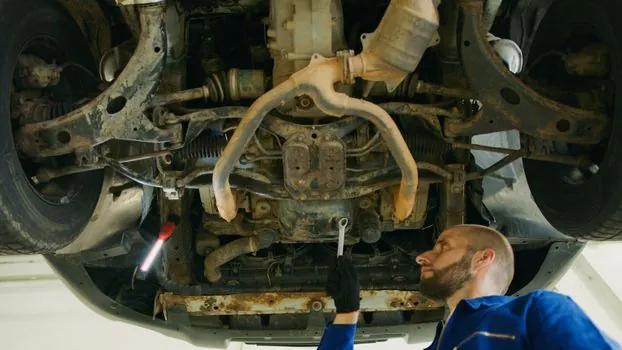
Driven against four decision criteria, drive size picks the tool. 1/2 inch drive is the workhorse for cars, SUVs, and pickups, with peak loosening torque around 1100 Nm and the widest socket ecosystem [S5]. 3/4 inch drive is the correct answer for most Class 6 to 8 truck tire work, given the 1 1/8 to 1 1/2 inch lug range, the easier handling, and the lower air demand; it is the safe fleet spec [S1][S3][S4]. 1 inch drive, especially the extended-anvil D-handle or chainsaw-handle format, is reserved for the heaviest truck wheel assemblies, mine and ag tires, and shop work where the tech is standing in one bay all day on big Budd wheels [S1][S4].
For cost and integration, 1/2 inch wins outright: it shares sockets and air fittings with the rest of the shop, and cordless platforms are mature [S2][S5]. For torque and headroom on big lug nuts, 3/4 inch wins on the cost-to-torque ratio and on operator fatigue over an 8-hour shift [S1][S4]. For pure nut-busting on the worst seized truck wheels, 1 inch wins, but only if the compressor, hose, and socket inventory are already in place [S1][S4].
When 1 Inch Is the Wrong Answer, Even on a Truck
For mobile roadside service, 1 inch drive is the wrong tool: it is too heavy, too air-hungry for a portable compressor, and the D-handle does not fit a kneeling roadside posture. A 3/4 inch gun on a vehicle-mounted 30 to 60 cfm compressor is the standard road-call setup, and 1/2 inch covers the small end of the fleet [S1][S2][S3].
For mixed fleets that include both light pickups and heavy trucks, standardizing on 3/4 inch air impact and a 1/2 inch cordless for the smaller jobs is the lower-total-cost path; buying both 3/4 inch and 1 inch means two socket sets, two hose setups, and two air-demand profiles to manage in the same bay [S1][S5].
For shop electricians and HVAC, an air impact wrench at any of these sizes is overspec; the right tool there is a lighter impact drill or a 3/8 inch cordless wrench, and pulling a 1 inch gun into that workload is wasted mass.
Standards, Sourcing, and Buyer Checks
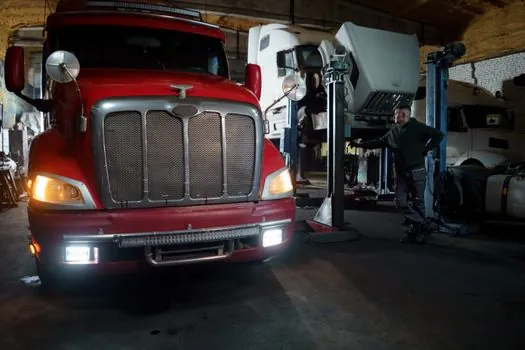
Verify any air impact wrench against its free-speed RPM, maximum torque (both fastening and loosening), impacts per minute, air consumption in CFM at a stated working pressure, and the anvil type: square, spline, or "hog ring" for socket retention [S2].
For used trucks, confirm compressor output before sizing the gun: an 80 gallon tank at a stated CFM will starve a 1 inch gun on long bursts, and 3/4 inch is the realistic ceiling unless the compressor is upgraded in parallel [S4].
Tightening control matters as much as loosening power: the industry advice is to use the impact for removal and a calibrated torque wrench tester or torque-sticks for the final install, which is the only way to stay inside OEM lug-torque spec on heavy truck wheels and avoid wheel-off incidents.
For background on the air tool class and its working envelope, the air impact wrench reference page covers the mechanism and the typical drive-size grid, and the air pick entry sits alongside it as the chipping-class cousin in a shop's pneumatic line.
Trackable signals to watch: any fleet spec sheet for Class 7 to 8 tractors that names 1 inch drive as the standard, OEM service-truck build sheets from major body builders, and ISO 11148-5 pneumatic-tool compliance language on EU-spec guns. A working spec for air quality monitor at the compressor outlet is the right cross-reference for shops seeing tool-stall complaints, since wet air is the most common reason an otherwise-correct 1 inch gun will not deliver rated torque. For related reading on spec-driven tool selection across other work-site equipment, see shotcrete machine maintenance on bridge sites and stud welder safety: PPE, clearance, and circuit rules.