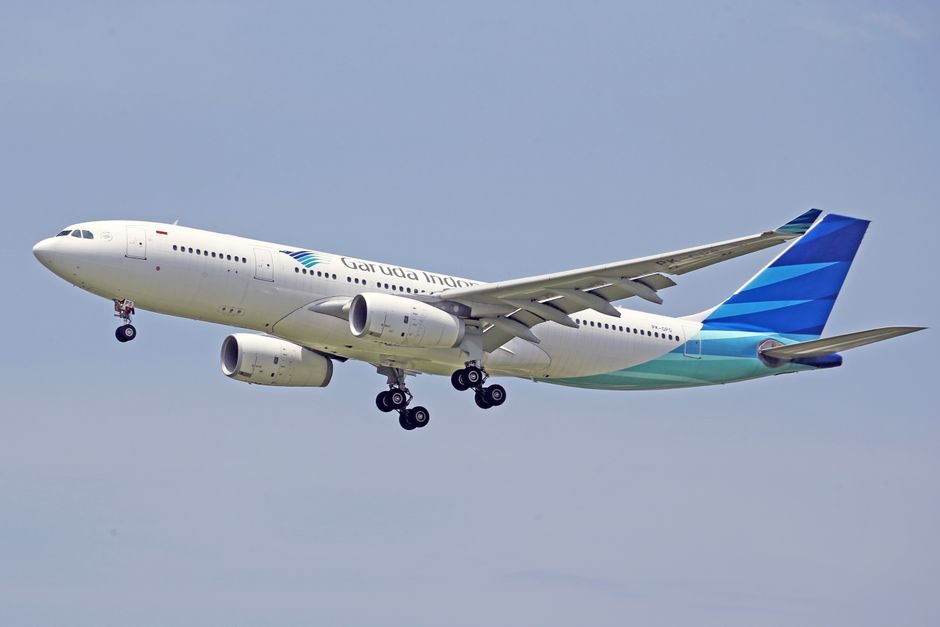
Boeing tops the 2026 headcount table among publicly listed aerospace employers on Built In Colorado's design-company roster, with 170,000 employees spread across 33 offices and a benefits catalogue of 27 items as of the June 2026 snapshot [S1].
The same snapshot positions Boeing across four technology tracks — Information Technology, Software, Cybersecurity, and Design — alongside Defense and Manufacturing, signalling a vertically integrated engineering footprint rather than a pure airframer profile [S1]. On the software side, Oracle E-Business Suite remains the most prominent enterprise resource planning package compared in SourceForge's Middle East aerospace-manufacturing software ranking published 2026-06-08, with reviewers citing support for evolving business models as the headline criterion [S3].
Headcount and Footprint Comparison: Boeing vs the 2026 Field
Boeing's 170,000 employees and 33 offices on the Built In Colorado 2026 list dwarf the typical mid-tier aerospace design firm tracked in the same dataset, where office counts sit in the low single digits and benefits lists rarely exceed 10–15 items [S1]. The 27-benefit count Boeing carries is roughly twice the median observed in the same Built In Colorado cohort, and the company is flagged as "Hiring Now" on the listing, indicating active requisitions across IT, software, cybersecurity and design roles [S1].
For a process engineer reading this for spec context, the takeaway is operational: when qualifying a prime contractor's design-of-record capability, headcount in the 100,000+ band correlates with in-house stress, fatigue, materials and NDT coverage that sub-tier suppliers cannot replicate — a lever already mapped against material spec gates in the 2026 aerospace market forecast.
Enterprise Software Stack: Oracle E-Business Suite Dominance
SourceForge's 2026-06-08 ranking of aerospace-manufacturing software in the Middle East places Oracle E-Business Suite at the top of the sponsored list, with reviewers emphasising its fit for "today's evolving business models" and broad module coverage across finance, supply chain and manufacturing [S3]. The ranking is paginated, with page 3 surfacing long-tail tools beneath the Oracle anchor, a typical pattern where one ERP platform absorbs the majority of qualified buyer shortlists [S3].
For aerospace programmes bound by AS9100 quality management and full traceability from raw stock to flying spares, an ERP with native configuration management, lot/serial genealogy and electronic signature workflows is the decisive selection criterion. Oracle's footprint in this segment is consistent with the broader 2026 enterprise-software picture across regulated industries; for plants specifying pressure transmitters and flow meters against MRO work orders, ERP-driven instrument calibration records are now table stakes rather than a differentiator.
Research Backbone: The MDPI Journal Aerospace in 2026

The MDPI journal Aerospace (E-ISSN 2226-4310) reported a 5-year average impact factor of 2.7 in the 2025-03 CAS upgrade, with 97.00% of its content classified as original research (monograph) versus review, and a Gold OA share of 99.97% [S4]. In the 2025-03 upgrade it sits at CASmajor engineering technology category 3zone / subcategory engineering:aerospace 3zone, and in the 2023-12 upgrade at major engineering technology category 3zone / subcategory engineering:aerospace 2zone — a stable mid-tier venue for open-access aerospace engineering work [S4].
For engineers sourcing peer-reviewed data on airframe materials, propulsion CFD, or GNC algorithms, this venue's near-total Gold OA model (99.97%) means paywalled access rarely blocks the underlying PDFs — a practical advantage when a procurement spec demands a literature review alongside mechanical test data. The 97.00% original-article ratio also implies that reviewers and editorial board see a steady stream of primary experimental and computational work, not survey re-summaries.
Selection Criteria: How to Read 2026 Aerospace Vendor Lists
Built In Colorado's 2026 design list filters on three hard signals: office count, employee count, and benefits/perks count, with Boeing's 33/170,000/27 triple representing the dataset's high-water mark [S1]. SourceForge's 2026-06-08 ranking filters differently, weighting sponsored placement alongside user reviews and feature checklists, which is why Oracle E-Business Suite anchors page 3 of the Middle East aerospace-software list [S3].
CASzone and impact factor remain the dominant filters for the academic layer, with the MDPI Aerospace journal's 2.7 5-year IF and 3zone/2zone trajectory defining the mid-tier benchmark against which new submissions are evaluated [S4]. The decision blueprint for a 2026 aerospace specifier therefore splits cleanly: corporate capability (Built In-style lists), software stack (SourceForge-style rankings), and research substrate (CAS/IF metrics) — each with non-overlapping evidence.
Who the 2026 Aerospace Data Is For — and Who Should Skip It

This triad of data points is calibrated for procurement engineers, programme managers, and technical leads at primes and Tier-1s who need a defensible shortlist of vendors, software platforms, and peer-reviewed sources before locking a 2026–2027 work package [S1][S3][S4]. It is less useful for retail investors looking for ticker-level performance, since Built In headcounts lag financial filings by a quarter and SourceForge rankings measure software mindshare rather than revenue.
Engineers specifying flight-critical hardware — actuators, industrial valves for fuel and hydraulic lines, PLC controllers for ground support — should triangulate the corporate list with the OEM's AS9100 cert scope, the software list with the platform's DO-330/DO-178C tool-qualification notes, and the journal list with the specific paper's dataset and code-availability statement, not the impact factor alone.
Limitations and Failure Modes in the 2026 Snapshot
Three failure modes sit inside the data: (1) Built In Colorado is a regional (Colorado-anchored) view, so a 170,000-employee Boeing entry coexists with much smaller regional design shops, biasing any "top 10" interpretation toward firms that maintain a Colorado presence [S1]; (2) SourceForge page 3 is a sponsored-heavy slice of the Middle East aerospace-software market, so Oracle's dominance on that single page does not generalise to North America or Europe without a parallel dataset [S3]; (3) the CASzone snapshot for MDPI Aerospace is dated 2025-03, and any 2026 acceptance or rejection decision should cross-check the most recent upgrade rather than rely on the 2.7 5-year IF in isolation [S4].
None of these caveats invalidates the headline numbers — 170,000 staff, 33 offices, 27 benefits [S1]; Oracle E-Business Suite atop the SourceForge page 3 list [S3]; 2.7 5-year IF, 97.00% original-article share, 99.97% Gold OA [S4] — but each is a known precision limit that a spec engineer should flag in the audit trail.
Trackable next-node signals to watch: the next Built In Colorado 2026 mid-year refresh for changes in Boeing's 170,000/33/27 triple [S1], the SourceForge Q3 2026 ranking refresh for Oracle's continued page-1 placement in the Middle East aerospace category [S3], and the CAS 2026-12 upgrade for any movement in MDPI Aerospace's 3zone/2zone standing [S4]. The satellite-side supply chain — flat-panel terminals, HTS payload, LEO constellation build-out — is a parallel 2026 track worth cross-referencing against the LEO and flat-panel terminal shift for sub-tier material demand.