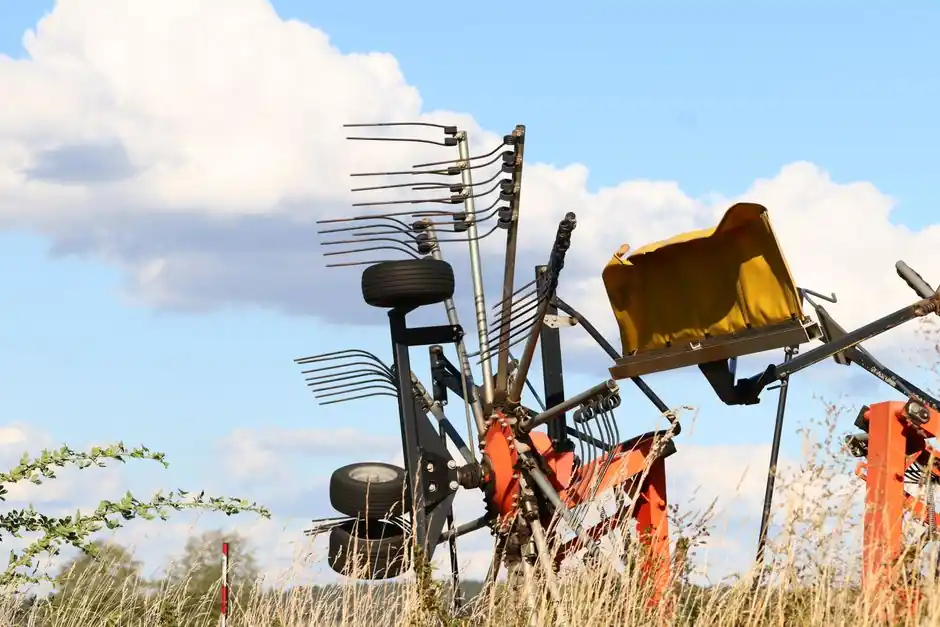
Agricultural machinery component shortages in 2026 are running on two parallel tracks: high-wear steel parts (disc blades, hammer blades, plough shares) are constrained by raw-material grade and hardness variability rather than unit count, while smart-farming electronics (GPS guidance, sensors, controllers) are constrained by supplier concentration and projected demand of 150,000 GPS units and 120,000 sensor units in 2026 [S4]. The 35-45% collapse in 2025 new-equipment sales has also thinned dealer inventory [S1], so replacement buyers are chasing a smaller pool of new machines plus an aging fleet.
The farm implements market was valued at USD 33.91 billion in 2024 and is projected to reach USD 61.18 billion by 2033 at a 7.1% CAGR, with Asia Pacific holding 36.7% of 2024 revenue [S3]. That headline growth hides a near-term squeeze: typical in-field replacement cycles for soil-engaging parts run 250-400 working hours [S3], so any 2025 fleet that kept working through the downturn is now hitting a wear cliff at the same time dealers are rebuilding stock from a low base.
Where the shortage actually is: high-wear steel parts
The bottleneck on the steel side is metallurgy, not tonnage. Disc harrow blades specified for abrasive soils are commonly made from 30MnB5 boron steel at 48-52 HRC, in 4-8 mm thickness and 16-24 inch diameters [S3]. Hammer blades for rotary tillers run boron or alloy steel at 38-45 HRC, and MB plough blades sit in the same 38-52 HRC envelope as the broader wear-part family [S3]. When hardness drifts outside that window, edge life collapses in sandy soil; when it climbs too high, chips initiate in rocky ground.
Sandy soils accelerate edge erosion while clay-heavy soils raise torque and structural load, which is why a single part can have a 250-hour life on one farm and a 400-hour life on the next [S3]. For buyers, the procurement risk is not "can I get a blade" but "will the heat-treat batch hit 48-52 HRC across the full heat, with uniform through-thickness hardness." Mills that skip lot-level hardness mapping are the ones producing the shortage in practice, even when shipping volume looks healthy.
Where the shortage is different: smart-farming electronics
The 2026 demand stack for electronics-led spares is concentrated and steep: GPS guidance systems at a projected 150,000 units, sensor technology at 120,000 units, and a third tier of controllers and telematics modules that ride on the same supply chain [S4]. These parts are not interchangeable with steel wear parts; they require firmware compatibility, EMC compliance, and dealer-level programming tools, which is why distributors are being told to "source alternative suppliers for high-tech components" before the 2026 season [S4].
Compare that with the steel side: a 30MnB5 disc blade is a commodity-grade wear part with published hardness bands, while a GPS receiver is a vendor-locked module with no drop-in second source. The shortage pattern is therefore a margin compression on commodity steel parts and a hard allocation on branded electronics. Procurement teams that treat both with the same dual-sourcing playbook will mis-allocate effort.
Selection criteria for the constrained part families
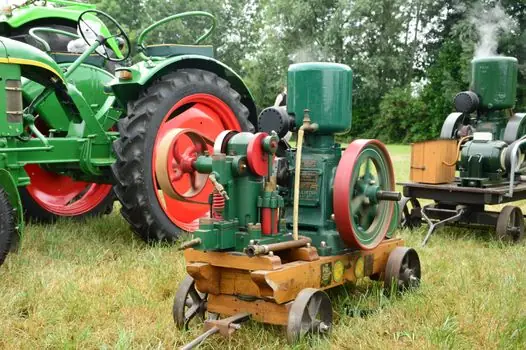
For high-wear tillage parts, the four criteria that actually separate a good batch from a shortage-driven bad one are: material grade declaration (boron vs high-carbon, with 30MnB5 called out specifically for disc blades), hardness range (38-45 HRC for hammer blades, 48-52 HRC for disc blades), dimensional envelope (4-8 mm thickness, 16-24 inch diameter for discs), and replacement-cycle rating against soil type (250-400 working hours) [S3]. Any quote that omits the HRC window or substitutes "hardened steel" for a named grade is a flag to walk away or insist on a mill cert.
For smart-farming electronics, the criteria shift to firmware version pinning, connector and CAN-bus protocol compatibility with the target tractor/harvester, ingress protection for the field environment, and the OEM's own service-parts program status (active, end-of-life, or remanufactured-only) [S4]. A unit that is technically compatible but locked out of the OEM's telematics subscription is functionally unavailable. Buyers should ask for the firmware family and the active subscription SKU in writing, not just the part number.
Use cases and who should (and should not) stock what
Large-scale commercial farms running tractors above 150 hp through deep tillage should hold 2-3 sets of disc blades, hammer blades, and plough shares per unit, because their operating hours hit the 250-hour end of the replacement window under sandy-soil conditions [S3]. Smallholder operations below 50 hp should rely on dealer stock for high-spec steel parts and focus their working capital on electronics that lock them into a precision-agriculture workflow, where the 150,000-unit GPS demand spike will hit dealer shelves first [S4].
Distributors and importers should treat the two shortage tracks separately. A European Union-bound distributor needs an EORI number, correct HS/TARIC classification, a Single Administrative Document declaration, and verification of applicable product-safety requirements before any Spanish or EU shipment clears customs [S2]. That compliance load is identical for a USD 20 disc blade and a USD 1,200 GPS receiver, so the bottleneck is documentation throughput, not part cost. Sourcing from outside the EU and shipping into Spain or another EU member state also requires the importer to act as importer of record, which means liability for misclassification, including reassessed duties and administrative penalties [S2].
Limitations, failure modes, and what the data does not yet show
The 2025 new-equipment sales drop of 35-45% [S1] is reported as a year-over-year range, not a regional split, so the geographic distribution of the shortage is not directly readable from the headline. The 150,000-unit and 120,000-unit demand projections for GPS and sensors [S4] are vendor-published forecasts, not installed-base audits, so a 20% miss in either direction is plausible without invalidating the allocation signal. The farm implements market sizing of USD 33.91 billion in 2024 and USD 61.18 billion by 2033 [S3] is a top-line number and does not break out the aftermarket vs OEM split, so the share of that growth that actually flows through independent distributors versus dealer networks is not pinned down.
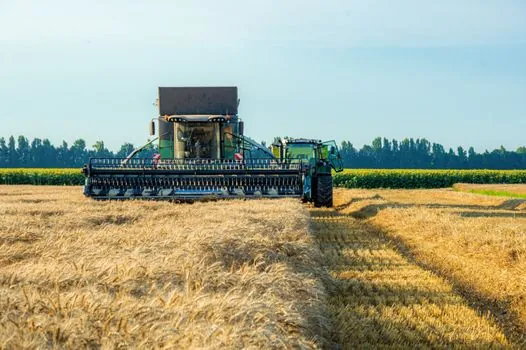
For combine harvester wear parts, the dominant failure modes are cutting-system blade wear from direct crop contact, concave and threshing-drum friction in the grain separation stage, conveyor-chain fatigue in the feeding and transfer stage, and sieve/grate clogging in the cleaning stage [S5]. Each of these maps to a different replacement interval, which is why combine harvester spares are sourced as continuous replenishment rather than one-time orders, and why distributors and bulk buyers need stable multi-supplier pipelines rather than spot buys.
Procurement playbook for Q4 2026 and into 2027
Three signals are worth tracking into the next two quarters. First, watch for any rebound in 2025-model used equipment listings, because the used-equipment surplus that the 35-45% sales drop created [S1] is the supply valve for buyers who can accept higher-hour machines. Second, watch for 30MnB5 boron steel spot-price moves out of Asia Pacific, which holds 36.7% of 2024 farm-implements revenue [S3], because that region is both the largest end market and a major production base. Third, watch OEM service-parts program announcements for GPS and sensor families, because the 150,000/120,000-unit demand gap [S4] will be closed either by allocation, by remanufactured supply, or by delayed deliveries, and the chosen path determines whether the shortage eases in spring 2027 or persists into 2028.
The 2026 picture is therefore not a single shortage but two: a metallurgy-quality shortage on commodity wear parts that is solvable with better incoming inspection, and an allocation shortage on smart-farming electronics that is only solvable with multi-vendor qualification started now. The Sancheng 2026 practical guide and the JCBL Agri global-demand roundup both flag supplier diversification as the dominant 2026 response, and that guidance is consistent with the demand-side numbers above. For context on how adjacent component supply chains are responding to similar pressure, see this write-up on the aerospace investment casting capacity squeeze and this note on AM consolidation and capital rotation in 2026, which trace the same dual-track shortage pattern in higher-spec industries.
Spec-level background on the components involved: control panel component, construction machinery and equipment, and pressure transmitter.