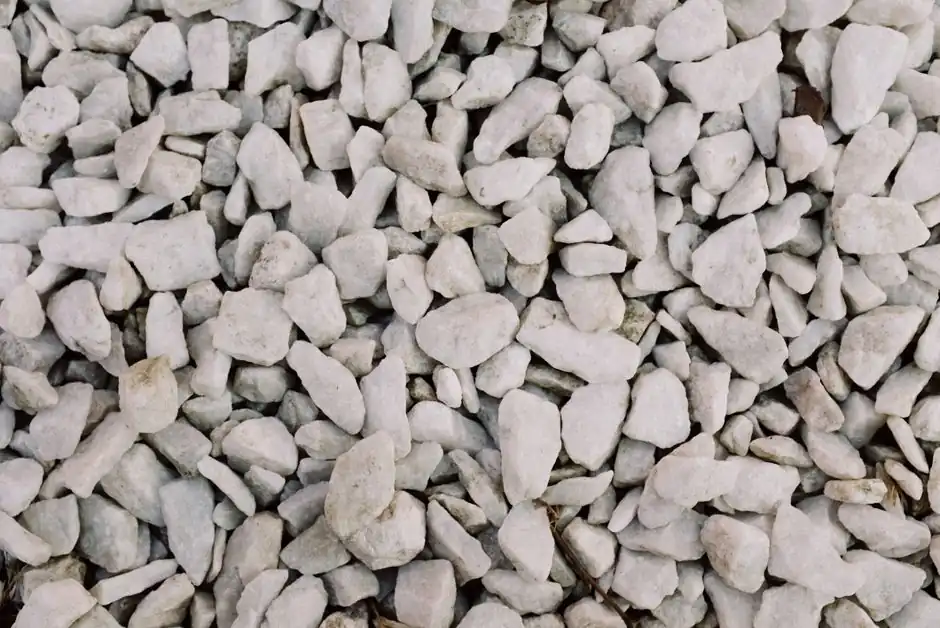
About 50 billion tonnes of construction-grade sand is consumed each year worldwide, a volume that has pushed aggregate prices to more than quintuple their 1978 level on the U.S. Bureau of Labor Services Producer Price Index for sand and gravel [S4]. Urban growth, hydraulic-fracturing proppant demand, and container-glass output all draw on the same narrow band of coarse, water-swept grains, and that single bottleneck is reshaping how ready-mix plants, glassworks, and construction machinery and equipment fleets are specified.
The headline "running out of sand" is technically wrong, because quartz is one of Earth's most abundant minerals, but the bottleneck is real and lies in grain shape and grading, not absolute volume [S2][S4]. For civil engineers and glass plant buyers, the practical problem is the availability of ISO 14688-acceptable coarse sand near the project, not the existence of silica worldwide.
Why the Shortage Is a Particle-Size Problem, Not a Volume Problem
Under the Unified Soil Classification System, engineering "sand" requires at least 50% of particles passing a 4.75 mm (No. 4) sieve and no more than 50% passing a 0.075 mm (No. 200) sieve, with "clean sand" holding fines below 12% [S2]. That window excludes the smooth, wind-rounded desert dune sand, which behaves like ball bearings in a cement matrix and cannot develop the bond strength concrete needs.
Only fluvial, glaciofluvial, and marine sand with angular to sub-angular grains meets structural-concrete and float-glass feedstock requirements, and these particular sources are concentrated in river deltas, floodplains, and shallow seabeds already under environmental protection [S1][S4]. The result is a regional mismatch: cities like Singapore are planning to grow land area by roughly 20% using imported fill, while inland aggregate plants ship material hundreds of kilometres by truck or barge [S5].
End-Use Split: Concrete, Mortar, Glass, and Frac Proppant
More than 75% of dredged sand goes to construction as the key fine aggregate in concrete, mortar, and render, with the remainder feeding flat-glass furnaces, container-glass cullet lines, and silicon-metal production for semiconductors and solar PV [S1][S3]. For a standard 25 MPa ready-mix, fine aggregate typically makes up 25%–35% of the total mix mass and directly controls workability, shrinkage, and 28-day compressive strength [S2].
Flat-glass and container-glass furnaces need a much tighter silica specification, with Fe2O3 held below 0.05%–0.10% for clear float and alumina kept low to avoid cord and seed defects, which is why architectural and automotive plants still pay premium prices for washed, beneficiated silica sand even when concrete-grade material is in surplus [S1]. Hydraulic-fracturing operations add a third pull on the same coarse fraction, with Northern American shale wells historically consuming tens of millions of tonnes of 20/40 and 40/70 mesh frac sand per year [S4][S5].
Selection Criteria: Matching Aggregate Grade to End Use

For a project engineer choosing material, the decision is driven by four measurable parameters, with each grade band tied to a sieve envelope and a contaminant ceiling. Comparing the main options side by side clarifies why no single source can serve every consumer: [S2]
Construction-grade concrete sand (ASTM C33 fine aggregate): FM 2.6–3.1, less than 5% passing the 75 µm sieve, mica below 2%, chloride under 0.06% for reinforced work. Priced regionally at roughly 1×–2× the local fill-sand benchmark and accepted by ready-mix plants with minimal rehandling.
Mortar and plaster sand: finer FM of 1.6–2.2, with tighter silt controls (typically under 4% passing 75 µm) to avoid shrinkage cracking in render and to keep water demand low.
Container and float-glass silica: 99.5%–99.8% SiO2, Fe2O3 below 0.10% for clear float, alumina under 0.20% for container, beneficiated through attrition scrubbing and magnetic separation; this grade is generally 2×–4× the price of C33 fine aggregate at the quarry gate and is rarely substituted in architectural plants.
Frac-sand proppant: 20/40, 40/70, or 100 mesh round-grain silica with high crush resistance (K-value under 10% fines at 7,000 psi closure stress), API RP 19C labelled, and is functionally interchangeable with construction sand only when mines have spare capacity.
Failure Modes When Substitution Goes Wrong
Using unwashed or beach-derived sand in structural concrete has produced well-documented alkali-silica reaction (ASR) failures, where reactive silica combines with Portland-cement alkalis and forms an expansive gel that cracks aggregate and paste within 5–15 years [S2]. Engineered mitigation, including low-alkali cement, supplementary cementitious materials such as fly ash or slag, or lithium admixtures, is rated against ASTM C1260 and C1293 mortar-bar tests, but a properly graded, non-reactive aggregate is still the first line of defence.
In glass furnaces, iron contamination above the 0.10% Fe2O3 ceiling shows up as a greenish tint in clear float, and alumina spikes above 0.30% can devitrify the melt and seed the ribbon, costing a line 2%–4% in yield [S1]. Both failure modes are expensive to detect after the fact: an ASR-affected bridge deck costs several hundred dollars per square metre to mitigate, and a contaminated glass melt can scrap an entire 24-hour pull.
Standards, Sourcing, and What Specifiers Should Track
For concrete fine aggregate, the controlling documents are ASTM C33 (Standard Specification for Concrete Aggregates) and EN 13139 in Europe, with regional equivalents including IS 383 in India and GB/T 14684 in China. For glass feedstock, IS 488, BS 2975, and the higher-purity grades in vendor datasheets are the practical references, with the more familiar lighting equipment and electric lamps borosilicate and soda-lime families drawing from the same washed silica stream that feeds float lines. [S1]
For glass fiber reinforcement, E-glass and S-glass producers require still tighter Fe2O3 ceilings (typically under 0.04%) and lower loss-on-ignition, which is why the reinforcement-grade silica trade runs on long-term offtake contracts rather than spot pricing. Specifiers should monitor three signals: regional quarry permit decisions, U.S. BLS PPI sand-and-gravel series for trend confirmation, and frac-sand rig counts as a leading indicator of cross-sector price pressure; together they have moved the needle on structural concrete bids by mid-single-digit percentages year over year in tight markets, consistent with the log-haul economics covered in the bridge-formula truck-loading analysis and the dynamic-compaction print-spacing guidance for fill replacement at /news/print-spacing-and-blow-counts-in-dynamic-compaction-2026-design-read.html.