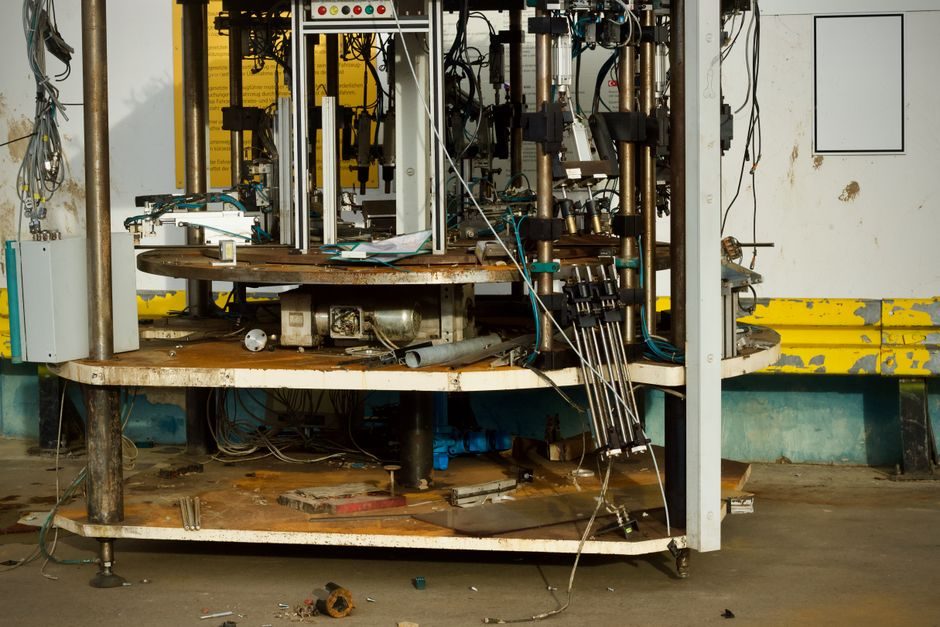
Industrial Ethernet/IP hardware — switches, routers, gateways, modules, converters and extenders — accounted for 74.1% of segment revenue in 2020 within a $9.20B market growing at a 10.1% CAGR over 2026–2031 [S1].
North America held 37% of that 2020 share on the back of early Ethernet adoption in automotive and discrete manufacturing, while end-user demand spans Energy & Power, Oil and Gas, Pharmaceutical, Aerospace and Defense, Transportation/Logistics, and General Manufacturing [S1].
Protocol Stack: EtherNet/IP, Modbus TCP, and PROFINET Co-Exist on the Plant Floor
Industrial Ethernet is engineered for deterministic communication among machine controllers, routers/gateways, actuators, sensors and other processing nodes in factory environments, distinct from office IT Ethernet [S1].
Schneider Electric's Modicon M580, released in 2013, remains a representative example: a single PAC chassis that supports both EtherNet/IP and Modbus TCP natively, so plants mixing legacy Modbus I/O with newer CIP-based devices do not need separate backbones [S5]. Rockwell Automation's 2026 product directory similarly lists Industrial Network Products and FactoryTalk Linx as the integration spine for EtherNet/IP-based Logix controllers and third-party I/O [S3]. This multi-protocol reality is why a spec sheet that only mentions "Ethernet" is not enough — buyers must fix the protocol layer (CIP, Modbus TCP, PROFINET, EtherCAT) before sizing switches and cabling.
Hardware Spec Boundaries: Unmanaged vs Managed vs PoE Switches
By offering, the Industrial Ethernet/IP market breaks into Hardware, Software and Services, with Hardware holding 74.1% in 2020 thanks to switches, hubs, routers, bridges, modules, converters and extenders [S1].
Within switches, plant-grade spec sheets typically separate unmanaged (plug-and-play, no VLAN/IGMP), managed (VLAN, QoS, ring redundancy such as MRP/DLR, port mirroring, IEEE 1588 PTP), and PoE variants (802.3af/at/bt for Class 0–8 powered devices up to ~90 W per the 802.3bt amendment) — each tier trading cost per port against deterministic traffic handling and field-device power budget. Marvell's September 2019 launch of High-Port Multi-Gigabit Automotive Ethernet Switches showed how gateway-class silicon (routing, security, multi-gig uplinks) is migrating from automotive into rail, factory automation and large gateway applications [S1]. For a deeper comparison of how instrumentation software stacks wrap around these networks, see the automation software stack comparison.
Deployment Topology: Cloud, On-Premises, and Edge Gateways
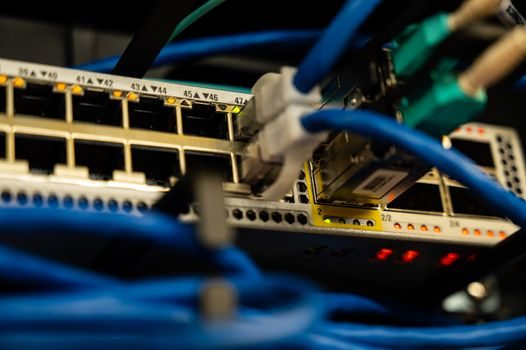
IndustryARC segments Industrial Ethernet/IP deployment into Cloud and On-Premises, with organization-size cuts across Small, Medium Enterprise and Large Enterprise [S1].
For a related reference on how on-the-floor instrumentation is being re-specified in 2026, the measuring-instrument spec landscape breaks down smart sensors and edge gateways. In practice, brownfield plants still anchor on on-premises architectures with edge gateways pushing filtered data upward, while greenfield Industry 4.0 builds blend on-prem controllers with cloud historians — meaning switch selection must support both southbound (CIP/Modbus/OPC UA) and northbound (MQTT/HTTPS, REST) traffic classes without head-of-line blocking. Rockwell's 2026 site flags FactoryTalk Historian, FactoryTalk Analytics, and the Thingworx IIoT edge platform as the software surface area over that same network [S3][S4].
Selection Criteria: Bandwidth, Determinism, Redundancy, Power, and Environmental Rating
Selection for industrial Ethernet hardware collapses onto five engineering axes: (1) port speed (10/100 Mbps vs 1G vs 2.5G/5G/10G uplinks, with multi-gig now visible in gateway silicon) [S1]; (2) determinism (cut-through switching, QoS/DSCP, IEEE 1588 PTP for sub-microsecond motion sync); (3) redundancy protocol (MRP, MRP master/client, DLR for EtherNet/IP ring recovery under 3 ms, RSTP/STP fallback); (4) PoE budget per port and total (Class 0–8 under IEEE 802.3af/at/bt); and (5) environmental rating — operating temperature, humidity, shock/vibration, conformal coating, and hazardous-area approval such as ATEX/IECEx for zone-classified sites. On the protocol side, EtherNet/IP rides CIP over standard TCP/UDP, Modbus TCP is a lightweight request/response over TCP port 502, and PROFINET adds real-time (RT) and isochronous real-time (IRT) classes — they are not interoperable, so gateway or hybrid-PAC hardware is needed where two protocols meet.
Use Cases and Vertical Mapping
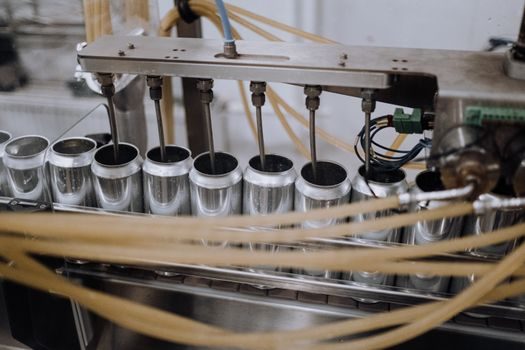
Industrial Ethernet/IP hardware is the most-deployed backbone in automotive body-in-white and final assembly lines, where deterministic I/O on EtherNet/IP or PROFINET synchronises robots, torque tools and vision systems [S1]. In process plants, the same switches and routers carry Modbus TCP and EtherNet/IP between PACs (such as Modicon M580) and remote I/O over copper or fibre, often crossing ATEX/IECEx boundaries through certified media converters [S5]. Energy & Power, Oil and Gas, Pharmaceutical, Food & Beverage, and Water/Wastewater rely on the same hardware under harsher environmental specs (extended -40 °C to +75 °C ranges, IEC 61850-3 substation rating, IEEE 1613 utility rating) [S1].
Limitations, Failure Modes, and Sourcing Constraints
Industrial Ethernet is not a drop-in for office IT: unmanaged switches break determinism, QoS and ring recovery, and a single non-IE switch on a DLR or MRP ring will collapse redundancy. Cabling and connector choices (M12 D-coded for 100 Mbps, M12 X-coded for 10G, IP67 sealing) are part of the switch spec, not an afterthought. Supply of long-life components (10–15 year product lifecycles) and cybersecurity certification (IEC 62443-4-2 on networked devices) increasingly drive sourcing more than raw port price [S3]. Buyers should validate the exact protocol firmware revision and the redundancy recovery time, not just the port count, before approving a BOM.
Track for the next cycle: (a) 802.3bt PoE uplift to power larger PoE-driven field devices such as smart camera heads and IIoT sensors, (b) OPC UA over TSN convergence that may collapse EtherNet/IP, PROFINET and EtherCAT onto shared TSN bridges, and (c) IEC 62443-4-2 hardening requirements rolling into tender specs across European process plants.
For the relevant spec sheets and selection criteria, see additive manufacturing material, and smart meter.