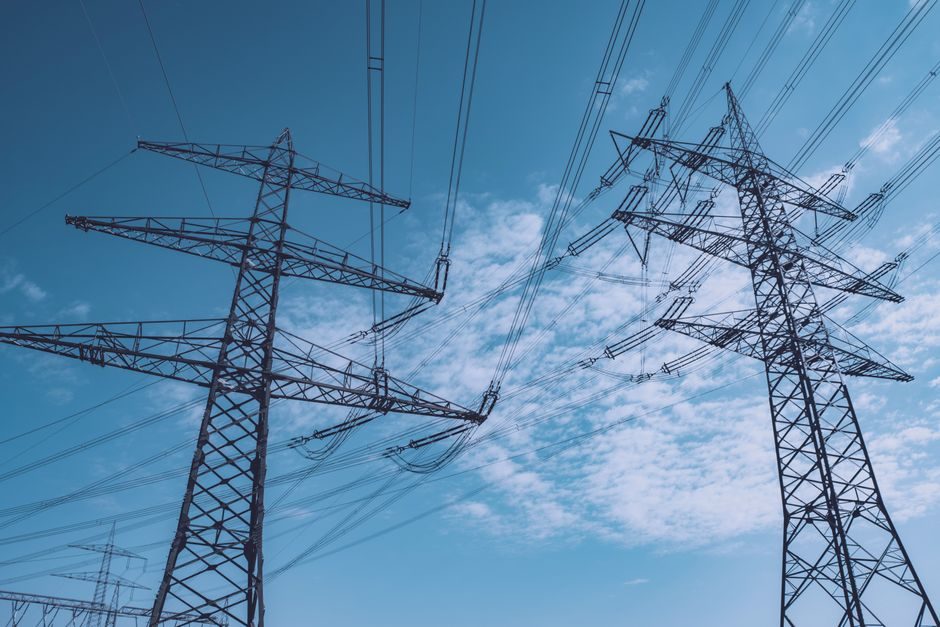
Hyundai Electric's Alabama facility is positioned as a US growth anchor for power and distribution transformers, with capacity scaled against rising grid-modernisation and data-centre load forecasts [S1].
The 2026 demand picture is being driven simultaneously by utility T&D upgrades, hyperscale data-centre build-outs, and a parallel spec migration toward dry-type and ester-fluid designs, as covered in the broader power transformer market outlook for 2026. Distribution-transformer market value reached US$ 20.1 Billion in 2023, providing the baseline scale against which current capacity announcements are measured [S2].
US Capacity Build-Out: Hyundai Electric's Alabama Anchor
Hyundai Electric is cited as a key beneficiary of US transformer demand growth, with the Alabama plant acting as a domestic production node for power and power transformer units serving grid upgrades and data-centre interconnection queues [S1]. The 22 April 2026 industry note frames the facility as the most visible Korean-owned capacity expansion into North America and links output growth directly to data-centre electrification rather than purely to utility replacement cycles [S1]. For a process engineer reading this, the practical consequence is shorter lead times on 69 kV to 230 kV class units and a new domestic option for utilities that previously leaned on Mexican or European imports.
Grid-modernisation spending in the US, driven by ageing 1960s-1970s transformer fleets, FERC Order 2222 distributed-energy aggregation rules, and hyperscaler behind-the-meter procurement, is the demand substrate that makes the Alabama ramp viable [S1]. The same hyperscaler load profile is also reshaping upstream component demand for power semiconductor 2026: IGBT modules, SiC adoption and sourcing gates, since rectifier and UPS stages feeding data-centre buses need upgraded switching devices. Alabama's role is therefore not standalone — it sits inside a coupled supply chain spanning grain-oriented electrical steel, MV switchgear, and solid-state substations.
Distribution-Transformer Demand Baseline and Growth Vectors
The global distribution-transformer market reached US$ 20.1 Billion in 2023, and IMARC's 2024-2032 forecast tracks continued expansion tied to grid-extension, renewable interconnection, and urbanisation in South and Southeast Asia [S2]. For 2026, the year-on-year growth vector is concentrated in pad-mount and dry-type transformer classes serving commercial buildings, EV charging depots, and rooftop-solar step-up, rather than in legacy pole-mount replacements alone [S2].
Specifiers evaluating 2026 distribution-transformer orders should compare the main construction options against four decision criteria: dielectric fluid, fire-load rating, lifecycle CO2 footprint, and indoor-versus-outdoor mounting. Mineral oil remains the cost baseline; natural-ester (FR3, Midel eN) and synthetic-ester fluids raise the fire point above 300 °C and are widely specified for indoor, tunnel, and offshore-wind substations; cast-resin dry-type eliminates the oil fire-load entirely and is now common in data-centre MV rooms up to 36 kV [S5]. The trade-off is clear: dry-type units cost 1.4-1.8× the mineral-oil equivalent at the same kVA, but they remove the bunding, oil-water separation, and soil remediation scope that is now standard under EU and US environmental rules for indoor installations [S2].
Eco-Fluid and Dry-Type Migration: 2026 Spec Levers

Ester-fluid retrofill of existing mineral-oil units is now an established practice for extending life and raising fire safety on ageing 110 kV-class power transformers, with ester dielectric breakdown strength and moisture tolerance covered in OEM technical guidance [S5]. The 2026 procurement signal is that utilities in the EU, Japan, and parts of the US are writing ester-compatible clauses into new-build tenders, citing fire-point advantages and reduced spill containment scope [S2].
Dry-type transformer capacity is also expanding, driven by data-centre MV room builds where the absence of a flammable dielectric simplifies building permit and insurance underwriting. The decision matrix for a 2026 specifier on a 2,500 kVA, 11 kV/415 V indoor transformer looks like this: (1) cast-resin dry-type for tight indoor footprints and zero oil fire-load; (2) natural-ester-filled pad-mount for outdoor or rooftop installations needing a higher fire point than mineral oil; (3) conventional mineral-oil for the lowest capex where site environmental rules allow [S2][S5]. The first sentence of any 2026 RFP technical schedule should bind this choice to a stated installation location and fire-load envelope, not to a brand, to keep bids comparable.
Digital Monitoring and Transformer Testing Equipment
Online dissolved-gas-analysis (DGA) sensors, bushing tan-delta monitors, and fibre-optic winding hot-spot probes are now standard fit on new 230 kV and above units, and increasingly retrofittable on units down to 69 kV [S3]. The 2020-2026 global transformer testing equipment industry forecast report tracks rising demand for partial-discharge detectors, frequency-response analysers, and on-line DGA instruments as utilities move from time-based to condition-based maintenance [S3].
Process engineers specifying 2026 testing equipment should require IEC 60270-compliant partial-discharge measurement with a stated background noise floor in picocoulombs, and DGA interpretation per IEC 60599 Duval-triangle method, because proprietary alternative methods break comparability across a fleet [S3]. The economic argument is hard: unplanned failures of a 400 MVA unit cost a utility US$ 1-3 M in replacement energy plus contractual penalties, and continuous monitoring pays back inside one avoided failure on most transmission-class units [S3].
Adjacent Industrial Load: What Transformer Specs Mean for Plants
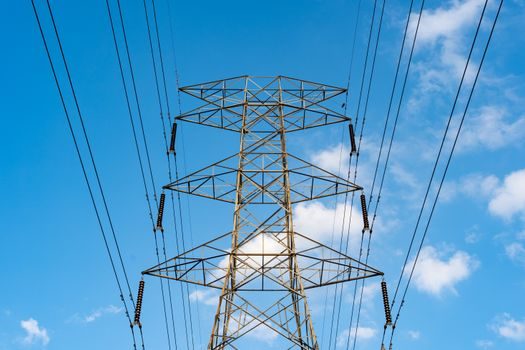
Industrial users accounted for roughly 42% of global electricity consumption in 2018, with a 0.9% annual growth rate, meaning industrial MV and LV transformer fleets are growing in absolute terms even where industrial output growth is flat [S5]. A 2026 plant electrification project — adding heat pumps, induction melting, or electrolyser load — needs the upstream power transformer sized for harmonic and inrush duty, not just nameplate kVA, because VFD-driven loads can push the K-factor to K-20 on the LV side [S5].
Specifying K-rated transformers, or harmonic-mitigating transformers with a K-factor of K-13 or K-20, is now standard for plant LV networks feeding large VFD clusters, and the same procurement path overlaps with the power-electronics supply chain covered in IGBT market 2026: module pricing, SiC displacement and spec levers.
Standards, Limitations and Sourcing Constraints
Three standard families dominate 2026 transformer procurement: IEC 60076 for power transformers, IEC 61558 for small power units, and IEEE C57 for North American oil-immersed distribution units, with energy-efficiency classes anchored in EU 548/2014 Tier 2 and DOE 10 CFR 431 for the US [S2]. Eco-fluid designs must still meet the same dielectric and temperature-rise tests as mineral-oil units, and the OEM test report should be checked against the actual installed fluid, not a generic IEC 60076 certificate [S5].
The dominant 2026 constraints are not technical but supply-chain: GOES (grain-oriented electrical steel) allocation, copper conductor availability, and skilled winder labour remain the lead-time drivers, with 230 kV and above units quoted at 18-30 months for many North American utilities [S1]. Engineers reading the Hyundai Electric Alabama note should treat it as a credible relief valve for 69-230 kV demand but not yet as a solution for 345 kV and 500 kV EHV units, which remain bottlenecked at a small set of global suppliers [S1]. The next data point to watch is Hyundai's Alabama capacity utilisation rate in Q3 2026 quarterly disclosures, and any DOE or IRA-funded second-source announcement from a US or Mexican producer in the same window.
For component-level specifications, see pressure transmitter.