
A 60 J demolition hammer delivers twice the nominal impact energy of a 30 J model, making it the stronger choice for reinforced concrete, thick foundations, and sustained professional breaking [S1].
The comparison applies to impact-only demolition hammers: assess joules per blow, blows per minute, operating mass, permitted working direction, and tool-holder compatibility rather than motor wattage alone [S1][S5].
30 J vs 60 J: Core Performance Difference
Impact energy is the energy delivered in one blow, while motor power in watts describes electrical input; the two ratings do not provide interchangeable measures of breaking performance [S1]. A 60 J rating therefore indicates a substantially more energetic class than a 30 J rating, but it does not establish a guaranteed breaking rate because blow rate, chisel geometry, operator technique, and concrete strength also affect results [S1][S5].
The cited guidance says 8–20 J is usually enough for most home renovation projects, while heavy concrete breaking, reinforced concrete, and professional demolition work call for 20–40+ J [S1].
For compact comparisons, rotary hammers generally use combined rotation and percussion, with listed impact-energy ranges of 1.5–20 ft-lb, while demolition hammers use straight impacts and are listed at 15–75 ft-lb [S3]. A rotary hammer is the correct reference where precise holes matter; a demolition hammer is intended to destroy or fracture material rather than produce a finished hole.
Decision Matrix: Energy, Mass, Workload and Access
On impact energy, 60 J leads by 100% relative to 30 J. On mass, no valid comparison can be made from joules alone because manufacturers specify weight separately and impact energy does not determine mass [S5]. On workload, both the 30 J and 60 J classes fall within the cited 20–40+ J range for heavy concrete breaking, reinforced concrete, and professional demolition work [S1]. On access, the lighter machine is generally easier to control, but the exact model weight and permitted orientation must govern overhead or horizontal use [S5].
Breaking Capacity by Material and Thickness
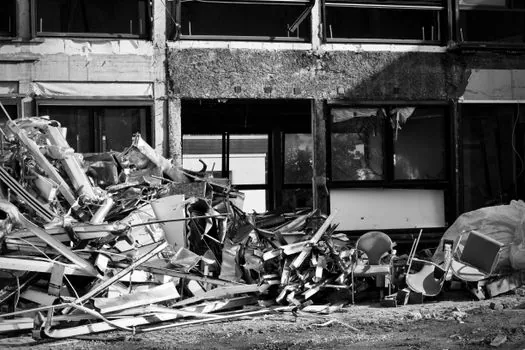
The cited guidance says 8–20 J is usually enough for most home renovation projects, while heavy concrete breaking, reinforced concrete, and professional demolition work call for 20–40+ J [S1].
At 30 J, a breaker has the energy class for professional work on thick concrete and heavy masonry, but it is not automatically suitable for heavily reinforced foundations [S1]. At 60 J, it has greater energy margin for reinforced concrete and large foundations, yet rebar may still require cutting or another removal method before the concrete can be broken away effectively.
The impact rate matters alongside each blow. A cited 1,000 W jackhammer example delivers 8 ft-lb of impact energy at 3,000 bpm, showing that a lower-energy tool can remain practical where the work is limited [S7]. Impact energy alone does not guarantee job-site productivity, which is why BPM, weight, vibration handling, and the selected chisel must be checked together [S5].
Chisel and Holder Compatibility Controls Actual Output
Impact energy does not transfer usefully unless the chisel, retaining system, and machine are compatible. A 30 J or 60 J label cannot be evaluated independently of the specified holder; the accessory must be approved for that exact machine and retained correctly before operation [S5].
The accessory selection guide compares demolition hammer chisel types by geometry and intended removal result.
Do not transfer a 60 J specification from one platform to another with a similar-looking chisel. SDS Plus, SDS Max, HEX, and spline systems are different holder interfaces, and the model, shank, and accessory must be matched before comparing nominal energy [S1][S5]. A rotary hammer combines rotational drilling with percussive hammering for precise holes in concrete, brick, and stone, whereas a demolition hammer delivers straight percussive blows without rotation for breaking up materials [S3].
Operator Control, Access and Workload
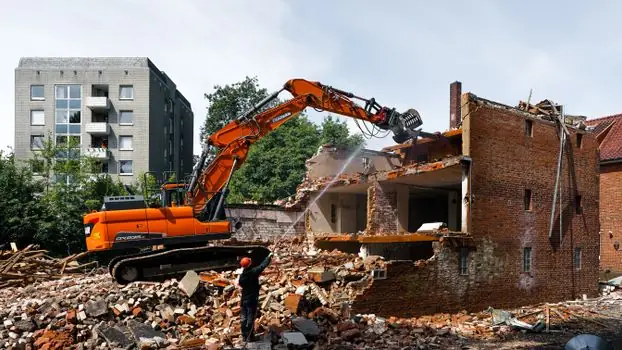
A 60 J breaker has the energy to deliver more severe blows, but controllability can become the limiting factor in confined spaces, on ladders, or against overhead surfaces. Many heavy floor breakers are intended for downward work, and the permitted orientation and technique must be taken from the exact model manual [S5].
The 30 J option is normally the more rational choice for repeated access, smaller work areas, and tasks where oversizing creates control problems. The 60 J option becomes defensible when the material category, section thickness, reinforcement, and daily workload justify the larger machine. Tool weight must not be used as a substitute for impact energy because the two specifications can vary independently across models [S5].
Motor size can help characterize a machine but cannot settle the decision. Listed manufacturer examples include a 13 kg HEX breaker with a 1,500 W motor delivering up to 40 J per impact, as well as 14 kg machines rated at 1,700 W and 1,800 W [S2]. Compare published joules first, then use motor power, mass, BPM, orientation, and accessory system as secondary checks [S1].
Where 30 J Is the Correct Purchase
Choose a 30 J demolition hammer for controlled removal of brick walls, heavy masonry, floor finishes, and thick concrete that falls within the 20–40 J professional class, provided the exact machine’s orientation rating suits the work [S1][S5]. It is also suitable when the operator must move between areas, work close to edges, or avoid carrying an industrial breaker for a limited number of hours.
The 30 J choice is unsuitable as a default for reinforced foundation work, deep structural elements, or long production shifts where a lower-energy class would repeatedly stall or overheat. It may also be excessive for brick veneer, tile, mortar joints, and thin slabs, a workload placed in the 8–20 J range [S1].
Demolition hammers should not be selected for clean, precise anchor holes or service penetrations. Rotary hammers combine rotation with percussion, typically covering 1/2–2 in concrete drilling with specialist larger systems, while demolition hammers deliver straight impacts for destruction [S3]. If accurate drilling is part of the job, specify a rotary hammer separately.
Where 60 J Justifies the Extra Machine
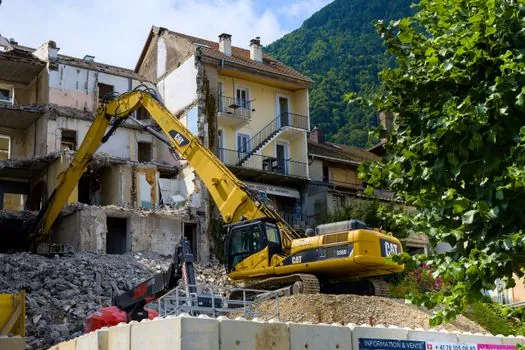
Specify a 60 J demolition hammer for reinforced concrete, foundation breaking, large structural demolition, and other work within the cited 40–70+ J industrial range [S1]. The doubled energy per blow can improve fracture capability relative to 30 J, but expected productivity still depends on blow rate, chisel retention, access, operator technique, and whether the concrete is reinforced.
A 60 J machine is not the sensible choice for small renovation work, overhead operation unless specifically permitted, or sites where its mass cannot be controlled. It also does not replace the correct chisel or a concrete cutter. For heavily reinforced elements, evaluate whether rebar must be cut first, because impact energy cannot simply be substituted for structural preparation.
Concrete slab work should also be planned around the complete system. A cutting machine may be more suitable when the objective is a controlled slab cut rather than localized fracture. Use the demolition hammer for removal after cutting, where its 60 J class has a clear material and workload rationale.
Specification Checklist Before Purchase or Rental
Require seven published figures or ratings: impact energy in joules, blow rate in BPM, operating mass, motor power in watts, holder type, permitted working direction, and model-specific accessory approval. Impact energy is the energy per blow, while BPM is the blow frequency; neither BPM nor impact energy can be inferred from tool weight alone [S5].
For a 30 J candidate, confirm that the listed energy, weight, BPM, and holder match the intended brick, masonry, or concrete removal. For a 60 J candidate, verify the same data against the exact model rather than the model family, and confirm that its mass and orientation are manageable at the workface.
Check published rated values against the manufacturer’s manual and label, then trial-fit the chisel. A 60 J machine with the wrong shank, worn retaining mechanism, or unsuitable flat chisel will not provide the intended result. A rental decision should also include transport, service support, and the available accessory range, since a higher joule rating does not solve a tooling gap.
Choose 30 J for controlled medium-to-heavy masonry and concrete removal; choose 60 J when reinforced concrete, foundations, or sustained industrial breaking justify the additional mass and reduced accessibility.