
304 stainless steel cold-rolled 2B sheet trades between $2.60 and $3.75 per kilogram FOB China in 2026, with the wider industrial-procurement band running $2.95 to $4.65 per kilogram depending on volume tier, finish, and lead time [S2][S3].
LME nickel is the dominant input, contributing 60–75% of raw material cost for the 8–10.5% Ni grade, and Q1 2026 prices jumped roughly 12% after Indonesian RKAB quota cuts and the Weda Bay mine entering maintenance [S2]. Regional plate indices for September 2026 show North America at $3.01/kg (+2% MoM), Europe at $2.77/kg (-0.4%), and Northeast Asia at $1.82/kg (-1%) [S6], a spread that makes sourcing geography the second-largest cost lever after nickel.
What Sets the 2026 Price Band: Nickel Pass-Through and Mill Behaviour
304 sheet contains 8–10.5% nickel by weight, so the LME nickel print translates almost mechanically into FOB China quotes, usually with a 2–4 week lag [S2]. A worked sensitivity table from the same source shows $14,000/t nickel supporting roughly $2.20–$2.70/kg, $18,000/t supporting $2.65–$3.25/kg, and $22,000/t supporting $3.10–$3.80/kg for cold-rolled 2B [S2]. In April 2026, with LME nickel near $19,140/ton, Tsingshan raised 304 cold-rolled export quotes by approximately $90/ton in a single week, evidence that mills pass through, rather than absorb, feedstock shocks [S2].
Q1 2026 nickel averaged $17,200–$19,800/ton, Chinese domestic scrap premiums ran +8–12% YoY, and Shanghai–Rotterdam CFR freight added about $42/ton in March 2026 [S3]. The other measurable line items: mill processing fees of $0.35–$0.68/kg for 2B finish, customs duties from 0% under ASEAN FTA to 12.5% on certain EU tariff lines, and EN 10088-2 compliance adding $0.11–$0.19/kg [S3]. Buyers should read quotes as FOB plus these surcharges, not as a single sticker number.
Procurement-Tier Breakdown: Order Size, Lead Time, Certification Depth
Volume is the single biggest discount lever inside the China-origin market. Standard industrial orders at ≥25 metric tons sit at $3.28–$3.75/kg with a 22–28 day lead time and ASTM A240 plus GB/T 4237 certification; project-scale OEM orders at ≥120 metric tons drop to $2.95–$3.42/kg with a longer 35–45 day window and full EN 10088-2 plus mill test report traceability; urgent deliveries at ≥5 metric tons run $4.10–$4.65/kg with a 10–14 day lead time and ASTM A240 only [S3].
Contract structure matters as much as volume. Buyers on quarterly pricing with ±3% adjustment clauses tied to the LME nickel index saw 11.4% lower average variance in early 2026 than those on monthly spot renegotiation, a meaningful number for EPC contractors managing multi-year budgets [S3]. EN 10204 3.1 mill certification, nickel-linked clauses, and CBAM-ready carbon documentation are the three contract clauses engineers should require for any European-destined shipment [S2].
Regional Spot Prices and Where the Sourcing Wins Are
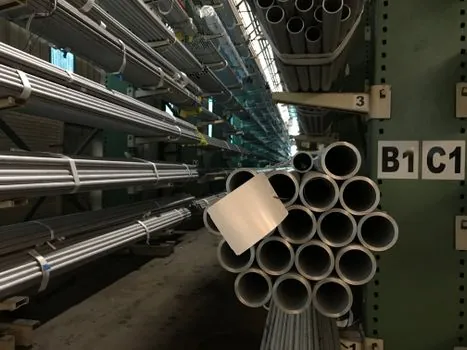
Regional September 2026 plate indices show a $1.19/kg gap between Northeast Asia ($1.82/kg) and North America ($3.01/kg), and a $0.24/kg gap between Europe ($2.77/kg) and North America [S6]. For buyers outside Asia, the math is freight-versus-tariff: a CFR Asia-to-US Gulf routing eats roughly $0.10–$0.20/kg in ocean and handling, far less than the trans-Pacific duty wedge for some HS lines. Indian distributor pricing for 304 2B sheet shows 18GA at $193.95 per 48"×96" sheet and 12GA at $319.95, translating to a per-kg figure that varies with thickness and finish [S7].
For small-quantity North American buyers, OnlineMetals lists 304 sheet at $5.00 for a 12"×12" piece, $8.37 for 12"×24", $11.37 for 12"×36", and $14.17 for 12"×48", piece-price territory where per-kg economics are secondary to cut-to-size convenience and single-piece MOQ [S5]. Ryerson's North American service-center base price reports show 304 cold-rolled base rising $0.14–$0.15/lb on recent adjustment, and 316 rising $0.20–$0.21/lb, evidence that domestic service centers pass through the same nickel shock with a short lag [S8].
Grade Selection: When 304 Stops Being the Right Answer
304 vs 316L is the most common grade-switch question in corrosion-service procurement, and the 2026 price spread between them sits at 25–40%, wide enough to make grade substitution a real cost lever [S2]. The same source flags that grade switching to 316L only makes economic sense above 50 ppm chloride exposure, a useful rule of thumb for chemical-plant and coastal-facility work. For a deeper look at how 201's nickel cut costs corrosion performance, the 201 vs 304 comparison walks through the metallurgical trade-off, and the broader stainless steel grade reference covers the full family tree.
Buyers comparing 304 sheet to carbon steel plate for hybrid structural frames should note that SPCC-series carbon plate offers 270–340 MPa yield strength at roughly one-third the per-kg cost, with stainless reserved for corrosion zones [S3]. Where 304 sheet feeds into welded assemblies, the stainless pipe and industrial valve specs share the same EN 10088-2 and ASTM A240 compliance documentation, so procurement teams can standardise on a single mill-test trail across sheet, pipe, and valve bodies.
Cost-Driver Ranking and Total-Cost-of-Ownership View
Ranked by contribution to a 2026 industrial-buyer landed cost: (1) LME nickel at ~$19,140/ton, the largest single variable, accounting for 60–75% of raw material cost [S2]; (2) mill conversion and 2B processing fees of $0.35–$0.68/kg [S3]; (3) CFR ocean freight, $42/ton Shanghai–Rotterdam in March 2026 [S3]; (4) customs duty, 0% under ASEAN FTA up to 12.5% in certain EU tariff lines [S3]; (5) EN 10088-2 / EN 10204 3.1 certification surcharge of $0.11–$0.19/kg [S3]; (6) scrap premium, +8–12% YoY in Q1 2026 [S3]. Order size, finish spec, and lead time are cross-cutting multipliers that re-rank items 2 and 4 for any given PO.
Total-cost-of-ownership stretches past the invoice. Lifecycle cost on a 304 sheet tank in a food or pharma service runs 20–30 years with periodic pickling, while the same vessel in 316L extends that interval at roughly 1.3× the purchase price. For buyers running multi-year EPC budgets, locking the nickel-indexed quarterly clause cut 2026 variance by 11.4% [S3], which on a 500-ton order at $3.50/kg baseline is roughly $19,250 in avoided contingency draw, more than enough to cover the EN 10204 3.1 mill-test uplift. Indian domestic market notes flag 10–15% spread between dealer, distributor, and stockist pricing, worth probing on any large-lot India-origin RFQ [S1].
What 2026 Procurement Teams Should Verify on Every Quote
Three checks before issuing a PO: confirm the LME nickel reference date and lag, since a quote stamped 14 days out of date is materially under- or overpriced; require ASTM A240 / EN 10088-2 / GB/T 4237 certification named explicitly on the mill test, not just in marketing copy; and pin the 2B finish reference (Ra ≤ 0.5 µm typical) plus thickness tolerance, because a 0.5 mm-vs-3.0 mm spread alone moves per-kg cost by $0.20–$0.40 [S3]. Buyers targeting EU end-use should also request CBAM-ready carbon footprint documentation now, since the Carbon Border Adjustment Mechanism phase-in rewards suppliers who already publish per-tonne CO₂e on their mill certificates.
Trackable signals to watch through Q4 2026: LME nickel weekly settlement against the $19,000/ton threshold, Indonesian RKAB quota revisions, and the next Tsingshan export-quote reset; a move of nickel to $20,000/ton would push the lower bound of 304 cold-rolled 2B toward $2.85/kg, and a slip back to $16,000/ton would pull it toward $2.40/kg [S2]. Regional plate-index prints from businessanalytiq and service-center base-price adjustments from Ryerson are the two weekly data points that let a buyer tell whether a quoted price is current, stale, or opportunistic [S6][S8].