
For buyers writing a CNC RFQ in 2026, the 6061 vs 6082 question comes down to three concrete variables: which regional stock list you pull from, what minimum T6 yield strength your load case requires, and whether your welds will be re-aged or left in the as-welded condition [S2][S3].
Both alloys are heat-treatable Al-Mg-Si grades in the 6000 series, share an elastic modulus of roughly 69 GPa, and sit within 0.01 g/cm³ of each other in density (6061 at 2.70 g/cm³, 6082 at 2.71 g/cm³) [S4][S5]. Their distinguishing feature is manganese: 6082 carries 0.4–1.0% Mn versus a 0.15% ceiling in 6061, which refines grain structure and shifts strength, machinability, and weld behavior in measurable ways [S1][S3][S4].
Composition and Temper Envelope
The 6082 chemistry envelope runs 0.7–1.3% Si, 0.6–1.2% Mg, 0.4–1.0% Mn, with Cu capped at 0.10% and Fe at 0.50% max; 6061 inverts the Cu and Mn priorities, allowing 0.15–0.40% Cu but only 0.15% Mn max, with Fe permitted up to 0.70% [S1][S4]. Lower Cu in 6082 is a deliberate corrosion-resistance trade, while the higher Mn gives better grain control during extrusion, which is why 6082-T6511 bar stock is the default precision-machining temper in European supply [S3][S5].
Common tempers diverge as well: 6061 ships in T6, T651, T4, O, T42, T62, and T6511, while 6082 is generally stocked in T6, T651, T4, and O, with T6511 appearing on extruded bar and profile [S1][S5]. The wider 6061 temper menu is a direct consequence of its longer North American stocking history, not a metallurgical advantage.
Mechanical Properties in T6
Manufacturer-published T6 values cluster 6061 at roughly 310 MPa tensile / 276 MPa yield, with 6082 in a 310–340 MPa tensile band and 250–260 MPa yield, although some structural-extrusion tables push 6082-T6 tensile to 410 MPa and yield to 370 MPa depending on section and lot [S4][S5][S1]. Fatigue strength sits at 97 MPa for 6061-T6 versus 110 MPa for 6082-T6, and shear strength at 207 MPa versus 215 MPa in the same comparison [S4].
Two honest caveats: the published 6082 tensile range (310–410 MPa) is wider than 6061's because extrusion cross-section and quench rate shift the value more than they do in 6061 plate, and the higher end of the 6082 range typically comes from European EN 573-3 / EN 755-2 certified lots rather than generic mill stock [S3]. The 6061-T6 elongation figure of 12% edges out 6082's 10%, which is the one mechanical column where 6061 still wins for formed or bent features [S4].
Regional Availability and Stock Forms
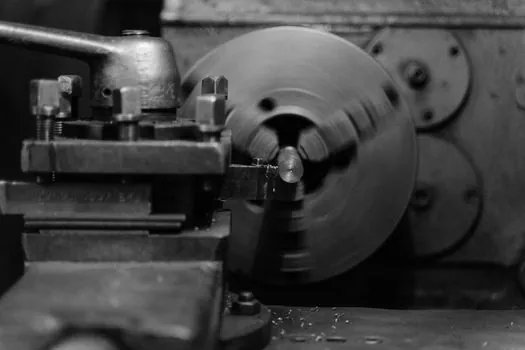
Stocking patterns are the single biggest procurement variable in 2026. 6061 plate, sheet, bar, and extrusion dominate North American service-center shelves; 6082 plate, bar (including T6511 round), and structural extrusion dominate European EN-standard supply, with growing but still secondary North American presence [S2][S3][S5]. This is why a US job shop sourcing 6082-T651 round bar typically pays a premium and accepts a longer lead time than the same part in 6061-T651.
For CNC housings, brackets, and workholding fixtures, 6061 remains the practical default because round bar, flat bar, and plate in 6061-T6 and 6061-T651 are off-the-shelf items at most North American distributors [S6][S7]. For structural profiles, gantries, robot bases, and load-bearing machined plates destined for European assembly, 6082 is the smoother sourcing path because EN 573-3 / EN 755-2 certified stock is locally available, and the alloy's higher typical yield removes the need to step up to 7075 [S2][S3].
Machinability, Welding, and Surface Finish
6082 is generally credited with better chip behavior on CNC because the higher Mn content produces small, uniform chips and reduces built-up edge on cutting tools, a meaningful gain in high-volume milling of pockets and thin-wall sections [S3]. 6061 still machines well, is more forgiving on tool wear in older CNC installations, and is the safer pick when a shop lacks experience with 6082's slightly higher tool-load at the same feed [S5][S6].
Both alloys weld with 4043 or 5356 filler, with 5356 favored for higher as-welded strength; the critical caveat is that 6082 in thick sections, left to natural aging after welding, can retain a heat-affected zone at only about half the parent-metal strength, so post-weld artificial aging or a re-solution treatment is often specified [S3]. Anodizing response is good on both, but 6061's broader Si range can make cosmetic anodizing shade more variable lot-to-lot, a point that matters for visible consumer or architectural parts but rarely for internal machine frames [S2][S3].
Decision Matrix for Machined-Part Buyers
Lining the two alloys up on the four criteria that actually drive RFQ decisions: stock availability favors 6061 in North America/Asia and 6082 in Europe; T6 strength favors 6082 by 30–100 MPa tensile and 10–90 MPa yield depending on lot; CNC machinability is a wash with 6082 slightly ahead on chip control; cost-per-kg generally favors 6061 in the US by a single-digit percentage and 6082 in Europe by a similar margin, with the 6082 premium reversing on US soil [S1][S2][S3][S4][S5].
Per-use-case recommendation: specify 6061-T6 or 6061-T651 for general CNC housings, brackets, mounting blocks, and workholding fixtures, especially when AMS 4121 compliance, US/Asian supply, or cosmetic anodizing consistency is on the spec [S4][S7]. Specify 6082-T6 or 6082-T6511 for European structural assemblies, transport frames, cranes, bridges, and any load case that needs the higher EN-certified yield, accepting the 6082 weld-strength caveat and the longer US lead time if you are buying from a North American distributor [S2][S3][S6].
Standards, Surcharges, and 2026 Watch-Items
Both alloys are covered by overlapping but region-specific standards: 6061 is the default under ASTM B209 (sheet/plate) and AMS 4121 (aerospace bar), while 6082 is the default under EN 573-3 (composition) and EN 755-2 (extruded bar/tube) for European structural work, with GB/T 3190 covering the Chinese market for both grades [S3][S4]. Confirming the actual mill certificate against the cited standard is the cheapest insurance against a substitution that quietly drops yield below your design allowables.
For buyers tracking cost in 2026, the relevant upstream watch-items are alumina/bauxite supply concentration and the rolling surcharge mechanics applied by service centers; coverage of both can be found in Alumina and Bauxite Supply Risk in 2026: Guinea, Hormuz, and Refinery Capacity and the surcharge-formula walkthrough in Tool Steel and Superalloy Surcharges: How the Formula Reaches Your Quote in 2026. For fabrication shops welding either grade into larger assemblies, the weld-tracking discipline discussed in How fabrication yards digitize weld tracking for offshore wind foundations is directly relevant because the post-weld strength loss noted for 6082 HAZ is exactly the data those systems are designed to capture.
Next node: before locking a PO, pull the actual mill cert and confirm temper (T6 vs T651 vs T6511), cross-section, and standard (ASTM B209 / EN 573-3 / GB/T 3190) match your drawing note, and run a two-line RFQ comparing 6061 and 6082 stock against your required bar diameter or plate thickness, because the region-specific lead-time delta is wider than the per-kg price delta in 2026 and is the variable that most often decides the alloy on a real shop floor [S2][S3].
For the relevant spec sheets and selection criteria, see aluminum alloy, aluminum ladder, and aluminum veneer panel.