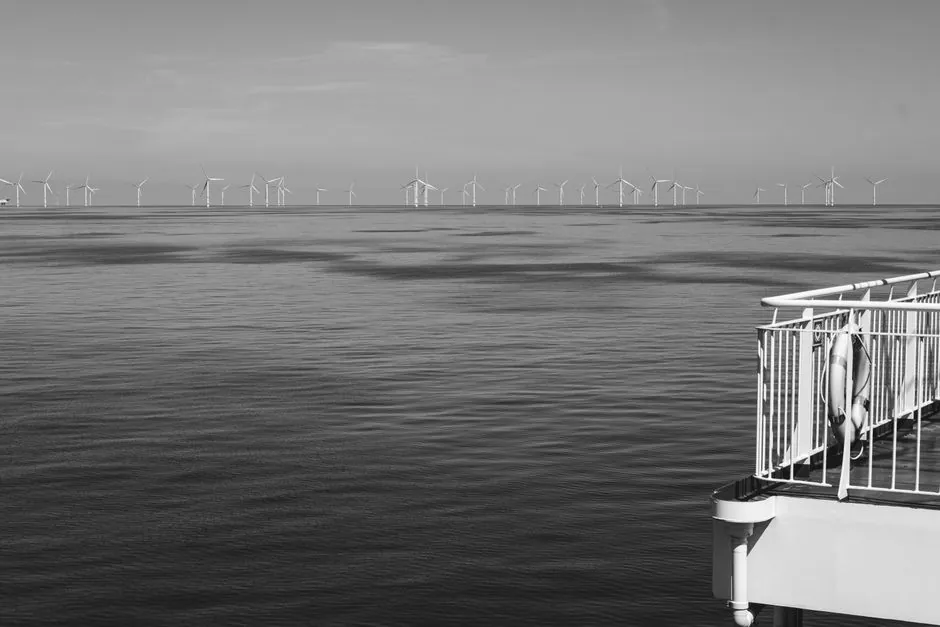
Offshore wind fabricators are moving weld tracking off paper travelers and into a closed digital loop: barcode and RFID tags pinned to each component now feed welding parameter sets, induction preheat logs, NDT inspection records, and material batch certificates into a single shopfloor database [S8]. The WeldLogic parameter generator, deployed at CS Wind Offshore for large steel structures, automatically produces the full welding procedure (speed, weaving amplitude, bead position) and links it to the workpiece identifier rather than the welder's clipboard [S2].
Why it matters now: as turbine ratings push past 15 MW, monopile and jacket geometries are outrunning the productivity ceiling of manual welding, and digital weld traceability is what makes the higher deposition rates of robotic SAW, laser-hybrid, and single-sided techniques auditable to project owners and insurers [S1][S4][S7].
What "digitized weld tracking" actually means on the shop floor
Digital weld tracking is a three-layer stack, not a single software purchase. Layer one is workpiece identification: every plate, can, leg, chord, and node carries a barcode or passive RFID tag that travels with the part from plate cutting through loadout [S8]. Layer two is the parameter generator: a system such as WeldLogic outputs a full set of welding parameters (speed, weaving amplitude, bead position) tied to that workpiece ID rather than stored on a standalone power source [S2]. Layer three is the inspection and material batch record, which closes the loop by stamping NDT results, welder qualification, and plate certificate numbers against the same identifier [S8].
The practical effect is that a quality engineer can pull a single tag number and see the full weld history, which is the prerequisite for using advanced techniques like single-sided welding or laser-hybrid cladding on thick offshore steel [S4][S7]. For yards running pressure transmitter instrumentation on preheat stations, the same data spine also carries the actual interpass temperature record, replacing the manual pyrometer log.
Hardware layer: how robots, lasers, and induction nodes feed the database
Adaptive robotic welding cells with laser-based seam tracking are the workhorses for the demanding node welds on jacket foundations, where the geometry is too complex for fixed-path programs and demands parametrized robot programming [S1]. The robot reads the workpiece ID at station entry, pulls its program and parameters from the server, and the laser sensor corrects torch position in real time, with every offset logged back to the database for post-weld review [S1][S2].
For the long longitudinal and circumferential seams on monopiles and jacket legs, submerged arc welding (SAW) stations running on dedicated production lines handle the thick plate work, while induction heating replaces resistance or flame preheating to remove the ceramic-pad burn hazard and the carcinogenic insulation from the open yard [S1][S3]. Induction cables also do not get hot, so the same preheat cycle is recorded electronically and tied to the weld log rather than written on a chalkboard [S3]. Operators at wind-tower lines control the welding through touchscreens that recall the exact program for each joint, which is a simpler interface than legacy pendant teaching and a cleaner audit trail [S9].
Process coverage by foundation type
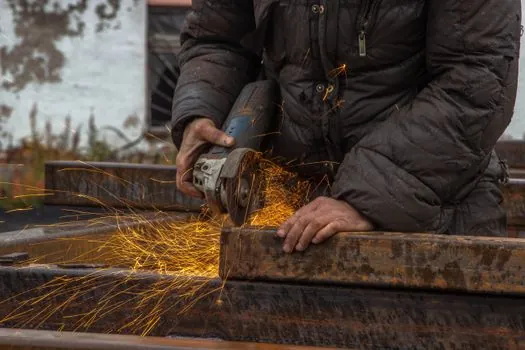
Monopiles are the simplest digitization target: rolled plate becomes a can, longitudinal SAW welds and circumferential SAW welds run on dedicated lines, and the tag-to-log chain is mostly linear [S1][S3]. Transition pieces add flange machining and internal fit-out but reuse the same SAW data backbone. Jackets are the harder problem because the value lives in the TKY nodes (tubular joints where a brace meets a leg) and the brace-to-leg circular joints, both welded in the open yard at height [S3].
Floating foundations borrow automation patterns from shipbuilding, oil rigs, and submarine construction, and require the largest fabrication tolerance envelope of the three because the floating unit is assembled in dry dock and then towed out [S1][S5]. The yard-side approach is to combine multiple welding automation cells (panel lines, block lines, stiffener mounts, and pipe spool stations) so the same digital thread covers sub-assemblies that previously would have been tracked on three or four separate paper systems [S5].
Productivity claims worth weighting
Independent reporting on similar single-sided approaches describes them as a credible cost-reduction lever, though the saving is project- and geometry-specific rather than universal [S4]. Robotic welding cells consistently deliver gains in deposition rate and repeatability, but the productivity uplift is locked to the upstream plate-prep and downstream NDT steps running on the same digital schedule [S5][S9].
Limits, failure modes, and what digital tracking does not fix
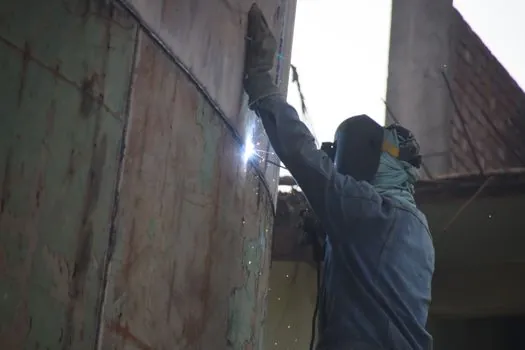
Digital weld tracking is not a substitute for procedural qualification: the parameter set pushed to the robot still has to be backed by a qualified WPS, and the database will faithfully record a bad weld if the upstream programming was wrong [S2][S3]. RFID and barcode systems also fail in the field if the tags are mounted in the weld heat-affected zone, so placement is a small but real design choice, and offshore the surviving tags need to survive jacket loadout, sea fastening, and pile driving vibration [S8].
The single biggest practical limit is operator interface: a touchscreen recall of programs works only if the program library is curated, and a WeldLogic-style parameter generator needs clean CAD input for every joint variant, which the yard has to keep current as the project moves from prototype to serial production [S2][S9]. The industry is also short of welding engineers who can both run the database and the robot cell, so training capacity is a constraint that no software purchase removes [S3][S5].
Standards and sourcing
Weld traceability for offshore wind foundations sits on top of the same ISO 3834 quality requirements and EN 1090 execution classes used in structural steel, with project-specific additions from DNV, BV, or Lloyd's depending on the developer [S1][S3]. The Ebflow technique announced for Dogger Bank and the British-Dutch single-sided welding work both position themselves as a faster path to those same compliance targets rather than a replacement for the underlying WPS framework [S4][S6][S7]. For yard planners, the practical question is which execution class the developer has specified, because that sets whether your digital thread needs full traceability per weld or per joint, and the cost difference between those two scopes is non-trivial [S1][S8].
Two near-term signals to track: first, the publication of full-scale qualification results from the British-Dutch single-sided welding program beyond the lab coupons [S7]; second, the first commercial yard retrofit of a digital weld thread onto an existing monopile line rather than a greenfield jacket or floating foundation build, which will set the realistic capex benchmark for the rest of the industry [S5][S8].
Component reference pages worth checking: flow meter, and industrial valve.
See also our earlier report, Automatic Level: How a Self-Compensating Telescope Sets the Horizontal Reference.