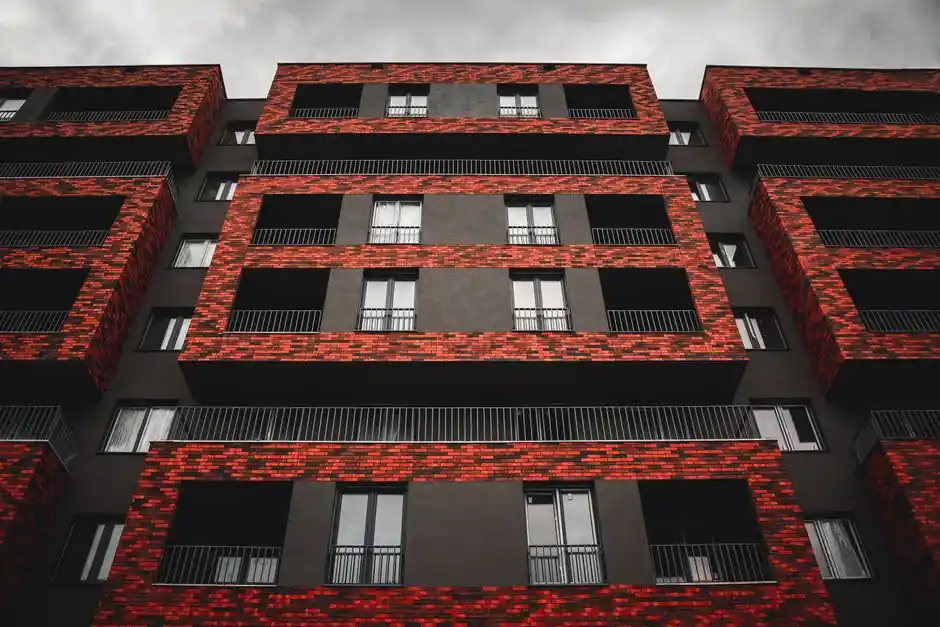
AAC blocks for residential construction are graded by dry density (B04–B07, 400-700 kg/m³) and compressive strength (A2.5–A5.5), with the standard face at 600-625 mm × 200-250 mm and thickness chosen by wall function [S2][S5].
Residential is the fastest-growing AAC application segment globally, expanding at a 7.5% CAGR through 2034 on a USD 19.74 billion 2026 base, driven by affordable-housing programs and demand for lightweight, energy-efficient envelope materials [S1].
Density Grades and Where Each One Actually Works
AAC dry density is sold in four standard grades, B04 through B07, corresponding to nominal oven-dry densities of 400, 500, 600, and 700 kg/m³, with prime-grade tolerances capped at 425, 525, 625, and 725 kg/m³ respectively [S2]. The B03 grade (≤350 kg/m³) is reserved for non-structural insulation panels, not load-bearing walls [S3].
For a residential wall, density dictates the structural role, not just the weight: 400-500 kg/m³ blocks are thermal-insulation-only with no load-bearing value, 500-650 kg/m³ suits non-load-bearing partitions, and 650-850 kg/m³ is the structural range required for walls carrying floor slabs or roof trusses [S4]. A 600 kg/m³ block can carry a two-story house, while anything taller demands 700 kg/m³ minimum [S4].
On weight, a B04/B05 block at 400-550 kg/m³ is roughly 28% the weight of a clay-brick wall and 20% of a normal concrete wall, which directly trims dead load on the frame and foundation sizing for multi-story residential builds [S3]. For comparison context across building materials, see the block and brick reference.
Compressive Strength Bands by Building Height
AAC strength grades A2.5, A3.5, A5.0, and A5.5 map directly onto density grades B04, B05, B06, and B07 with prime-grade cube strengths of 2.5, 3.5, 5.0, and 5.5 MPa respectively [S2]. B03-grade A1.5 panels deliver ≥1.5 MPa average / ≥1.2 MPa minimum, only suitable for partition or cladding use [S3].
For a 3-story residential wall carrying roughly 0.5-1 MPa of working compressive stress, a safety factor of 3 pushes the minimum specified strength to 4 MPa, with 5 MPa recommended for long-term creep resistance in apartments [S4]. Single-story garden walls can be built with 3 MPa, but treating 3.5 MPa as a universal "standard" for multi-family housing is a common specification error.
Specifiers should also confirm the test-certificate date and the standard referenced (IS 2185 Part 3 in India, EN 771-4 in Europe, GB 11968 in China) before accepting a strength claim [S5]. For a fuller breakdown of how AAC panels stack up against cast-in-place alternatives, the AAC block encyclopedia entry gives the raw material and curing-process context.
Standard Sizes, Tolerances, and the 1-Block-Replaces-18-Bricks Payoff
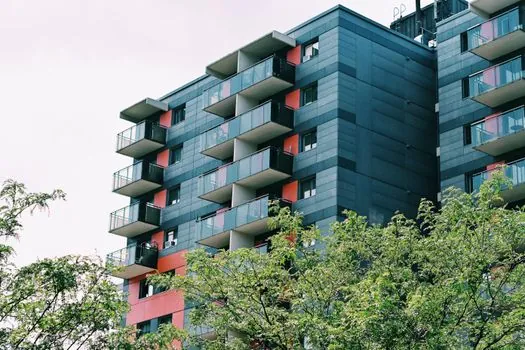
The standard AAC block face is 600 mm long × 200-250 mm high; thickness runs 75, 100, 120, 125, 150, 200, 250, 300 mm in the Chinese/Asian supply chain [S2] and 100-300 mm in Indian supply under IS 2185 (Part 3) [S5]. A single AAC unit replaces roughly 18 standard clay bricks, which collapses joint count and labor time on residential wall runs [S3].
Dimensional tolerance is the quiet spec that decides mortar consumption: ±1.0 mm on all sides enables thin-bed mortar construction (~2-3 mm joints) and eliminates thermal bridges, while ±3 mm forces conventional 10 mm mortar beds and the cracking risk that comes with them [S3][S4]. Reject any pallet where block variation exceeds 2 mm face-to-face, because thick mortar cannot compensate for out-of-tolerance units [S4].
For wall-by-wall thickness selection, the rule is function-driven: 75-100 mm for internal partitions, 150-200 mm for framed external walls, and 200-300 mm for outer envelopes in hot climates, lift-shaft walls, and high-rise faces where thermal mass and acoustic damping matter [S5][S8]. A 200 mm wall is the common residential balance point, offering a usable insulation gain without sacrificing floor area [S8].
Thermal and Fire: Two Specs That Are Easy to Misread
Thermal conductivity for AAC runs 0.10-0.18 W/(m·K) across B03-B07 grades, equivalent to 87% better insulation than normal concrete and 71.4% better than clay brick at equivalent thickness [S3]. Lab numbers are measured bone-dry, however, so for energy modeling in humid residential zones use 0.18 W/(m·K) and in dry climates 0.15 W/(m·K) to avoid under-sizing cooling loads [S4].
Fire resistance is mass-driven: a 100 mm AAC unit gives ~1 hour, a 100 mm AAC panel 3.23 hours, a 150 mm panel 4+ hours, and a 200 mm AAC wall an 8-hour Class A rating, with the material itself non-combustible and rated beyond 700 °C without toxic off-gassing [S3]. For a 2-hour residential fire-separation wall, a 100 mm block is not enough; 150 mm is the minimum defensible choice, and mortar joint detailing still matters at the rating boundary [S4].
Acoustic performance lands at 30-60 dB sound insulation across typical residential wall configurations, which is why lift-shaft and stairwell walls in apartments lean on 200 mm AAC rather than thinner partitions [S3].
Moisture, Shrinkage, and Site Realities
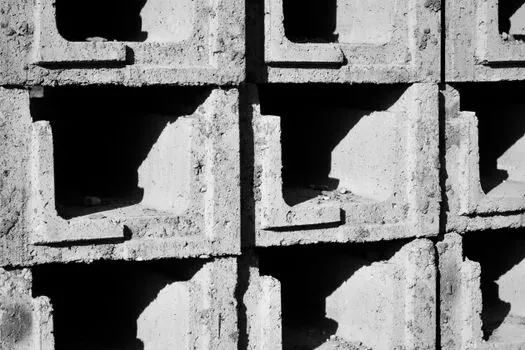
AAC achieves moisture resistance through 1-2 mm closed-cell pores plus anti-seepage formulations, delivering roughly 85% better water resistance than clay-brick walls in standard residential exposure [S3]. The standard-method drying shrinkage is 0.5 mm/m across all four density grades, and 0.8 mm/m under the rapid test method [S2].
Frost-resistance mass loss is capped at 5% for B04-B06 and 4% for B07, and freeze-thaw cycling is rarely a design driver in most Indian, Middle Eastern, and tropical residential builds where AAC is concentrated, but it does matter in northern Chinese, Central Asian, and northern US sites [S1][S2].
Site practice that follows: keep pallets covered on site, pre-wet AAC before thin-bed mortar application to control suction, and design movement joints at roughly 6 m spacing in long residential walls to absorb the residual drying shrinkage that the autoclave does not eliminate [S4].
Selection Criteria and What to Verify Before Placing an Order
Minimum spec to demand from any AAC supplier on a residential project: declared density grade (B04/B05/B06/B07) with average dry-density test value, declared compressive strength class (A2.5/A3.5/A5.0/A5.5) with both average and minimum individual values, declared thermal conductivity at design moisture, declared drying shrinkage value and test method, and a dimensional-tolerance report showing ±1.0-1.5 mm on each face [S2][S3][S4].
For a typical 2-3 story Indian or Southeast Asian residence, the workable target band is B05/B06, A3.5/A5.0, 200 mm external walls plus 100-125 mm internal partitions; for tropical high-rise residential envelopes, push to B06/B07 and 200-250 mm external walls to capture the thermal and acoustic upside [S4][S5][S8]. A B04 block at A2.5 is a partition block, not a structural block, regardless of how the datasheet is marketed.
For a comparison of how AAC fits alongside cast-in-place and other lightweight wall systems referenced on the site, the construction tools overview covers handling and cutting equipment. Trackable signals for the next sourcing window: IS 2185 Part 3 revision activity in India, any new GB 11968 density-class additions from the Chinese standard body, and the 2026 PMAY-Urban procurement guidance updates that continue to steer residential AAC demand in South Asia [S1].
Background reading: Renovation Membrane Selection: 2026 Spec Map for Wet Rooms, Basements and Decks.