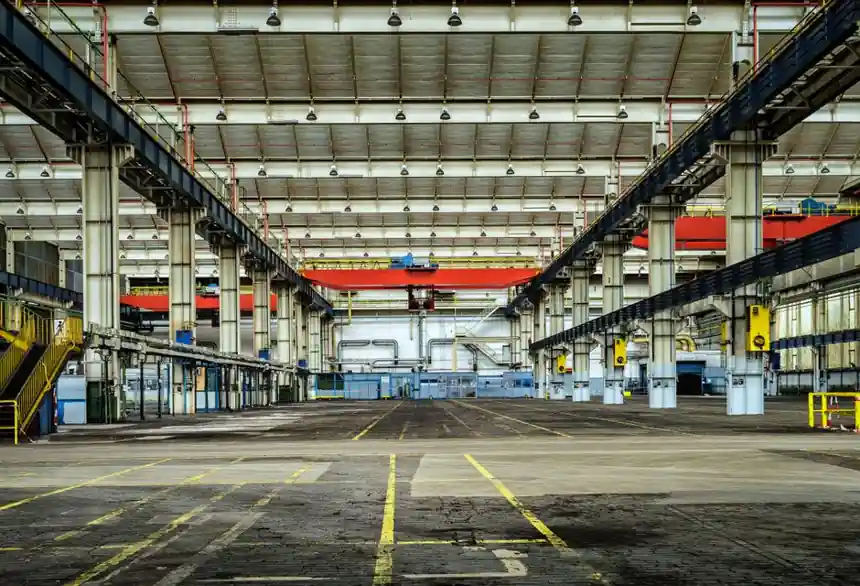
Warehouse projects in 2026 typically route waterproofing spend across two distinct assemblies: the exposed low-slope roof (where single-ply sheets such as TPO, PVC, and EPDM compete) and the below-grade or split-slab envelope (where cold-applied polyurethane and modified-bitumen systems dominate) [S1][S4].
For specifiers, the first decision is never "which brand"; it is the exposure class, the substrate moisture state at handover, and the seam-joining method the installer can actually execute on site. The global waterproofing membranes market is projected to grow from USD 41.49 billion in 2026 to USD 57.95 billion in 2031, a 6.9% CAGR, with TPO listed as the fastest-growing raw material at a 10.0% CAGR through the same window [S4].
Membrane Chemistry Options for Warehouse Envelopes
Commercial-basement and warehouse-below-grade methods documented for 2026 include APP, SBS, TPO, EPDM, PU, polyurea, and liquid-applied membranes, each tied to a different failure mode the designer has to plan around [S1]. Modified-bitumen membranes (APP, SBS) remain a reference choice where torch-applied, multi-ply redundancy is acceptable; TPO and PVC single-ply sheets lead exposed-roof counts because heat-welded seams deliver consistent lap strength under foot traffic and weather cycling.
Liquid-applied polyurethane systems, by contrast, are specified where the geometry is irregular (planters, upstands, pipe penetrations) or where the membrane must bridge hairline cracking in the slab. The liquid-applied segment held 61.8% of the 2025 waterproofing membrane market by value, the largest type share recorded in the segment [S4]. Within roofing, single-ply membranes for industrial and commercial buildings such as warehouses and data centers are explicitly cited for weather resistance, energy efficiency, and reduced maintenance burden [S4].
Cold-Applied Polyurethane Comparison: Sikalastic HLM 5000 GC vs. TREMproof 250 GC
Both Sikalastic HLM 5000 GC and TREMproof 250 GC are single-component, moisture-curing polyurethane membranes that meet ASTM C836, can be applied to damp or green concrete, ship in 5-gallon pails, and cure to a black finish, making them near-drop-in options on a warehouse spec sheet [S2]. Standard coverage on either product is roughly 25 ft²/gal at 60 mils and about 13 ft²/gal at 120 mils, so a 10,000 ft² warehouse slab at 60 mils lands near 400 gallons of base material before waste.
The technical divergence sits in tensile strength, elongation, and build ceiling: Sikalastic HLM 5000 GC is a bitumen-modified polyurethane rated at 150-200 psi tensile and 300-600% elongation, with high-build capability up to 120 mils and a 24-72 hour green-concrete window [S2]. TREMproof 250 GC posts 200 psi tensile, 600% elongation, single-lift application up to 120 mils, and high-build systems up to 215 mils; it can be applied 24 hours after form removal and water-catalyzed for cold-weather acceleration [S2]. For warehouse projects on tight schedules or in cold-weather regions, the TREMproof cure window and 215-mil ceiling are usually the deciding factors; for projects that need wider substrate-movement tolerance and proven salt/acid resistance on retaining walls, the Sikalastic elongation band and chemical-resistance profile tend to win.
Roofing Sheet Selection: TPO, PVC, EPDM, and Modified Bitumen
Single-ply roofing membranes for warehouses, distribution centers, and data centers are valued for their weather resistance, contribution to energy efficiency, and reduced maintenance cycles compared with built-up roof assemblies [S4]. TPO is the fastest-growing raw-material category in the waterproofing membrane market, with a 10.0% CAGR through 2031, reflecting specifier migration toward heat-welded thermoplastic seams and reflective roof surfaces [S4].
PVC roofing and below-grade membranes are typically designated by manufacturer type codes such as H, L, P, G, and GL; importers and project buyers should request the manufacturer to identify, in writing, the type, construction, intended application, and referenced technical data for the proposed code rather than selecting a code from a generic table [S3]. On exposed low-slope roofs, PVC and TPO sheets are commonly hot-air welded at the laps, and seam quality is a function of trial-weld parameters set on the actual substrate, not a temperature copied from a previous project [S3]. For an importer weighing two PVC quotations, the meaningful differentiators are welding procedure, accessory package (internal/external corners, roof drains, pipe penetrations), and protective layer, not just roll price [S3].
Selection Criteria Mapped to Warehouse Use Cases
For an exposed warehouse roof in a temperate climate, TPO or PVC single-ply at 45-80 mils with mechanically attached or fully adhered fixing is a common default, with hot-air welded laps and pre-formed accessories at penetrations [S3][S4]. For a warehouse split slab (parking under storage), a cold-applied polyurethane such as Sikalastic HLM 5000 GC or TREMproof 250 GC at 60-120 mils over damp or green concrete offers seamless coverage and ASTM C836 compliance, with TREMproof favored where 215-mil high-build is needed for plaza or vehicular-deck duty [S2].
For below-grade foundation walls and lift pits exposed to hydrostatic pressure, crystalline or polymer-modified cementitious systems are often used in combination with a sheet or liquid membrane, because external water head can exceed the bond capacity of a coating alone [S1]. For warehouse walls, planters, and backfilled structures, both modified polyurethane systems tolerate green concrete and damp substrates, but Sikalastic's 150-200 psi tensile and salt/alkali resistance make it a frequent pick for aggressive backfill conditions [S2]. The fastest-growing usage segment in the waterproofing membrane market through 2031 is refurbishment, which matters because most existing warehouse stock is being re-roofed rather than newly built [S4].
Standards, Documentation, and Sourcing Discipline
ASTM C836 is the headline standard cited for cold-applied single-component polyurethane waterproofing membranes used on the warehouse assemblies above, and both Sikalastic HLM 5000 GC and TREMproof 250 GC are documented to meet it [S2]. For PVC and TPO single-ply roofing, hot-air welding procedure qualification and trial welds on the actual substrate are the documented field requirements; welding temperature and line speed should be set on site, not borrowed from a previous job sheet [S3].
Importer and distributor buyers should lock the technical submittal before price comparison: a written membrane type designation (e.g. H, L, P, G, GL for PVC), the intended structure, the construction layer build-up, and the accessory list [S3]. On the supplier side, the waterproofing-membrane competitive landscape in 2026 names Sika, Tremco, and SOPREMA as star players, with ISOMAT, ALCHIMICA, and Kemper System America positioned in specialized niches [S4]. Related specification context for adjacent building-envelope work, including below-grade, wet-room, and traffic-deck assemblies, is covered in hospital waterproofing membrane specs, and floor preparation for concrete slabs is mapped in floor grinder selection for concrete.
Trackable signals to watch through the rest of 2026: the published TPO capacity additions tracked against the 10.0% CAGR forecast, any new ASTM C836 revisions affecting single-component polyurethane criteria, and the next round of SOPREMA and Sika product data sheets covering 215-mil and 120-mil high-build systems for warehouse plaza decks.
Component reference pages worth checking: thermal waterproofing, waterproof membrane, and modified bitumen membrane.