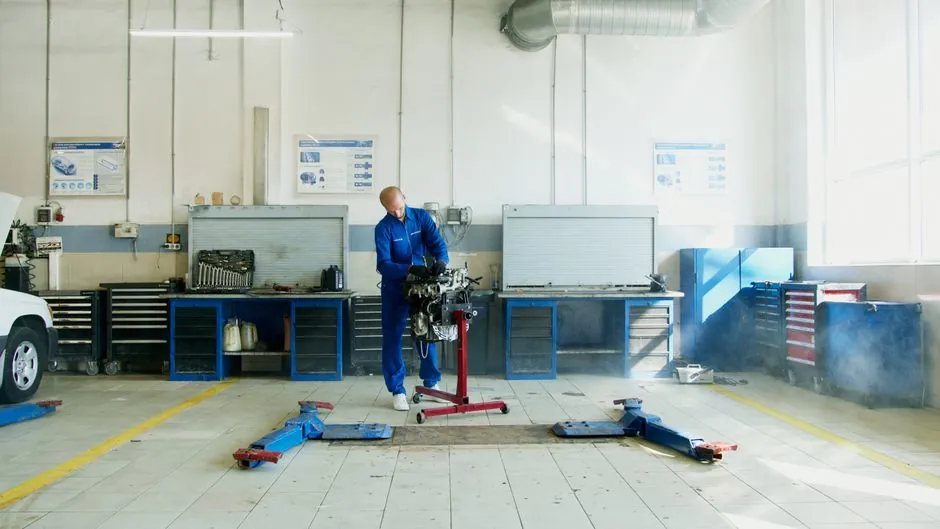
For continuous industrial duty, three-phase AC induction motors are the default specification in 2026: they are brushless, reach IE3/IE4 efficiency classes, and conform to IEC 60034-1 thermal ratings from Class B (130°C) through Class H (180°C) with 40°C ambient and 75–125°C permissible temperature rise [S4][S6].
DC motors still win a narrower band of applications: precise closed-loop speed control, very high starting torque, and any system powered from a DC bus or battery, at the cost of brush and commutator service intervals [S2][S3]. The decision is therefore not "which is better" but "which envelope of duty, control, and power source the plant actually has."
Operating Principle and Construction
An AC motor builds torque through a stator-driven rotating magnetic field that induces current in a squirrel-cage or wound rotor, with no electrical contact to the rotating part [S1][S5]. A DC motor instead delivers current to the armature through carbon brushes riding on a commutator, which mechanically switches the winding connections to keep torque unidirectional; brushless DC variants replace that mechanical switch with electronic commutation but still need a DC supply [S2]. That single difference, induction versus commutation, drives every downstream trade-off in service life, maintenance, and control.
AC induction rotors are short-circuited bars with no insulation, so the only consumables inside the motor are the bearings; a typical frame can run 20+ years in benign continuous duty with nothing more than periodic greasing [S1][S4]. Brushed DC armatures carry insulation class limits of Class B 130°C (small motors) or Class F 155°C (general-purpose industrial), and the brush-commutator interface is the wear surface that sets the DC service interval [S6].
Speed Control, Torque, and VFD Pairing
DC motors historically owned the variable-speed space because armature voltage and field flux could be trimmed independently, giving smooth regulation from base speed down to near zero with high starting torque [S2]. The 2026 reality is different: pairing an AC induction motor with a VFD delivers 1–200 Hz output (typical 0–60 Hz at full torque, 60–200 Hz in constant-HP field-weakening) with closed-loop vector or sensorless control, which has displaced DC drives in most retrofit and new-build continuous-duty lines [S1][S3].
For very precise positioning, the comparison shifts to stepper and servo territory; a 1.2° 3-Phase Hybrid Stepper Motor spec map is the right reference for open-loop indexing, while DC servos still dominate when sub-millisecond torque response matters more than absolute efficiency [S3]. AC synchronous and reluctance machines, paired with VFDs, are now the efficiency leader above 7.5 kW, with documented efficiency gains of 2–8% versus legacy AC drives in field retrofits [S4].
Decision Matrix: AC Induction vs Brushed DC vs Brushless DC
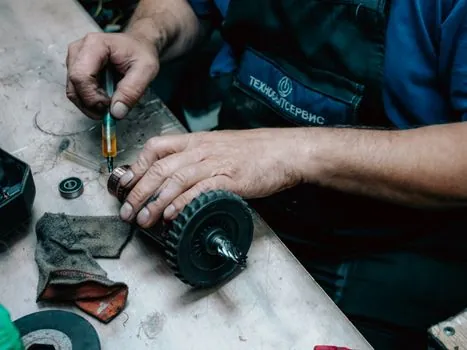
Three criteria dominate continuous-duty specification: maintenance interval, efficiency class, and starting torque per amp. Brushed DC delivers the highest starting torque per armature amp (T = Kt × Φ × Ia, a linear relationship), but brushes cap service life at 5,000–15,000 operating hours before replacement in typical industrial environments [S2][S6]. AC induction motors, with no brushes, routinely exceed 40,000 hours between bearing overhauls in clean duty and pair with IE3/IE4 efficiency classes that cut kWh cost by 5–10% versus older IE1 stock [S4].
Where the matrix turns on power source rather than load, the answer flips. Battery or DC-bus powered equipment, AGVs, mobile robots, and DC-fed conveyor sections in remote or hazardous sites, still need brushed or brushless DC. A practical frame for AGV vs AMR drive choices on heavy fixed routes is in the AGV strengths on fixed-route heavy loads breakdown; DC gearmotors dominate there because the energy source is a battery pack, not a three-phase bus. Conversely, a fixed pump, fan, or compressor on a plant three-phase bus is almost always best served by an AC induction frame plus VFD.
Thermal Ratings and Duty Cycle (IEC 60034-1)
IEC 60034-1 Part 1 (Rating and Performance) defines insulation classes that cap permissible winding temperature at 40°C ambient: Class B 130°C with 80°C rise, Class F 155°C with 100°C rise, and Class H 180°C with 125°C rise [S6]. Most general-purpose AC and DC industrial motors are wound Class F, with Class H reserved for high-temperature or heavy-duty duty cycles such as traction, hot-aisle fans, and steel-mill auxiliary drives [S6].
Duty cycle designation still matters as much as insulation class. S1 (continuous) is the rating basis for most pump, fan, and compressor motors and assumes a thermal steady state; S2 (short-time), S3 (intermittent periodic), and S6 (continuous with periodic load variation) ratings permit higher short-term output for a given frame size [S6]. Specifying a Class F motor on an S1 duty curve gives a 25°C thermal margin over its Class B limit, which is the most common route to longer winding life in continuous industrial service.
Maintenance, Service Life, and Reliability
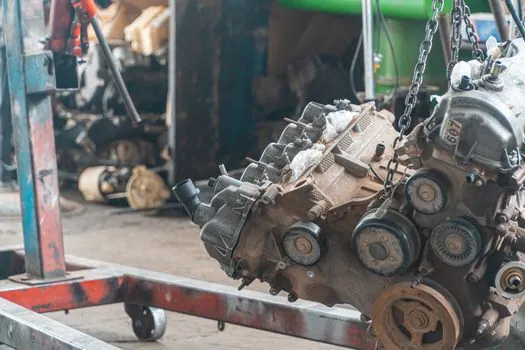
Reliability under continuous industrial duty is the metric where AC induction motors have the clearest edge: brushless construction eliminates the commutator as a failure mode, leaving bearings as the only scheduled wear part [S1][S4]. Brushed DC motors require brush inspection at 500–1,000 hour intervals and brush replacement every 5,000–15,000 hours depending on load current, vibration, and ambient dust, with commutator turning or undercutting scheduled as wear develops [S2].
The headline reliability numbers, 5–10 years brush life on DC versus 20+ years bearing life on AC, are not absolute, but they map cleanly onto the maintenance philosophies of continuous-process plants. Plants running 24/7/365 batch or continuous processes almost always standardize on AC induction + VFD for new installs because spare-parts inventory collapses to bearings and encoder feedback devices; DC spares (brushes, commutators, field coils) become a stocked commodity that few sites want to carry [S1][S3].
Application Mapping: Where Each Type Wins
AC induction is the default for pumps, fans, compressors, conveyors, mixers, and most HVAC equipment on plant three-phase supply, exactly the continuous-duty envelope that defines industrial process plants [S4]. Synchronous AC motors add value where constant-speed accuracy matters (line-shaft drives, large compressors) because rotor speed locks to supply frequency; linear AC motors are specified for high-throughput linear motion where mechanical transmission losses would dominate [S5].
DC motors remain the right answer for electric vehicles, elevators and hoists, rolling mills, battery-powered portable tools, and any application where the supply is intrinsically DC, where the speed range must extend well below base speed, or where very fast dynamic torque response is mandatory [S2][S3]. For variable-speed retrofit of legacy equipment originally driven by DC, modern practice is to replace the DC motor with an AC induction frame plus VFD rather than rewinding the DC armature, because lifecycle cost, parts availability, and efficiency class all favor the AC path [S1][S4].
Spec Sourcing and What to Verify Before Purchase
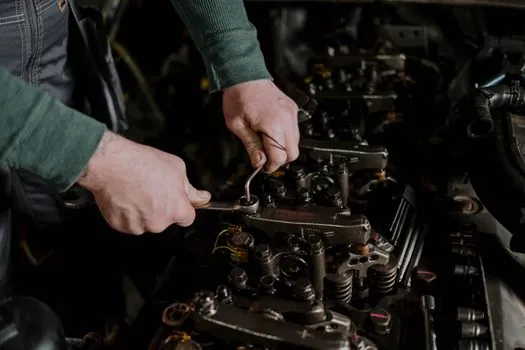
Three data points must be confirmed on any motor datasheet before a continuous-duty purchase: insulation class per IEC 60034-1 (B/F/H), efficiency class (IE1 through IE4 per IEC 60034-30-1), and duty cycle designation (S1 for continuous, S2–S6 for other patterns) [S4][S6]. For VFD-driven AC motors, also confirm the inverter-duty winding (often called "inverter spike resistant," phase-to-phase insulation, and 1600 V peak withstand) to avoid premature winding failure from reflected-wave transients on long cable runs.
For DC motors, the equivalent gating data are armature voltage and current, base speed, field voltage, and brush grade (electrographitic vs resin-bonded vs metal-graphite), because each grade targets a different current density and commutation band. Cross-check these against the load's torque-speed profile rather than the nameplate horsepower alone, and confirm that the duty cycle S-rating covers the worst-case overload band the process will actually see.
Trackable signals to watch over the next two quarters: IE5 efficiency-class AC motors moving from premium to standard catalog SKUs, brushless DC (BLDC) and permanent-magnet AC (PMAC) cost compression in the sub-15 kW range, and VFD firmware releases that push sensorless vector control deeper into constant-torque territory below 3 Hz. These are the levers that will reshape the AC-vs-DC decision matrix in continuous-duty specs through 2027.
Component reference pages worth checking: vfd duty motor.