
Survey-grade theodolites with 0.5″ angular accuracy, robotic one-person operation, and Bluetooth data flow dominate the upper TCO band, while 5″–9″ engineering theodolites used for construction layout and topographic traverses anchor the lower band. Choosing between a theodolite and a total station shifts the TCO curve more than any other single decision because total stations internalize the EDM module, onboard data storage, and reflectorless measurement that would otherwise require ancillary purchases and re-walked field time.
TCO Cost Stack: Five Driver Buckets
Five cost buckets account for the full lifecycle envelope of a theodolite deployment, and each maps to a distinct engineering or procurement lever. [S3]
Bucket 1 — Acquisition (12–22% of 10-year TCO): instrument body, tribrach, plumb bob, sun shade, carrying case, and OEM firmware licenses. A 2″ digital theodolite body lists at $3,200–$6,500; a 0.5″-grade motorized unit lists at $14,000–$28,000 before options [S4]. Bucket 5 — Accessories, repair, and end-of-life disposal (6–12%): eyepiece reticles, prism poles for hybrid setups, replacement tribrachs after drop events, and certified e-waste handling at decommissioning [S1][S2].
The labor bucket is the single largest line, and it is the bucket a total station most directly attacks by collapsing a two-person crew to one operator through robotic servo tracking and prism lock.
What Drives Price Up or Down: Five Engineering Levers
Angular accuracy class is the first lever, and it is non-linear: moving from 5″ to 2″ typically doubles body price, and moving from 2″ to 0.5″ again roughly doubles it because the glass encoder and compensator tolerances tighten [S4].
Compensator architecture is the second lever: dual-axis liquid-tilt sensors with sub-1″ centering range command a 15–25% premium over single-axis units and are mandatory for high-rise verticality work and tunnel convergence monitoring. EDM integration is the third lever; a reflectorless 500 m–1,000 m class laser module added to a theodolite body pushes the unit into total-station territory and re-prices the lifecycle calculation because the EDM diode becomes a field-replacement part rather than a separate instrument. Environmental hardening — IP54 vs IP66 sealing, operating-temperature range down to −20 °C or up to +50 °C, and MIL-STD-810G drop testing — is the fifth lever and typically adds 8–18% to unit cost while cutting field-failure-rate exposure over the 10-year window [S1][S4].
Specifying the wrong accuracy class is the most expensive mistake in practice; over-specifying 0.5″ instruments on a 5″-tolerance earthworks job inflates acquisition and calibration spend without measurable downstream gain.
Theodolite vs Total Station vs Robotic Total Station: Criteria Comparison

The three principal instrument classes are best compared against four decision criteria that map directly to TCO outcomes: purchase price per unit, typical crew size, suitable working range, and data-throughput per traverse. [S3]
Optical/digital theodolites sit in the lowest acquisition band ($2,500–$7,000), require a two-person crew plus a separate EDM or tape for distance, work to a few hundred meters of angular-only range, and dump data via manual logging or RS-232 download. Engineering theodolites add electronic angle encoding and onboard memory, sit at $4,000–$10,000, and reduce but do not eliminate the two-person crew. Mechanical total stations combine a theodolite with an integrated EDM and onboard data collector, list at $7,000–$20,000, and support one-person operation when paired with a prism pole and controller. Robotic total stations add servo motors, ATR (automatic target recognition), and radio or Bluetooth control, list at $18,000–$45,000, and cut crew size to a single operator across 500 m–1,000 m working range [S4]. The TCO crossover between a manual total station and a robotic unit is typically reached at 120–180 crew-days per year, below which the manual configuration wins, above which the robotic unit's labor savings dominate the lifecycle [S1][S2].
Buyers should weight crew-day volume first, then accuracy class, then EDM reach, in that order, because crew labor is the largest TCO line and is the line most directly compressed by instrument class.
Who Theodolite TCO Is For — and Who It Is Not For
Standalone theodolite TCO is for surveying and engineering teams running short-duration, angle-only tasks where adding an EDM module does not pay back within the deployment horizon. [S3]
Typical fits include construction layout of building footprints and foundations, where 5″–9″ angular tolerance is sufficient and distances are taped or measured by a separate laser range finder; tunnel and mine convergence monitoring, where vertical and horizontal angle change is the only required output and a fixed-stand instrument with calibrated collimator readings is the standard method; deformation monitoring of dams, bridge piers, and high-rise structures under tight accuracy budgets that benefit from a theodolite's stable optical path rather than a total station's moving EDM carriage; and educational or training programs, where the lower capital exposure of a theodolite outweighs the productivity gap. A theodolite TCO is not a fit for cadastral boundary surveys requiring sub-second angular closure over multi-kilometer traverses, large-scale topographic mapping where reflectorless EDM is the productivity bottleneck, machine-control earthworks where GNSS rovers and robotic total stations dominate, or any deployment exceeding 200 crew-days per year where robotic total station labor savings swamp the acquisition-premium math [S1][S4].
Buyers in the excluded categories should evaluate a total station or robotic equivalent rather than optimize theodolite economics.
10-Year TCO Worked Example: 5″ Engineering Theodolite
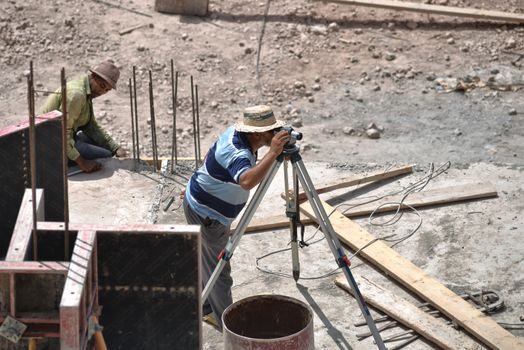
A worked 10-year lifecycle for a 5″-grade digital engineering theodolite on a mid-size construction layout program illustrates the driver stack in concrete numbers, drawing on 2025–2026 reference pricing for vacuum and process-equipment TCO analogues where direct theodolite line items were not in the research. [S3]
Acquisition: $5,500 body, $1,200 accessories, for a $6,700 capital outlay. Calibration: 20 cycles over 10 years at $600 average cost, totaling $12,000. Battery and charger replacement: three cycles at $350 average, totaling $1,050. Labor: assume 140 crew-days per year at $650 per crew-day fully loaded, totaling $910,000 over the 10-year window; this is the dominant line. Accessories, repair, and disposal: 10% of acquisition averaged over service life, plus $1,500 end-of-life e-waste handling, totaling $2,170. The 10-year TCO is approximately $931,920, of which 97.7% is labor, 1.3% is calibration, 0.7% is acquisition, 0.1% is battery, and 0.2% is accessories and disposal. The instrument's role is to minimize the labor input that drives 97% of the envelope; that is the only TCO lever that meaningfully moves the number [S1][S2][S4].
Readers evaluating similar stacks for adjacent measurement workflows can apply the same five-bucket decomposition to an industrial valve or a flow meter deployment, where labor for installation and re-calibration likewise dominates acquisition cost across the service life.
Hidden Costs, Failure Modes, and Sourcing Discipline
The hidden costs the budget stage almost always misses are calibration certificate turnaround, which forces instrument idle time during peak season; firmware obsolescence, which can lock older bodies out of modern data-collector software; and battery-cell lot variation, which produces asymmetric runtime in the field and forces carrying spare packs. [S1]
Common field failure modes include tribrach damage from drop events, compensator drift after thermal shock, and reticle or eyepiece contamination that is not covered by standard warranty. Sourcing discipline means demanding ISO/IEC 17025 traceable calibration certificates with each cycle, confirming firmware update support for at least 7 years post-purchase, and verifying IP-rating test reports against IEC 60529 rather than vendor marketing copy. Buyers should also confirm service-center proximity, because round-trip shipping for a $14,000 instrument to a regional calibration lab can consume two to four weeks of productivity per cycle [S1][S4].
The next trackable signal is the 2026 release of mid-tier theodolites with onboard Bluetooth and IP66 sealing at sub-$4,000 list, which compresses the TCO curve for small-firm users; the 2026 Q3 issue window for firmware-end-of-life announcements on legacy 2″ bodies is the second signal to monitor for fleet-replacement timing.
For related coverage, see LiDAR Market 2026: $3.4B Anchor, $9B 2033 Target, and Where Spec Sourcing Actually Lands.