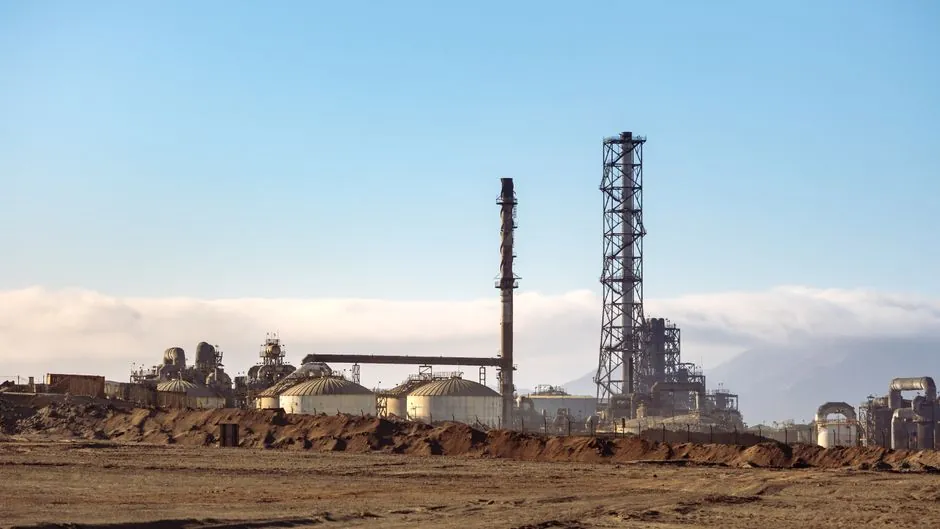
Activated carbon is a porosity-engineered adsorbent whose economics are dictated almost entirely by its raw-material lane: bituminous coal, anthracite, coconut shell, wood, lignite, and assorted agricultural residues such as rice husk and bamboo [S2]. Granular activated carbon (GAC) is the dominant physical form for fixed-bed water and air service, while powdered injection grades (Type 767, wood-injection) are dosed into process streams for one-pass adsorption of colour bodies, odorants, and trace organics [S1][S3].
Downstream, the same molecule is sold into MSG refining, amino-acid decolorization, edible oil bleaching, chemical intermediate polishing, and flue-gas mercury capture, with five-grade product families (XDP-1 through XDP-5) commonly differentiated by methylene blue number (180–240 mg/g) and caramel decolorization (100–110%) per Chinese vendor data (2025-08) [S6].
Upstream raw materials and what each one buys you
Coal-based grades (bituminous and anthracite) give the highest abrasion resistance and the densest micropore distribution, which is why they dominate large-molecule water-treatment beds and CSCR (catalytic sorbent for SO2/NOx) service [S2]. Coconut-shell carbon is the go-to for gold recovery and potable-water polishing because its slit-shaped micropores deliver a hard, attrition-resistant particle with a high proportion of 0.5–1.0 nm pores. Wood-based activated carbon, including the wood-injection grade documented in ChemicalBook records, is favoured for liquid-phase decolorization because its larger transitional pores (2–50 nm) are accessible to bulky colour bodies in sugar, MSG, and dye baths [S3].
Lignite and agricultural residues (rice husk, bamboo, sawdust) sit at the low-cost end of the feedstock ladder; their pore structure is dominated by mesopores, so they are routed into flue-gas treatment and wastewater polishing where iodine number and surface area matter less than bulk throw-away cost [S2]. Process engineers reading a vendor TDS should always cross-check the declared feedstock against the declared applications: a wood-injection grade specified for vapour-phase mercury capture is almost always a procurement error.
Downstream demand lanes and grade mapping
Five product lanes consume the majority of global output: potable and process water, food and beverage, oil and fat, chemical intermediate refining, and air/gas purification (H2S, VOCs, mercury, SO2). The Chinese vendor dataset for industrial-grade decolorizing carbon publishes a five-grade family where methylene blue adsorption drops stepwise from ≥240 mg/g (XDP-1) to ≥180 mg/g (XDP-5) and caramel decolorization holds at ≥110% for the top three grades, with iron capped at ≤0.05% and chloride at ≤0.1% across the family [S6]. The 0.1% chloride ceiling is a hard spec for any grade destined for edible-oil or pharmaceutical service because chloride residuals corrode 304/316 [stainless steel](carbon-steel) contact surfaces and contaminate product.
Oil-bleaching activated carbon is engineered for residual oil value and filterability rather than high iodine number, with typical dosing windows of 0.1–2.0 wt% of oil in edible-oil refining [S4]. Oil-and-fat grades are a related but distinct category, traded under CAS CB41124561, with similar chloride/iron ceilings but tighter specifications on carbon fines and filtrate colour [S5].
Selection criteria that actually move the spec
Four numbers drive 90% of an activated-carbon purchase decision: iodine number (mg/g), methylene blue number (mg/g), abrasion number (%), and apparent density (kg/m³). For water-treatment GAC, iodine number of 900–1100 mg/g is typical for coal grades, 1000–1200 mg/g for coconut-shell, and 600–900 mg/g for wood; for powder injection grades (Type 767, XDP series), methylene blue number of 180–240 mg/g and caramel decolorization ≥100–110% are the headline metrics [S1][S6]. The wood-injection grade carried by Fujian Yuanli and Nanping Yuanli is specified for liquid-phase decolorization, where its larger pore mouth prevents pore blockage by high-MW colour bodies [S3].
Mesh size is the second decision gate. 8×30 mesh (2.36–0.60 mm) is the workhorse for municipal water beds; 4×8 mesh (4.75–2.36 mm) is used in larger vessel diameters where pressure drop dominates; 200–325 mesh powders are for injection dosing and short-contact-time polishers [S1][S2]. Above 325 mesh, dust-handling losses during pneumatic conveying eat into the cost advantage, so even injection systems rarely go finer.
Comparison: coal vs coconut vs wood on four spec axes
Across the four critical axes, coal-based GAC scores high on abrasion and micropore density, coconut-shell on hardness and gold-cyanide access, and wood grades on decolorization throughput. Coal typically delivers iodine 900–1100 mg/g, abrasion ≥90%, and a service life advantage in multi-bed water plants; coconut-shell pushes iodine 1000–1200 mg/g and attrition ≥95% but costs 20–40% more; wood-injection grades trade iodine (500–800 mg/g) for methylene blue performance in the 200–260 mg/g band [S2][S3].
For specifiers tracking the value chain end-to-end, a closely related material stream worth understanding is carbon fiber, which shares the same carbon-rich precursor logic but exits the kiln as a structural reinforcement rather than a porous adsorbent. The plant-side instrumentation conversation in the activated-carbon industry runs on the same measurement backbone as the rest of process plants, so flow meter selection rules for slurry and chemical dosing are a frequent adjacent decision when activated-carbon slurry is being metered into a contactor.
Operational failure modes and the standards behind them
The three recurring in-service failures are pore blockage by oil/grease (especially in condensate polishing), premature backwash loss from low abrasion number, and biological fouling on long-bed potable service. The first is mitigated by upstream oil-removal to ≤5 mg/L; the second is a procurement error, not an operating one; the third is controlled by periodic thermal regeneration or by scheduled media change-out, which is why vendor lifecycle claims of 2–5 years for municipal GAC and 6–18 months for injection powder are useful procurement reference points [S2].
The standards stack that sits behind a serious activated-carbon purchase is dense: AWWA B604 for GAC, ASTM D2862 for particle size distribution, ASTM D4607 for iodine number, ASTM D2414 for methylene blue, and the food-grade variants under NSF/ANSI 61 and FDA 21 CFR for direct potable contact. For mercury capture in coal-fired flue gas, the relevant protocol is ASTM D6414 (oxidative pretreatment) plus site-specific compliance with the utility's MATS (Mercury and Air Toxics Standards) limit. Lighting equipment and electric lamp industries, while not a direct downstream lane, share a similar reliance on carbon electrodes and graphite components, which is a useful parallel when reviewing lighting equipment and electric lamps supply chains [S2][S6].
For whom this material works, and for whom it does not
Activated carbon is the right answer for adsorption of non-polar organics, decolorization, trace organics polishing, and gas-phase capture of mercury/H2S/VOCs in concentrations below the saturation point of the bed. It is the wrong answer for dissolved salts, metal ions, and hydrophilic VOCs, where ion-exchange resins, reverse osmosis, or specialized chemisorbents are the correct tool. A second common procurement error is specifying virgin carbon where reactivated (re-regenerated) carbon will do, which is acceptable for most water and air applications but disqualifies reactivated carbon for direct food or pharmaceutical service without re-testing against the relevant food-grade standard. [S1]
Process engineers sizing a contactor for pressure transmitter and differential-pressure instrumentation should note that clean-bed pressure drop for 8×30 mesh GAC at 10 m/h is roughly 50–80 mbar per metre of bed, rising to 200–400 mbar near the breakpoint, which is the real control set-point for backwash initiation rather than a calendar interval [S2].
Track these three signals over the next quarter: (1) Chinese anthracite and coconut-shell feedstock spot prices, which lead the global price curve by 4–8 weeks; (2) the XDP-family methylene-blue and chloride figures in vendor TDS updates, since the 0.1% chloride ceiling and 180–240 mg/g methylene blue band are the cleanest indicators of food-grade product integrity [S6]; (3) the supplier roster around wood-injection grade CB03015674, where the two Fujian Yuanli entities remain the most consistently listed producers as of mid-2026 [S3].
This topic is covered further in Roller bearing selection for wind power: load, life, and lube gates.