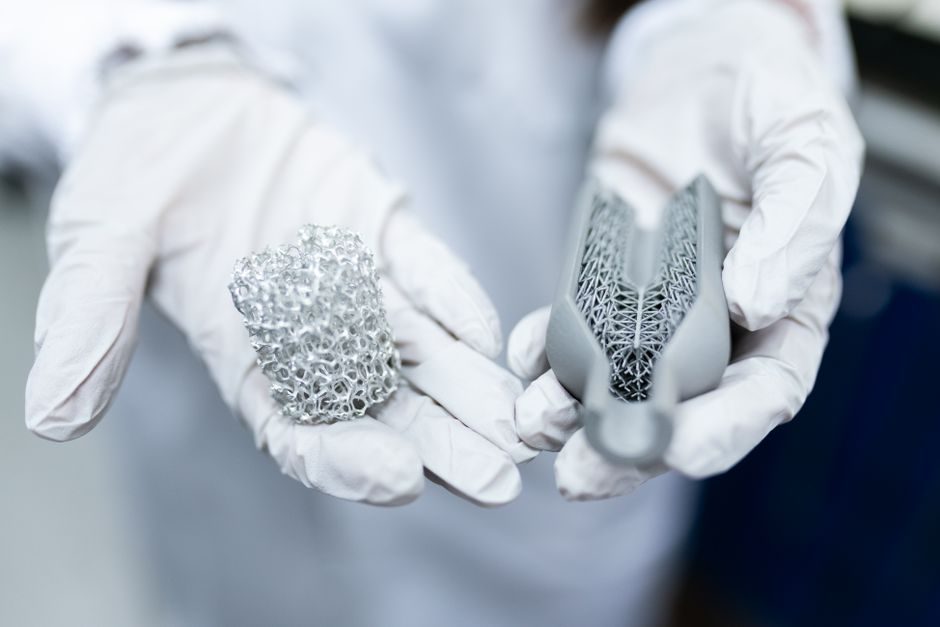
Additive manufacturing equipment is classified into seven process families under ISO/ASTM 52900, covering build envelopes from sub-100 mm polymer prototypes to multi-meter Wire plus Arc Additive Manufacture (WAAM) structures used in aerospace and marine fabrication [S2][S3].
Seven Process Families Under ISO/ASTM 52900 and Their Build Envelopes
The ISO/ASTM 52900 taxonomy defines seven AM process categories, each with distinct energy source, feedstock form, and typical build volume [S3]. Powder Bed Fusion (PBF) covers laser-beam (LB), electron-beam (EB), and directed energy variants operating in 50–800 mm envelopes; Directed Energy Deposition (DED) reaches 1–5 m through multi-axis robotic arms and is the basis for WAAM programmes at research centres such as Cranfield's Welding and Additive Manufacturing Centre [S2].
Material Extrusion (FDM/FFF) holds the largest installed base in entry-level polymer prototyping at 200–600 mm build volume; Vat Photopolymerization (SLA, DLP) targets ±0.05 mm tolerance parts in 100–300 mm envelopes; Binder Jetting covers both metal and sand moulds at 400–800 mm; Material Jetting (PolyJet, MJF) provides multi-material and full-colour parts in 250–500 mm; Sheet Lamination (LOM, UAM) accommodates large wood, paper, and metal-composite laminates up to 1 m [S1].
Metal AM Equipment: PBF-LB/M vs DED vs Binder Jetting Selection
Metal AM breaks into three dominant routes: Laser Powder Bed Fusion (PBF-LB/M) for complex geometries with 0.04–0.10 mm layer thickness, DED for large structural parts and repair, and Binder Jetting for high-volume indirect production requiring downstream sintering furnaces [S2][S3]. PBF-LB/M machines (EOS, SLM Solutions, GE Concept Laser class) build in 250×250×300 mm to 800×800×600 mm envelopes with 400 W–1 kW fibre lasers and oxygen-controlled chambers held below 50 ppm O₂ to prevent oxidation of reactive alloys such as Ti-6Al-4V and AlSi10Mg.
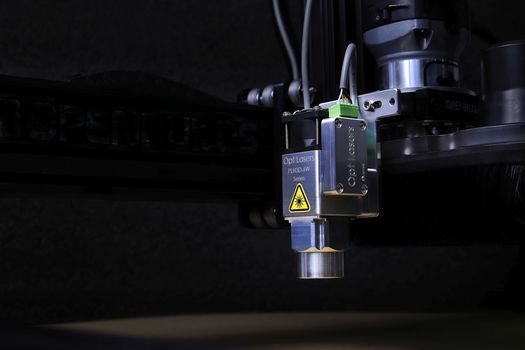
DED systems (Trumpf TruLaser Cell, Optomec LENS, DMG MORI LASERTEC) deposit 0.5–5 kg/h with 1–3 mm layer thickness, accepting wire or powder feedstock and enabling five-axis deposition on existing substrates — a route used in WAAM programmes targeting ship propeller and pressure-vessel fabrication at multi-metre scale [S2]. Binder Jetting (Desktop Metal, ExOne, voxel-level sand printers) prints at 100–200 mm/h layer speed and requires a separate sintering step that introduces 12–20% isotropic shrinkage, demanding compensation in CAD slicer software [S1].
Polymer AM Equipment: SLA vs FDM vs SLS vs MJF Decision Matrix
Polymer AM equipment selection follows a four-criteria decision matrix: surface finish, material range, build speed, and per-part cost. SLA (Formlabs, 3D Systems Figure 4) achieves ±0.05 mm tolerance with sub-100 µm surface roughness but is limited to photopolymer resins; FDM (Stratasys, Markforged, Bambu Lab) trades tolerance for the widest material range — ABS, PC, PEEK, PEKK, carbon-fibre reinforced — at 0.1–0.3 mm tolerance and the lowest entry cost.
Selective Laser Sintering (SLS, EOS P-series, HP Jet Fusion 5200) uses PA12, PA11, TPU powders at 0.08–0.12 mm tolerance and requires no support structures, making it the default for functional nylon prototypes and small-batch end-use parts. Multi Jet Fusion (HP MJF) layers fusing and detailing agents at 50 µm resolution and produces parts with isotropic mechanical properties comparable to injection moulding at volumes up to 10 000 parts/year [S1].
Software Stack: CAD Import, Slicing, Build Strategy, and Thermal Simulation
Additive manufacturing software packages (Magics, Materialise Magics, Netfabb, GrabCAD Print, EOSPRINT, PreForm) deliver four core functions: CAD import and repair, slicing with support generation, build platform placement, and custom reporting for quoting [S1]. Magics from Materialise is the de facto standard for STL/3MF repair and supports automatic and manual support generation, build platform nesting to maximise density, and toolpath parameter exports compatible with the major OEM printer families [S1].
For metal AM, thermal simulation modules such as the Additive Manufacturing Module in Thermo-Calc couple steady-state and transient heat-source calculations with CALPHAD-based material property databases to predict melt-pool dimensions, residual stress, and distortion before the first build [S4]. These workflows require licensed database packages — the free Educational Package supports only a restricted set of demonstration alloys, not full production-grade calculations [S4].
Workflow Integration: Build Preparation, Post-Processing, and Quality Control
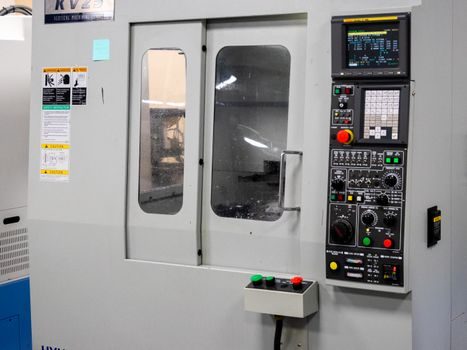
End-to-end AM workflow integration links CAD, slicing, build, post-processing, and inspection into a single digital thread. Build preparation includes orientation optimisation to minimise support volume, slicing at 0.02–0.10 mm layer height, and parameter sets controlling laser power (200–400 W for PBF-LB/M polymer; 200–1000 W for metal), scan speed (up to 7 m/s), and hatch spacing (0.08–0.15 mm) [S1][S4].
Service bureaus such as Forerunner 3D Printing position AM explicitly to avoid tooling cost and compress prototype-to-production lead time for low-volume end-use parts, with quick-iteration cycles measured in days rather than the weeks of conventional tooling [S5]. Quality control relies on CT scanning, in-process melt-pool monitoring (pyrometer + coaxial camera), and tensile-coupon validation per build batch.
2026 Sourcing Signals: Equipment Pricing Bands and Vendor Selection
AM equipment price bands in 2026 span three tiers: entry-level polymer FDM and resin printers at USD 200–5 000 for desktop use, professional polymer SLS/SLA at USD 20 000–250 000, and industrial metal PBF-LB/M and DED systems at USD 500 000–2 500 000 per machine [S5]. Production facilities pairing additive manufacturing material supply with binder jetting or MJF lines typically plan for a 3–5 year ROI on parts exceeding 5 000 units/year where tooling cost dominates.
The 2026 sourcing map shows the metal AM installed base concentrated in North America, Germany, and Japan, with service-bureau capacity expanding in Singapore, India, and Eastern Europe. For a deeper dive into one of the highest-growth end-uses, see the 3D Printing Production Line Design 2026 Spec and Workflow Map, which maps line layout, throughput, and post-processing cell design. Buyers comparing AM against conventional forming for low-volume aluminium and zinc parts can also reference the Aluminum Die Casting vs Die Casting Machine 2026 Spec-First Decision Map for side-by-side tolerance and cost criteria.
Limitations and Failure Modes Engineers Must Plan For
AM equipment imposes four hard constraints that conventional manufacturing does not: build envelope geometry (parts larger than the chamber must be split and joined), anisotropic mechanical properties from layer-by-layer deposition, residual stress in metal parts requiring post-process heat treatment, and material property drift between machines and even between builds on the same machine. For polymer FDM, layer adhesion remains the weakest mechanical axis; for metal PBF-LB/M, lack-of-fusion porosity and keyhole-mode porosity (above 2×10⁶ W/cm² absorbed power density) are the dominant failure initiators. [S1]
Process selection is also gated by material certification status: only PBF-LB/M of Ti-6Al-4V and Inconel 718 currently hold widespread aerospace qualification on specific machine-parameter sets; other material/process combinations require part-by-part qualification. Engineers specifying AM for safety-critical service should require material traceability per build, parameter-set documentation, and a documented post-processing heat-treatment record before accepting any part.
Trackable signals for the next planning window: ISO/ASTM 52900 additive-manufacturing terminology revisions under committee ballot, the annual Elsevier journal *Additive Manufacturing* (ISSN 2214-8604, 18 issues/year, Q1 engineering/manufacturing) [S3][S6], and OEM announcements of larger-format metal PBF and multi-laser DED systems expected at the Formnext 2026 trade fair in Frankfurt.
Component reference pages worth checking: anti static equipment, and linear guide.