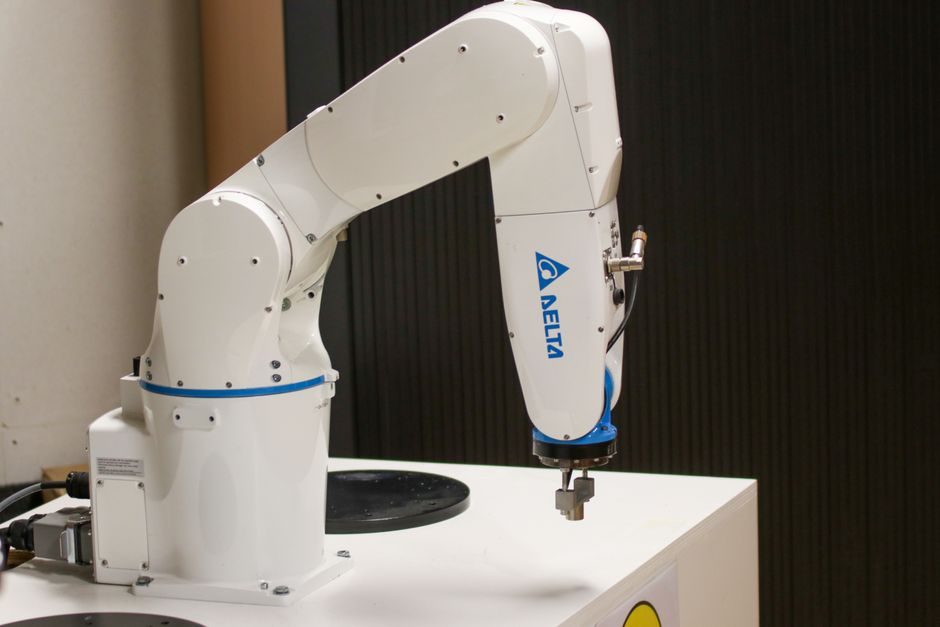
Global additive manufacturing (AM) production capacity in 2026 is distributed across roughly four anchor clusters — North America (metal PBF and aerospace DED), Western Europe (industrial polymers and high-end metals), East Asia (consumer/industrial printers plus metal powder output), and a fast-rising India/SEA tier — with installed printer counts running from several hundred large-format industrial systems in the top three to multi-thousand desktop/industrial hybrids in China [S2][S6].
The Manufacturing Technology Centre (MTC) operated its AM capability page live through 8 July 2026, listing powder bed fusion, DED, and binder jetting lines as core offerings for industrial R&D contracts [S6]. The Swiss Additive Manufacturing Network (AM Network) maintained an active events/education portal dated 6 July 2026, with the 8th annual IBAM campaign and a funded-projects track supporting European SME access to AM capacity [S2]. Peer-reviewed research in the journal *Additive Manufacturing* (Elsevier, ISSN 2214-8604) remains the dominant technical reference, with the title holding Q1/T1 status and 18 issues per year as of the 5 July 2026 journal-record snapshot [S5].
Top 4 Country Clusters: Installed Base and Process Mix
For 2026 sourcing, the four largest additive manufacturing capacity clusters are the United States, China, Germany, and Japan, each differentiated by process mix and end-market pull rather than raw printer count [S6]. US capacity is weighted to metal powder bed fusion in titanium and Inconel grades for aerospace, DED for large repair geometries, and binder jetting for serial production of small stainless parts. China leads industrial polymer printer unit volume and is the dominant filament/metal powder supplier; multiple Chinese OEM printer builders (industrial SLS, SLM, and DED lines) were actively exporting in the first half of 2026. Germany concentrates on industrial polymer SLS from the EOS-installed base plus metal PBF for automotive and medical, and Japan is anchored by SLM Solutions, Sodick, and engineering OEM service bureaus serving domestic semiconductor and tool-room customers [S6].
For process selection against country of origin: a buyer chasing high-temperature nickel-superalloy PBF for aerospace typically lands on US, German, or Japanese capacity; a buyer chasing polymer SLS at scale typically lands on German, US, or Chinese capacity; and a buyer chasing low-cost industrial DED for repair typically lands on Chinese, Indian, or US capacity. The MTC capability page (8 July 2026 snapshot) confirms that the UK is positioning as a tier-1 European R&D hub across PBF, DED, and binder jetting under one roof [S6].
Metal vs Polymer Capacity: Material and Standard Discipline
AM production capacity splits cleanly into two material lanes: metal (titanium Ti-6Al-4V per ASTM F2924, Inconel 718 per AMS 5663/5664, stainless 316L per ASTM F3187, aluminium AlSi10Mg per ASTM F3318) and polymer (PA12, PA11, TPU, photopolymer resins), each with its own powder specification, post-processing chain, and qualification standard [S5]. Most buyers mistake printer count for capacity: real capacity is gated by powder supply chain, build chamber volume × cycle time, and post-processing throughput (HIP, stress relief, support removal, surface finishing) — not by the nameplate of the printer OEM [S6].
Polymer AM (SLS, MJF, SLA, FDM) capacity is more geographically distributed because the powder/resin supply chain is less concentrated; desktop FDM unit volumes in China alone are reported in the millions for hobbyist/educational use, while industrial SLS lines number in the low thousands globally [S2]. Metal AM is bottlenecked on qualified powder (gas-atomised, plasma-atomised, plasma-rotating electrode process) and on a small number of large-format PBF/DED systems; build envelopes of 600 × 600 × 600 mm or larger are now standard on industrial metal PBF machines [S6]. Buyers specifying additive manufacturing material should confirm the powder supplier and atomisation route, not just the printer OEM, before locking capacity.
Selection Criteria: What Buyers Should Verify Before Sourcing
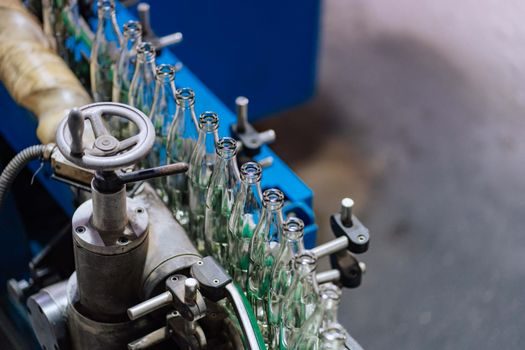
Three rules of thumb separate a real AM capacity quote from a marketing brochure, and each is verifiable on a 2026-dated capability page like MTC's [S6]. First, confirm the build chamber envelope in mm, the laser count and wattage (for PBF), and the oxygen-controlled atmosphere limit (typically <100 ppm O2 for titanium, <1000 ppm for aluminium). Second, confirm the post-processing chain in-house: stress relief furnace, hot isostatic press (HIP) availability, support removal, and surface finishing (bead blasting, electropolishing for medical-grade parts). Third, confirm the qualification status: ASTM/AMS material grade, ISO/ASTM 52900 process designation, and any sector-specific qualification (AS9100 for aerospace, ISO 13485 for medical) [S5][S6].
For cross-process sourcing, the buyer decision criterion is end-use: serial metal production (binder jetting + sintering for small stainless/bronze, PBF for titanium/Inconel), prototyping (polymer SLS/MJF/SLA for fast iteration, metal PBF for form-fit), and repair/large geometry (DED, wire-arc AM). The Swiss AM Network maintained funded-project tracks for SME access to AM as of 6 July 2026, which is a useful lever for European small-batch buyers [S2]. For real-time process visibility, buyers increasingly demand in-situ monitoring (melt-pool cameras, layer-wise optical tomography) and a digital thread from CAD to CT-scanned part, both of which are now table-stakes on tier-1 industrial PBF systems [S6].
Who This Capacity Is For — and Who It Is Not For
AM production capacity at this scale is for buyers who need geometric complexity (lattice, internal channels, topology-optimised brackets), low-volume serial production (10s to low 1000s of parts), or part consolidation that eliminates assemblies — and who can absorb the per-part cost premium of powder-bound manufacturing [S6]. It is not for buyers chasing high-volume commodity parts (millions of identical brackets, gears, or fasteners), where conventional CNC, pressure transmitter housings, or stamping/die-casting is a tenth of the AM cost; AM unit economics above ~5,000–10,000 identical parts usually do not close against conventional forming unless part count is constrained by warehousing, shipping, or lead-time, not by piece price [S6].
Adjacent comparison: a buyer choosing between a flow meter body machined from bar stock versus printed in 316L via PBF will find conventional machining cheaper at serial runs above ~200/year and only justified for AM in low-volume, high-mix, or rapid-iteration cycles. The same logic applies to industrial valve bodies, sensor manifolds, and custom pressure sensor housings — AM is a strong fit for prototypes and small batches, conventional machining/forging/casting is the answer at scale. Buyers should treat AM capacity as a complement to CNC/casting capacity, not a replacement, and should always request a per-part cost breakdown including powder, build time, post-processing, and QA/CT inspection before signing a long-term capacity reservation [S6].
Failure Modes and Limits Buyers Hit in 2026

Three failure modes dominate real-world AM production sourcing: powder supply disruption, post-processing bottleneck, and qualification gap. Powder supply is the single biggest gate — gas-atomised Ti-6Al-4V and Inconel 718 have lead times of 8–16 weeks from major atomisers, and buyers who have not locked multi-supplier powder contracts will see capacity idle even with printers ready [S6]. Post-processing (HIP, support removal, surface finishing, CT inspection) is the most under-resourced link in many service-bureau quotes; a metal PBF printer running 24/7 needs an equivalent throughput of HIP and finishing stations, and many tier-2 bureaus do not have it in-house [S6].
Qualification gap is the third, and it is the one that burns aerospace and medical buyers: an AM machine can produce a near-net-shape part, but the part is not flight- or implant-grade until the full process chain (powder lot, build parameter set, heat treatment, HIP cycle, surface finish, CT inspection) is qualified to the relevant ASTM/AMS/ISO standard. The peer-reviewed *Additive Manufacturing* journal (Elsevier, ISSN 2214-8604, Q1/T1, 18 issues/year per the 5 July 2026 record) is the most authoritative venue for process-window and qualification data, and buyers should require suppliers to cite at least one published paper per critical material/process combination before accepting serial-production runs [S5].
Standards, Sources, and the 2026-07-10 Reference Set
The technical reference set for AM capacity in mid-2026 is dominated by the *Additive Manufacturing* journal (Elsevier, ISSN 2214-8604 print / 2214-7810 electronic, Q1/T1 in the 5 July 2026 record, 18 issues per year, hybrid OA) [S5]. The Autodesk Community fusion-manufacture thread (16 December 2021) is a legacy support-structures discussion and does not carry current capacity data, but it remains a useful index of practitioner questions on support placement in PBF slicing [S1]. The LetPub journal-information page (30 November 2021) corroborates the journal's English-language, Netherlands-published, OA-hybrid status and T1-tier classification used in Chinese tenure-track assessment [S4].
Standards buyers should require in any 2026 AM capacity quote: ISO/ASTM 52900 (process taxonomy), ASTM F2924 (Ti-6Al-4V PBF), ASTM F3187 (316L PBF), ASTM F3318 (AlSi10Mg PBF), AMS 5663/5664 (Inconel 718), AMS 7000-series (process controls), and ISO 13485 / AS9100 for medical and aerospace certification respectively. Buyers who want a programmatic national-cluster view of manufacturing capacity for 2026 can compare the AM install map against the LNG global production capacity by country: 2025 operating mix and 2026-2028 build tracks and the petrochemical capacity by country: 2026 build tracks, ethylene tilt and sourcing cues pieces — both use the same country-cluster logic to expose where buyers should look for long-dated capacity versus spot capacity.
Two trackable signals for the next 6–12 months: first, the AM Network's 8th IBAM campaign and funded-projects track, both active on the 6 July 2026 portal [S2]; second, the MTC AM capability page, which serves as a live indicator of UK/European tier-1 R&D capacity for industrial PBF, DED, and binder jetting [S6]. Watch both for new build-envelope announcements, new powder-supply partnerships, and any shift in the metal-vs-polymer mix at the country-cluster level — those are the leading indicators of where 2026–2027 AM capacity will actually settle.