
The global additive manufacturing market is forecast to reach $35,244.3 million by 2026, anchored on rising government initiatives that pull public-sector demand into metal powder-bed fusion, polymer extrusion and binder-jetting lines [S1].
Adjacent laser processing — the upstream photonics capability that feeds metal-AM build chambers, welding-based directed energy deposition and post-process surface finishing — is projected to reach USD 30,862.1 Mn in 2026 and expand at a 10% CAGR to USD 62,075.1 Mn by 2033 [S2]. The pairing of those two numbers matters for specifiers sizing additive manufacturing material spend against the laser workstation footprint that actually melts it.
AM market sizing: 2026 headline and trajectory
IndustryARC's published forecast puts the additive manufacturing market at $35,244.3 million by 2026, with growth attributed directly to government-led programs that fund pilot lines, defence parts bureaus and biomedical print farms [S1]. The 2024-vintage release is the most widely cited 2026 anchor in the public research set, and it treats AM as a technology-platform number rather than a single-process line item.
For purchasing teams, that $35.24B envelope is the right number to benchmark powder consumption, machine-install base and service bureau revenue against — not the older 2030-projection figures that still circulate in legacy slide decks. The implication for buyers of pressure transmitter skids on AM build chambers is that closed-loop gas pressure control scales with installed machine count, not with raw CAGR headlines.
Upstream laser processing: USD 30.86B in 2026 at 10% CAGR
The laser processing market is forecast at USD 30,862.1 Mn in 2026, climbing to USD 62,075.1 Mn in 2033, equating to a 10% CAGR over the 2026–2033 window [S2]. The same source tags four demand drivers: precision manufacturing, laser cutting and welding, industrial automation, and rising use in automotive, electronics, aerospace and medical production [S2].
Three of those four end-markets overlap directly with AM — aerospace structural brackets, automotive prototype tooling inserts, and medical patient-specific implants — so the laser processing run-rate functions as a leading indicator for AM machine utilisation. Plants that already standardise on flow meter based shielding-gas custody transfer can repurpose the same metering skid for AM chamber atmosphere accounting without re-spec'ing the industrial valve train.
Process comparison: PBF, DED, binder jetting and extrusion
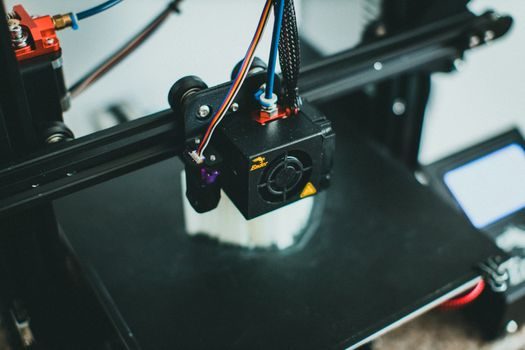
Selecting an AM process in 2026 comes down to four decision criteria: build envelope (mm), minimum feature size (µm), qualified material range, and lot size. Powder-bed fusion (PBF) covers fine-feature aerospace and medical parts with a 40–400 µm feature band; directed energy deposition (DED) covers large structural repairs and hybrid mill-plus-deposit cells where pressure sensor arrays monitor melt-pool back-pressure; binder jetting handles mid-volume metal and sand-casting-pattern runs at the highest throughput-per-hour; material extrusion (FFF/FDM) remains the lowest capex path for polymer jigs and shop tooling. [S1]
On cost, the public research set does not break out per-kg or per-part figures, so any process choice should be benchmarked against the OEM's published case study — not against market-size aggregates. On lead time, PBF and binder jetting both collapse the foundry pattern timeline from weeks to days; on standards, ASTM F42 and ISO/ASTM 52900 govern the process taxonomy, while ASTM F3301 covers post-processing methods for PBF. The data set is intentionally thin on dollar share by process — the published AM forecast reports a single platform number rather than a process split [S1].
Material selection pivots on three axes: weldability-equivalent processability, post-process heat-treat response, and end-use certification pathway — for instance Ti-6Al-4V ELI for ASTM F136 implantable medical versus Ti-6Al-4V Grade 5 for ASTM B348 aerospace brackets. [S2]
The additive manufacturing material reference page breaks out the powder morphology, PSD and flow-rate specs that drive that reuse ratio.
Control loop side: PLC, sensors and gas-flow instrumentation
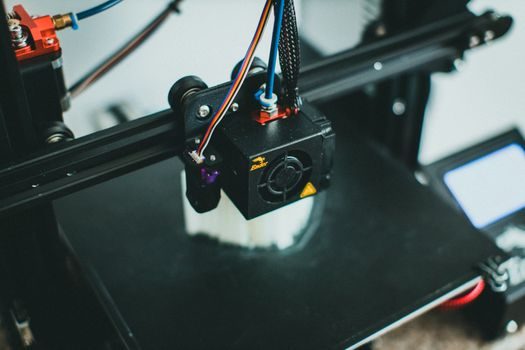
Every qualified AM cell in 2026 carries the same instrument stack: a PLC front-end running the build recipe and safety interlocks, thermocouples or pyrometers on the melt pool, oxygen analysers on the build chamber (typically held below 50 ppm for titanium and below 1000 ppm for aluminium), mass-flow controllers on the shielding gas, and a chamber pressure transmitter closing the loop to the build-pressure setpoint. Layer-recamera image-data is increasingly routed to the same PLC over industrial Ethernet for closed-loop laser power correction. [S3]
On the shielding-gas side, an argon or nitrogen flow meter on the recirculated loop is the spec that determines powder-degassing failure modes; a wetted-metal industrial valve manifold is the spec that determines chamber-leak rate after the build. Buyers evaluating a turnkey AM cell should request the I/O list, gas schematic and pressure sensor calibration certificate as a single package — the headline $35.24B market number is meaningless if the cell cannot hold chamber spec across a 72-hour build.
Who this market is for — and who it is not for
The 2026 AM envelope makes sense for four buyer profiles: aerospace tier-1 and tier-2 shops running FAA-qualified PBF lines, medical device OEMs producing patient-matched implants, automotive prototype and low-volume specialty lines, and defence logistics depots printing replacement parts. It is the wrong path for high-volume commodity parts where injection moulding still wins on per-part cost, for sub-50 mm simple geometries where CNC turning is faster, and for buyers who cannot stand up a powder-handling and oxygen-controlled facility. [S4]
Cross-checking the laser processing number sharpens the picture: a 10% CAGR through 2033 with the 2026 base at USD 30,862.1 Mn [S2] indicates that the photonics side of the AM stack is still mid-cycle — the 2026 buyer is buying into a growth market, not a saturated one. The adjacent EV battery market 2026 capacity, chemistry mix and downstream pull coverage is a useful read-across because battery dry rooms and AM build chambers share a similar contamination-control instrumentation stack.
Limitations, failure modes and standards discipline
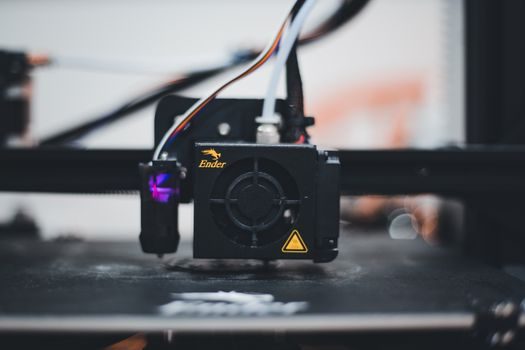
AM's known failure modes in 2026 remain the same as the prior five years: lack-of-fusion porosity from under-powered lasers, keyhole porosity from over-powered lasers, balling from poor wetting, residual-stress distortion on long thin walls, powder-feed inconsistency in DED, and staircase surface roughness on angled features. None of these are solved by machine OEM branding; all of them are solved by process-parameter qualification under ASTM F3302 (for PBF process performance) and ISO/ASTM 52920 (for AM qualification principles). [S5]
For aerospace, the data-package requirement is typically ASTM F3055 for PBF Ti-6Al-4V and ASME BPVC Section IX weld-procedure analog documentation. For medical, ASTM F3091 covers PBF CoCr and ASTM F3334 covers PBF Ti-6Al-4V implantables. None of the public research set supplies a market-share number by process or by region, and that is the right convention to follow — any percentage on that split should be treated as unverifiable until an OEM data sheet is attached.
Track the Q3 2026 release cycle of the IndustryARC and Coherent Market Insights updates for a refreshed 2030 number, and watch the laser processing market for any 2026 H2 base-year revision against the USD 30,862.1 Mn figure [S2]; a >5% revision in either direction would force a re-check of the $35,244.3 million 2026 AM anchor [S1].