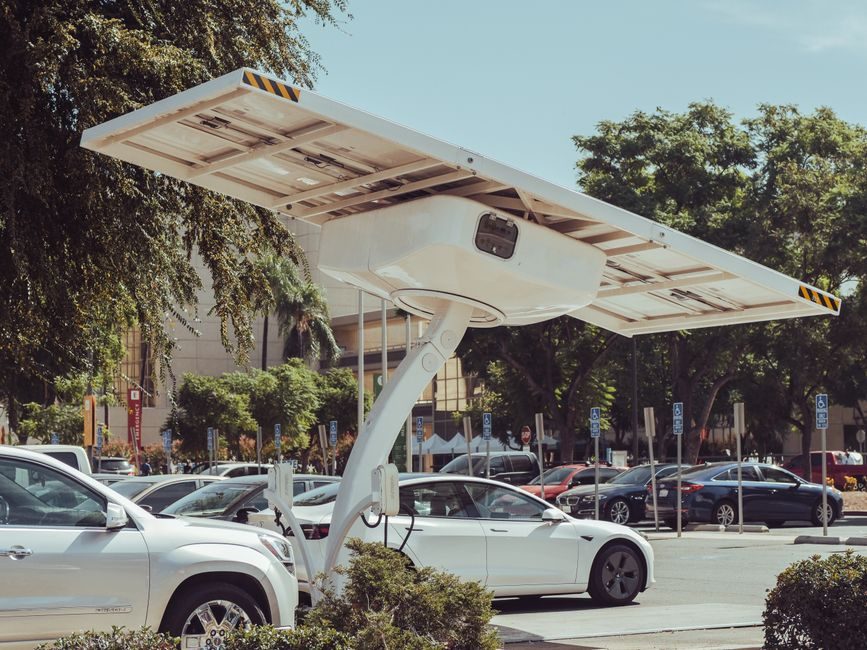
The lithium-ion cell market that feeds nearly every road-going EV programme is on a steep capacity curve: Statista's 2023 baseline and 2032 outlook place the global Li-ion battery market in the high-tens-of-billions today, with growth driven by EV-pack demand, stationary storage co-production, and Chinese cell-gigawatt oversupply [S4].
Adjacent indicators reinforce that pull. The global electric-vehicle on-board charger market is forecast to climb from USD 2.15 billion in 2019 to USD 10.82 billion by 2027, a 22.4% CAGR (2020–2027), as OBC power levels rise and 800-V architectures replace 400-V main buses [S6]. On the back end, the EV battery recycling market — Allied Market Research — is expanding in lockstep with installed-pack retirement volume.
Lithium-ion cell market: 2023 base, 2032 trajectory
Statista's January 2026 update sizes the global Li-ion battery market at roughly the low-tens-of-billions in 2023, with the trajectory to 2032 pushing the figure well above that base [S4]. The driver mix is well documented in 2026 industry reporting: Li-ion dominates electrochemical energy storage because of its gravimetric energy density, low self-discharge and absence of memory effect relative to NiMH and lead-acid, all properties that translate directly into longer EV driving range per kilogram of pack mass [S4].
For sourcing teams, the practical read is that cathode active material — NMC, NCA, LFP — and anode graphite supply remain the binding constraints. As cell output scales, the battery cell itself functions as a process-industry product: electrode coating uniformity, electrolyte fill precision and formation cycling all demand instrumentation that is increasingly shared with adjacent process lines, including the coating additives that feed electrode slurries. Future Market Insights' coating additives report puts that parallel market at USD 12.2 billion in 2025, rising to USD 12.8 billion in 2026 and USD 19.1 billion by 2036 at a 4.6% CAGR — a capacity-linked, not a structural-reset, expansion [S2].
EV on-board charger as a downstream telltale
The OBC market is one of the cleanest leading indicators of EV-pack production because every battery EV carries one. Allied Market Research sizes it at USD 2.15 billion in 2019 with a 2027 target of USD 10.82 billion, a 22.4% CAGR from 2020 to 2027 [S6]. That CAGR is roughly 4–5× the broader lithium-ion cell market growth rate, reflecting two compounding effects: rising EV unit sales, and rising OBC power per vehicle (11 kW → 22 kW is now common in premium segments).
Higher OBC power drives thermal management demand, which feeds back into pack design. The instrumentation overlap with industrial process plants is real — flow meters, pressure sensors and PLCs used in cell formation and electrolyte blending share hardware platforms with the broader discrete manufacturing base. For a deeper look at how these control layers are built up, see the pressure transmitter and PLC reference pages, and the practical spec guide for industrial valve selection in electrolyte and solvent service.
Battery recycling: the second-wave capacity build
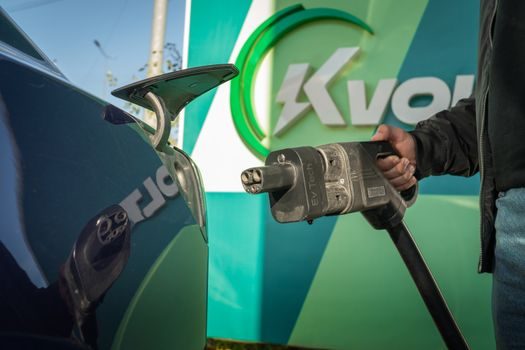
Allied Market Research's May 2026 update frames the EV battery recycling market as a structurally growing segment, tracking the wave of 2018–2020 EV packs now reaching end-of-first-life. The hydrometallurgical and pyrometallurgical lines needed to recover lithium, nickel, cobalt and copper are themselves process plants — and they are instrumented with the same classes of equipment that upstream cathode active material plants use. [S1]
Decision criteria for recycling capacity sit in four columns: feed chemistry (NMC vs LFP), black-mass yield, recovery rate per element, and effluent handling for fluorine-bearing electrolyte breakdown. Plants spec intrinsically safe instrumentation because lithium-bearing dusts and electrolyte vapours sit inside hazardous-area envelopes, which is why ATEX/IECEx-rated flow meters and pressure sensors are common procurement line items in this segment. The reference for hazardous-area flow measurement is covered in the flow meter encyclopedia entry, and cell-stack pressure monitoring in pressure sensor.
Adjacent industrial markets: forklift, laser processing, BLDC motion
Three adjacent markets help triangulate the EV battery picture. First, the global forklift battery market is sized at USD 5.9 billion (2022) with a 2032 target of USD 11.2 billion at 6.5% CAGR (2023–2032) — a useful proxy for industrial Li-ion demand outside road EVs, and one where lead-acid is being progressively replaced by LFP in Class I/II/III trucks [S5].
Second, laser processing — the dominant electrode-cutting and tab-welding technology for prismatic and cylindrical cells — is forecast by Coherent Market Insights to grow from USD 30,862.1 million in 2026 to USD 62,075.1 million in 2033 at a 10% CAGR, driven by precision manufacturing, automation and the automotive/electronics pivot. Third, frameless brushless DC motors — used in battery-module cooling fans, cell-formatting contactors and pack assembly robotics — are projected by Persistence Market Research to expand from USD 140.4 billion in 2026 to USD 204.2 billion by 2033 at 5.5% CAGR, with compact high-torque-density designs leading. For motion-control spec context, the servo motor reference covers the parallel premium tier.
Comparison: where each indicator points
Lining up the segments against four decision criteria — absolute 2026 size, forecast CAGR, chemistry-specificity, and process-industry overlap — gives a clear read on what each is telling the buyer: [S2]
• Li-ion cell market [S4]: largest absolute base; growth tied to EV unit volume; chemistry-specific (NMC/NCA/LFP split); moderate process overlap (electrode coating, formation).
• EV OBC [S6]: USD 10.82B by 2027, 22.4% CAGR; power-electronics-specific; high process overlap with automotive tier-1 lines.
• Forklift battery [S5]: USD 11.2B by 2032, 6.5% CAGR; LFP-led, industrial-channel; high process overlap (formation, end-of-line test).
• Laser processing: USD 30.86B in 2026, 10% CAGR; cutting/welding-specific; shares fixturing and motion platforms with cell assembly.
The cells themselves are the slowest-moving metric in absolute terms but the fastest in unit volume; OBC and laser processing move in lockstep with pack throughput.
Limits, constraints and failure modes to track
Three constraints bind the EV battery expansion. First, raw-material throughput: lithium, nickel and graphite refining capacity is the binding constraint on cathode/anode volume, and any 2026 supply shock in those chains propagates into cell pricing within one quarter. Second, formation-cycle bottleneck — every cell needs repeated charge/discharge cycling before ship-out, and formation cabinets are a capex-heavy, time-bound process step that constrains how fast new gigafactory lines can ramp. Third, hazardous-area compliance: electrolyte filling and formation rooms sit inside flammable-vapour envelopes, and any change to ATEX/IECEx zoning directly affects instrument specifications on new lines. [S3]
Buyers should also note that Li-ion's dominance in 2022 electrochemical storage installations does not mean it is the only chemistry in scope — sodium-ion, solid-state and lithium-sulfur pilots are running in 2026, though none has crossed into mass-EV production scale [S4]. The hedging move for procurement teams is to keep cell-format-agnostic fixtures (module trays, busbar geometries, BMS connector patterns) where the platform design allows.
Standards, sourcing signals and what to watch
No single standard governs the EV battery market end-to-end, but several pin the cell, pack and process-equipment levels: UN 38.3 for transport of lithium cells, IEC 62660 for performance/reliability testing of Li-ion cells for EV propulsion, ISO 12405 for pack-level testing, and IEC 61508 / IEC 61511 for the safety-instrumented systems in formation and electrolyte rooms. Hazardous-area equipment on the process side sits under the ATEX 2014/34/EU directive (Europe) or IECEx (international), with the relevant zone classifications set by the cell-maker's process engineers. [S4]
Three trackable signals into the second half of 2026: (1) Statista's next Li-ion market data point — the 2024 actuals that will firm up the slope of the 2023→2032 line [S4]; (2) Allied Market Research's recycling-market update cadence, where 2018–2020 vintage packs start to retire and report sizing will sharpen [S1]; (3) the laser-processing 2027 print from Coherent Market Insights, which will reveal whether the 10% CAGR held through the cell-capacity build phase. For context on the control systems going into those new lines, the PLC reference covers the discrete-control backbone used in module assembly.
For related coverage, see Lock Nut vs Retaining Ring: 2026 Spec Cut for Fastener and Shaft-Retention Decisions.