
The split is not a matter of opinion. Aerial work platforms (AWPs) are mechanically designed to lift limited weight, usually less than a ton, and are distinguished from most cranes by that safe working load (SWL) ceiling, with operators carried to the work face rather than goods ferried up in a hook block [S2]. A tower crane, by contrast, is a fixed vertical mast with a horizontal jib sized for multi-tonne material lifts on construction sites, and its radius is set by the jib length rather than by an articulating boom that bends around obstacles.
For an engineer sizing access equipment, the practical question is rarely "either/or" on a single task. It is which machine fits the dominant load case: a person plus tools at variable angle, or a heavy prefabricated element on a defined hoist path. The two answers come from different physics, different regulations, and different duty cycles, and a wrong call at the bidding stage shows up quickly on the jobsite.
Definition and scope: what each machine is rated to do
An aerial work platform is defined as a mechanical device used to provide temporary access for people or equipment to inaccessible areas, usually at height, and is generally set up and operated by a single person [S2]. The five common subtypes are scissor lifts, articulating boom lifts, telescopic boom lifts, vertical mast lifts, and trailer-mounted boom lifts, with articulating booms typically reaching between 10 and 48 metres of working height depending on the model and power source (diesel or electric) [S3][S8].
A tower crane is a stationary crane mounted on a vertical tower or mast, used for hoisting materials on building sites and similar large-scale construction. Its structural envelope is the jib length and the tie-in height of the mast, with a hook block sized for repeated heavy lifts over a fixed radius. Where the AWP gets its flexibility from a knuckle joint that can fold up and over a parapet, the tower crane gets its reach from a horizontal jib that sweeps a circular envelope and leaves the load suspended below.
Selection criteria: load, reach, setup, crew
Four numbers drive the decision more than any marketing line: safe working load, working height, horizontal outreach, and setup time. The AWP's SWL is generally under one ton for people, tools, and small materials, and the platform is allowed to extend in directions the base cannot follow because the operator is tied in with active fall protection [S2][S5].
Tower cranes are selected on the basis of maximum lift at the jib tip, jib length in metres, and free-standing or tied-in mast height. They require a heavy foundation pad or rail base, a climbing or telescoping sequence, and a trained operator, and the lifting chart is published by the manufacturer for every radius, so the engineer reads a load-radius table rather than a single headline number.
Setup time is where the gap opens up. Aerial work platforms require minimal setup time and usually involve positioning the lift and extending the platform or boom, which is why they tend to be specified for short-cycle maintenance and inspection work [S5]. A tower crane, even a self-erecting model, needs pad preparation, assembly, and a structural sign-off before the first hoist, which only pays back when the project runs months and the lift count is high.
Who each machine is for, and who it is not for
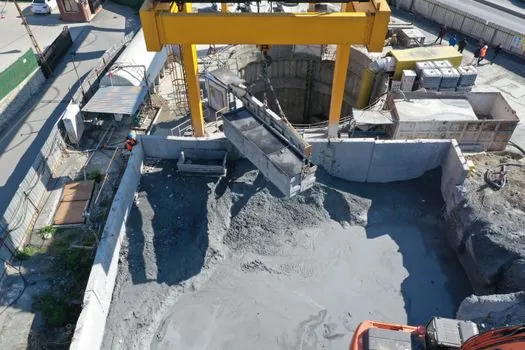
AWPs are specified for utility construction and maintenance, wind sector construction and maintenance, building and construction sites, port and shipyard construction and maintenance, bridge inspection, filming and lighting, and the telecommunication sector, especially when the workface is awkward and the load is light [S1]. They are not the right call when the lift exceeds roughly one ton, when the load must be held for long durations at full radius, or when the work envelope crosses a public right-of-way that the machine footprint cannot occupy.
Tower cranes are specified for high-rise concrete and steel construction, power-plant and heavy civil work, and any site where a defined radius must be served repeatedly with multi-tonne prefabricated elements. They are not the right call for low-rise touch-up, façade cleaning on an existing occupied building, or any job where a single mobile visit per day is the duty cycle. In a fire-rescue scenario, a crane "might work well for removing someone from the top of a building, tower or structure, but there are just so many easier methods" that get a rescuer to the casualty faster [S6], which is why aerial ladders and platforms, not tower cranes, are the standard rescue tool.
Criteria-based comparison: AWP vs tower crane
Side by side on the four selection criteria, the machines separate cleanly. The AWP wins on mobility, set-up time, and ability to work up-and-over, while the tower crane wins on absolute lift capacity and on serving a fixed radius day after day without repositioning. The AWP generally reaches 10–48 m on articulating booms [S8] and well beyond that on truck-mounted telescopic platforms, but a tower crane on a tied-in mast can run higher in exchange for days of climbing work. Crane operators require dual-rated skill for personnel and material lifts, whereas AWPs carry people by design and "require no dual rating" [S1].
On cost, a tower crane is justified by a high lift count over a long campaign; an AWP is justified by short-duration tasks and bid opportunities where a crane simply cannot be set up. The hybrid play that several rental fleets have adopted is to add truck-mounted AWPs alongside their crawler, tower, and truck-mounted crane inventory, because the existing operators, technicians, and industry contacts transfer to the aerial platform business with limited retraining [S1].
Real use cases where the two are paired
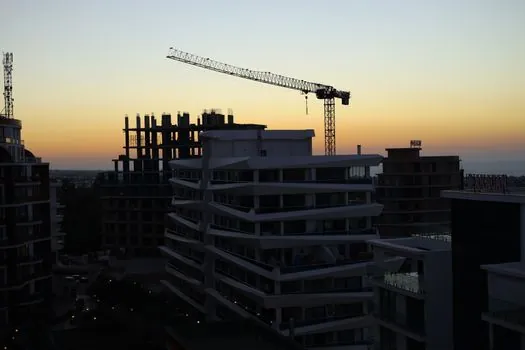
The strongest case for owning both is the restoration or dismantling project where a crane does the heavy lifting and an aerial work platform does the people-lift at the same time. On the Lamminsivu renovation of an old pellet tower, the crane lifted the structural pieces into position while an aerial work platform carried the tradesmen to the workface, and the same combination shows up on rollercoaster construction where the two machines run side-by-side for the full build cycle [S1]. The complementary logic is simple: cranes are sturdy and lift heavy loads, aerial work platforms are agile and versatile, and "using both methods, cranes and aerial platforms benefit every stage of an operation" [S1].
For facility management on an existing occupied building, the comparison is usually not against a tower crane at all, it is against scaffolding, and on that comparison the AWP wins on setup and re-positioning speed even though scaffolding is still the cheaper option for static work over many weeks [S5]. The OSHA rule that governs the choice between active and passive fall protection is keyed to whether the platform extends out beyond the base: out-and-over triggers a full-body harness and shock-absorbing lanyard, straight-up triggers guardrails [S5].
Limitations, failure modes, and standards to check
The headline AWP failure mode is overturning, driven by outrigger placement on soft ground, exceeding the platform's SWL, or using the machine in wind above its rated limit; that is why the SWL ceiling of "usually less than a ton" is the number to defend at the bidding stage, not the marketing brochure working height [S2]. For a tower crane, the failure modes are structural: foundation failure, over-radius lift, two-block, and weather exceedance, all of which are managed by the manufacturer's load chart, the operator's certification, and the site-specific lift plan.
On standards, OSHA scaffolding rules set the 10-foot fall-protection trigger height for supported scaffolds and require tie-off on suspended scaffolds, and the same regulatory framework keys the AWP fall-protection decision to whether the work platform extends farther than the base [S5]. For mobile elevating work platforms, ANSI A92 standards govern the US market and the equivalent EN 280 series governs Europe, with the manufacturer publishing a load chart that becomes the legal lifting document on site. The crane side is covered by ASME B30 series for crawler, truck, and tower cranes, with operator certification to NCCCO or equivalent. The two equipment classes do not share a single standard, and engineers should not let a vendor's marketing blur the boundary: a boom lift is not a personnel hoist, and a personnel hoist is not a boom lift.
Sourcing, lead time, and fleet decisions
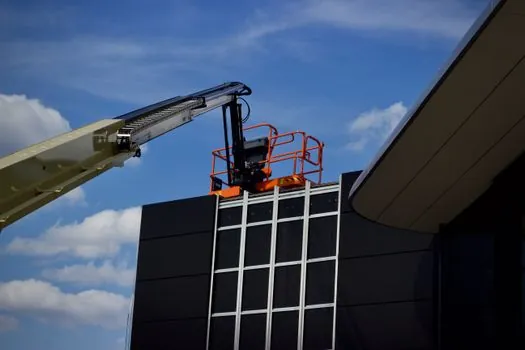
For rental fleets already running crawler, tower, or truck-mounted cranes, the data-driven case for adding truck-mounted aerial work platforms is direct: the same operators, technicians, and industry contacts can run the new fleet with limited retraining, and the platforms unlock bids in utility, wind, telecom, ports, shipyards, bridge inspection, and media that the crane-only fleet would otherwise miss [S1]. The decisive question is whether the fleet's bid pipeline has enough tight-access or short-duration work to justify a new chassis; if the answer is yes, the platform is a margin lever, not a side bet. For an engineer outside the rental business, the parallel question is whether the project's lift count and duration justify the tower crane's lead time, or whether an AWP and a telehandler will do the job for less. On mid-rise commercial work, the answer is increasingly "platform plus telehandler" rather than a fixed mast.
Trackable signals for the next planning window: the published working-height envelope of articulating booms (currently 10–48 m on the most common diesel and electric models) [S8], the share of rental fleets running both classes, and any tightening of OSHA or EN 280 fall-protection rules that would force a fleet renewal. None of these is a forecast; each is a published number or a draft regulation an engineer can read.
The underlying component specifications are covered under aerial work platform, and aerial work truck.
This topic is covered further in Fire-Rated Door Selection for High-Rise Buildings: Ratings, Materials, and Code Gates.