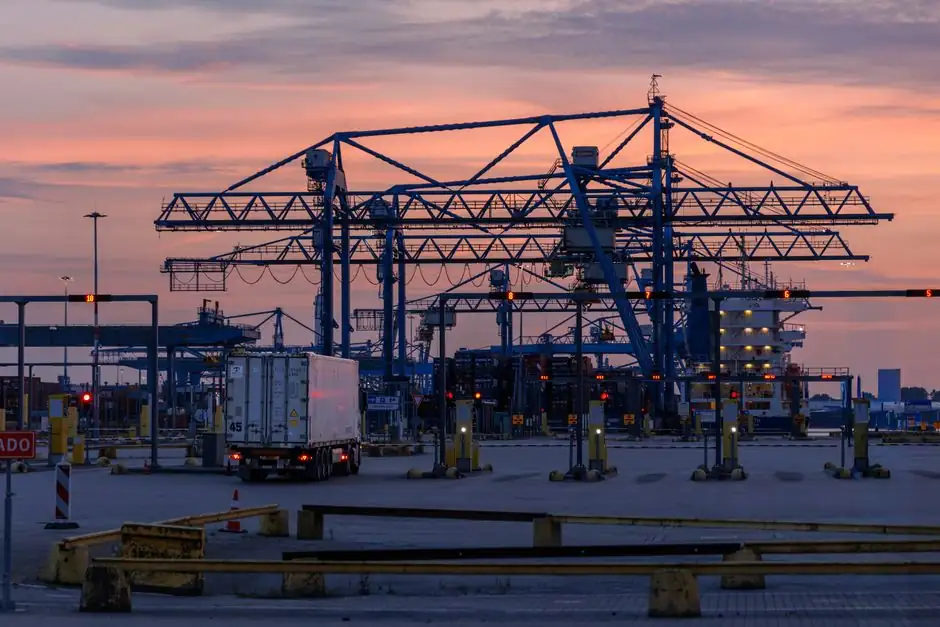
Under ASME B30.5 (mobile and locomotive cranes), a truck-mounted crane is defined as a rotating crane and boom on a commercial truck chassis, which is the same legal family as a "truck crane" [S2]. The split that actually matters on a jobsheet in 2026 is boom truck (crane on a stock chassis, lighter, roadable) versus hydraulic truck crane (crane on a purpose-built carrier, heavier, longer reach) [S2][S3].
Maxim's boom-truck fleet tops out at 65 US tons, and its hydraulic truck-crane fleet reaches 140 US tons; All Crane's boom trucks span 23–50 US tons while its truck cranes span 40–140 US tons [S2][S3]. Those are the two capacity bands that define the procurement question and frame the rest of this guide.
Definitions: what "truck crane" and "truck-mounted crane" actually mean
"Truck crane" is a parent category, not a single machine, and it includes boom trucks, conventional truck cranes, and hydraulic truck cranes, all treated as mobile, truck-mounted cranes under ASME B30.5 [S2]. A boom truck is a hydraulic crane mounted on a standard commercial truck chassis, usually keeping a flatbed for hauling, while a hydraulic truck crane is a mobile crane built on a purpose-built carrier with a telescopic boom [S2]. Custom Truck makes the same structural point: a boom truck is a crane attached to a standard chassis, while a truck crane uses a purpose-built carrier designed specifically to transport the crane [S1].
Outside North America the wording often shifts: a "truck-mounted crane" or "lorry crane" is treated as a knuckle-boom or stiff-boom loader crane with cargo bed for lift-plus-transport in one vehicle, and a "truck crane" (automobile crane) is the dedicated lifter with no bed and H-type outriggers [S5]. HMF's taxonomy of knuckle boom, long boom, recycling, telescopic, grab, service, and construction loader cranes covers the truck-mounted-crane family used in Europe and Asia [S7]. Operators comparing machines in this segment can find the truck-mounted crane category overview useful as a baseline reference.
Decision criteria: load, reach, roadability, duty cycle
Maxim frames the choice around six factors: load weight, reach and height, roadability, site access, duty cycle, and project duration plus budget [S2]. All Crane adds tire/axle count and steering modes as separate decision gates: all-terrain cranes can carry nine axles and offer crab steering, truck cranes commonly run three or four axles with optional rear-axle steering, and boom trucks use the commercial chassis' stock tire and axle package [S3].
For a yard logistics role where one operator needs to pick, haul, and unload in a single cycle, a truck-mounted loader crane on a stock chassis is the integrated lift-plus-transport solution and is reported to cut operational cost by up to 40% versus dispatching a crane and a separate flatbed [S5]. For repeated, heavier lifts where reach and stability dominate, a hydraulic truck crane on a purpose-built carrier remains the right tool, because the chassis is engineered around the load rather than around payload capacity [S2][S3].
Capacity comparison: boom truck vs hydraulic truck crane
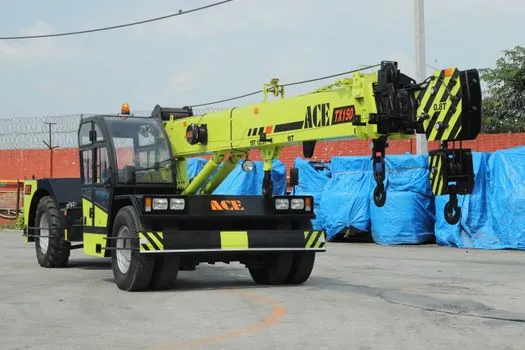
Across the major North American rental fleets, boom trucks cluster in the 23–65 US ton band and hydraulic truck cranes in the 40–140 US ton band, with all-terrain cranes extending to 45–900 US tons [S2][S3]. The literal comparison table Maxim publishes is: boom truck up to 40 US tons in one fleet segment and up to 65 US tons across the broader fleet, telescopic or articulating (knuckle) boom, fast setup, and best fit for utility, sign, HVAC, and roof-delivery work; hydraulic truck crane up to 140 US tons, telescopic boom only, larger footprint, longer setup, and best fit for heavier construction and industrial lifts [S2].
Outside the heavy-lift North American fleets, the lorry-crane (truck-mounted crane) sweet spot for 2026 sits in the 15–30 ton range, with a published total-cost-of-ownership advantage over dedicated mobile cranes for urban infrastructure, logistics, and municipal work, while dedicated mobile cranes (automobile cranes) cover 50 to 1000+ tons and dominate mega-projects such as tower-crane erection, large HVAC on skyscrapers, and heavy bridge construction [S5]. The procurement rule of thumb: under 30 tons and high mobility, specify a truck-mounted loader crane; 30–140 tons, specify a hydraulic truck crane; above 140 tons or where multi-axle off-road steering is required, move to an all-terrain crane [S2][S3][S5].
Boom type, chassis, and operating constraints
Boom trucks accept either a telescopic boom, suited for uneven terrain and reaching past obstacles, or an articulating (knuckle) boom, which bends at a joint for tight-space work and precise placement; both can carry an optional man-basket at the tip [S1]. Cab configuration runs fixed, swing, and fifth-wheel tractor (rear-mount), with the swing cab rotating with the boom so the operator can see the load directly [S1].
Hydraulic truck cranes run telescopic booms only, and their carrier is purpose-built: three or four axles on commercial-grade tires optimized for highway travel rather than off-road, fewer driven axles than an all-terrain, and optional rear-axle steering for tighter turning radius [S2][S3]. OSHA generally requires a certified operator for construction-duty cranes, and both classes are commonly available bare or with an operated-and-maintained crew [S2].
Where each machine fits (and where it fails)
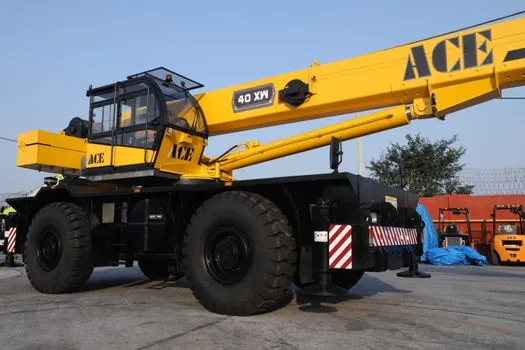
Boom trucks dominate power, oil and gas, commercial roofing, sign work, and HVAC service routes where the same truck can haul material, lift, and reposition between short hops in a workday [S1][S2]. Truck-mounted loader cranes in the 2–30 ton class cover general construction, urban landscaping, municipal maintenance, and last-mile logistics, where the integrated load-and-go cycle replaces a crane-plus-flatbed convoy [S5].
Hydraulic truck cranes (40–140 US tons) are the economical middle ground for industrial construction, chemical plants, HVAC and facility maintenance, and longer-duration lifts where setup time is amortized over many picks [S1][S3]. All-terrain cranes replace them when the site demands nine-axle ground load distribution, multi-mode steering including crab steer, and travel between paved and unpaved ground without a permit rig [S3]. Failure modes to plan around: boom trucks lack advanced steering and out of the box cannot match an all-terrain's off-road grade; hydraulic truck cranes need more setup time and a larger pad; truck-mounted loader cranes lose their edge above ~30 tons because chassis payload and structural limits start to dictate the design [S2][S3][S5].
Operator, standard, and sourcing constraints
ASME B30.5 is the governing US standard for mobile and locomotive cranes and is the rule both the boom truck and hydraulic truck crane fall under [S2]. OSHA generally requires a certified operator for construction use, and both machine classes are routinely rented bare or with crew [S2]. Fleet specs in this segment are published by the major North American rental operators (Maxim, All Crane) and by regional manufacturers in Asia and Europe; the truck-mounted crane family page consolidates the chassis, outrigger, and boom-type variants in one reference, and the truck crane category page is the closest cross-reference for the dedicated-lifter parent category.
Trackable signals for the next sourcing cycle: the 15–30 ton truck-mounted-crane segment is identified as the 2026 procurement sweet spot with documented TCO gains over a crane-plus-flatbed pair [S5]; fleet capacity ceilings in North America sit at 65 US tons for boom trucks and 140 US tons for hydraulic truck cranes, with all-terrain pushing to 900 US tons [S2][S3]; OSHA operator certification and ASME B30.5 remain the non-negotiable compliance gates for any US construction deployment [S2]. For teams standardising equipment selection across adjacent categories, the broader mobile work-truck reference set covers chassis and operator-platform decisions that overlap with crane carrier selection.
For the relevant spec sheets and selection criteria, see truck mounted concrete pump.
This topic is covered further in Sand Casting Mold Selection for Agriculture Machinery: 2026 Spec Map.