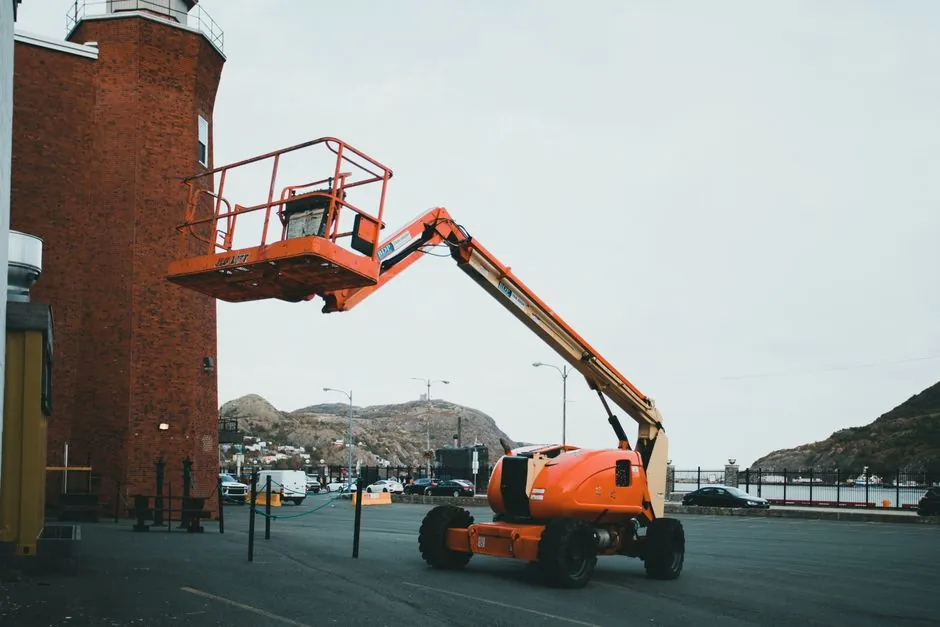
An aerial work platform is engineered to lift people (plus hand tools) to a working position, while a truck-mounted crane is engineered to lift and slew heavy goods via a hydraulic telescopic or knuckle boom; confusing the two is the most common procurement error on utility and signage tenders.
Current truck-mounted AWP models cover working heights from roughly 6 m to above 40 m, with platform load capacities typically 200-600 kg, as catalogued for boom, scissor, and truck-mounted variants [S5]. Truck-mounted cranes in the same product catalogues are sold by lifting class from 1 ton up to 25 ton on a single chassis [S1].
Definition and Functional Boundary
An aerial work platform (AWP), also called a mobile elevating work platform (MEWP), is a vehicle-mounted device whose primary output is elevated access for personnel: a bucket or platform, an extending structure, a wheeled or truck chassis, and outriggers for stabilisation [S3][S5]. On an aerial work truck, control stations in the bucket and at the slewing seat manage engine start/stop, high/low throttle, electro-hydraulic proportional valve motion, and continuous left/right slewing; an emergency pump lowers the bucket if the main pump fails, with night lighting and safety alarm as standard [S4].
A truck-mounted crane, by contrast, is a hydraulic lifting, telescoping, slewing device fitted to a cargo or special chassis, with the driving cab and lifting control room separated [S4]. Its load path is rated for mass, not for human occupancy, and no bucket-level man-riding control chain, emergency descent pump, or platform levelling linkage is fitted by design.
Operating Envelope Numbers (2026 Catalogue Range)
For truck-mounted AWPs the published height envelope spans 6 m to over 40 m depending on model, and standard platform/bucket load sits in a 200-600 kg band, sized for personnel, tools, and small materials [S5]. Chassis fitment is commonly Nissan or Iveco for European urban and confined-site work, with telescopic-arm Scorpion and articulated-arm Snake variants covering most heights [S2]. A representative 27 m truck-mounted AWP is sold on a standard truck chassis for direct transfer and quick deployment between sites [S1].
For truck-mounted cranes the catalogue is structured by lifting class: 1, 2, 3, 4, 5, 6, 8, 10, 12, 16, 20, and 25 ton models appear as distinct SKUs from the same OEM, reflecting load-class-specific boom, outrigger, and chassis design rather than a single continuous tonnage spectrum [S1]. Crane trucks are typically dispatched to stations, warehouses, docks, construction sites, and field rescue, where the load is goods, not people [S4].
Side-by-Side Selection Criteria

Four criteria separate these machines on tender day: primary load, height, reach geometry, and required safety chain. On primary load, an AWP bucket is rated 200-600 kg of people and tools [S5], whereas a crane is rated by tonnage class from 1 ton upward [S1]. On height, AWPs cover 6-40 m+ with vertical travel as the design intent [S5], while crane booms are sized for radius and tonnage first, height second. On reach geometry, the AWP working arm is typically a knuckle or telescopic arm meant to overhang obstacles and work in a small radius [S2][S4], whereas the crane uses a slewing hydraulic telescopic boom for material placement. On safety chain, the AWP carries bucket controls, an emergency descent pump, platform auto-levelling, alarms, and night lighting as standard equipment [S4]; a crane truck does not carry that man-riding chain, and a worker placed in a crane hook is outside the design envelope [S4].
That last row is the regulatory dividing line: the AWP safety package exists because the worker is the load, so the failure mode (main pump loss) must have a recovery path designed in. A crane has no such recovery path because the design assumes no one is in the load envelope.
Who Each Machine Is For (and Who It Is Not For)
A truck-mounted AWP is the correct spec for street-lighting maintenance, tree trimming, wall and facade cleaning, bridge inspection, signage work, and electrical line work where workers must reach overhead with both hands free and a stable footing [S2][S4]. It is the wrong tool for lifting concrete blocks, rebar cages, generators, HVAC modules, or any load above the bucket payload band.
A truck-mounted crane is the correct spec for loading and unloading cargo, lifting generators, setting structural steel, placing roof-top mechanical equipment, and field-rescue load handling [S4]. It is the wrong tool, and outside the safety design, for carrying personnel, because modified crane trucks lack the bucket control station, the emergency pump, and the platform auto-levelling linkage that an AWP carries by design [S4]. A cross-look at the closely related load-handling comparison is given in this truck crane vs truck-mounted crane 2026 spec decision map.
Work-Site and Mobility Constraints
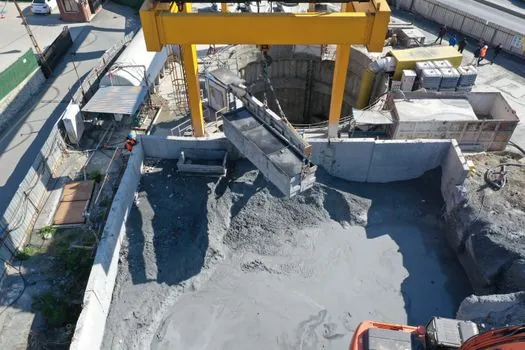
AWP mobility is dominated by bucket positioning, not travel speed: outriggers are deployed for stability before the boom moves, and the boom is designed to overhang obstacles, cross barriers, or work at multiple points without re-spotting the chassis [S4]. The truck chassis is selected for road transfer between sites, with typical 6 m to above 40 m working heights on the deployed envelope [S5].
Crane mobility is dominated by load radius and outrigger spread: outriggers are deployed for stability, the boom slews continuously, and the truck is selected by lifting class and roadability for the heaviest expected lift on the route. The chassis also needs to be road-legal for the gross vehicle weight that the chosen tonnage class implies, which is why crane catalogues separate 1, 5, 10, 20, and 25 ton SKUs with distinct chassis specifications [S1].
Cost, Conversion, and Common Mis-spec Pitfalls
Cost drivers differ by machine. For an AWP, the dominant cost blocks are the boom structure, the bucket safety package (controls, emergency pump, auto-levelling, alarms, lighting), and the outrigger system, plus the underlying truck chassis. For a crane, the dominant cost blocks are the lifting-class-rated boom, slewing ring, hydraulic system sized for tonnage, and chassis rating for the load class. A 27 m truck-mounted AWP is sold as a single integrated unit on a standard truck chassis for direct transfer and quick deployment [S1], which is the procurement model most fleet operators want for urban work at height.
The most common mis-spec is treating a crane truck as a substitute man-lift. Qingling-Isuzu's own comparison states that a modified crane does not have the safety protection function, and in case of failure the staff in the working bucket have no way to save themselves [S4]. The reverse mis-spec, using a truck-mounted AWP to lift a generator or a rebar cage above its 200-600 kg bucket rating [S5], is equally common on small sites; the boom and outrigger system are not sized for repeated tonnage-class lifts.
Decision Rules for the Buyer in 2026
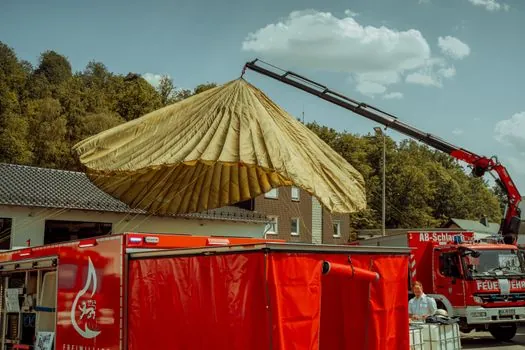
Use this three-question filter when writing the spec. (1) Is the load people, or goods? If people, the answer is a truck-mounted AWP with the full bucket safety package, and the height selection is 6-40 m+ per model [S5]. (2) Is the load above the 200-600 kg bucket band, or outside the bucket envelope by geometry? If yes, the answer is a truck-mounted crane sized by tonnage class from 1 to 25 ton [S1]. (3) Is the route a mix of both, with personnel at height and periodic heavy lifts? The correct fleet answer is two machines, not a modified crane, because the safety chain of one machine cannot be retrofitted onto the other without redesigning the boom, outriggers, and control architecture.
Watch on the next spec cycle: AWP chassis availability on common European cab-chassis (Iveco, Nissan) for the 27-40 m band [S1][S2], and crane OEM expansion of the sub-3 ton knuckle-boom class for last-mile urban delivery work, where tonnage demand is dropping but lift frequency is rising.