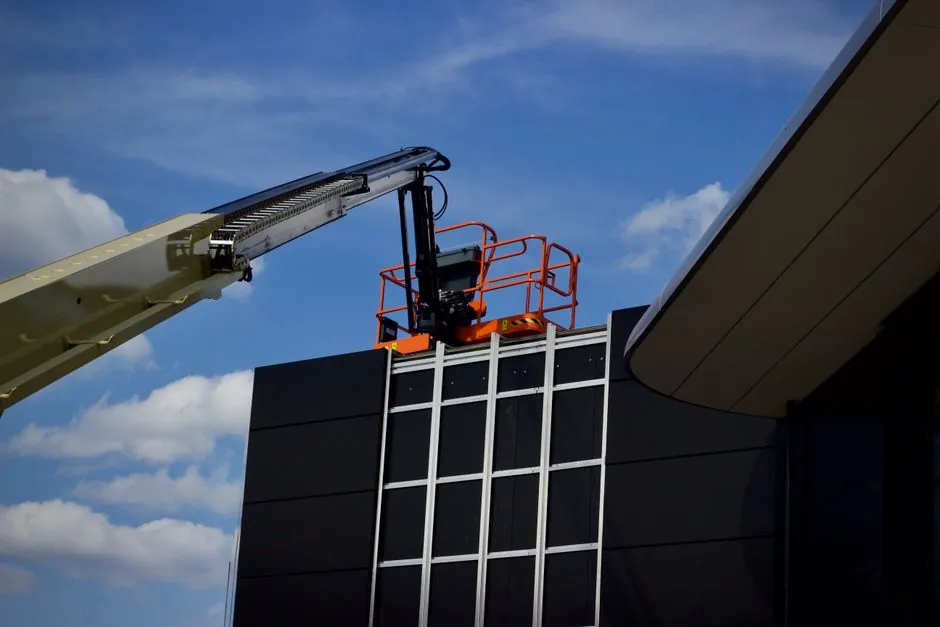
Construction-grade aerial work platforms span working heights of roughly 6 m to 40 m depending on configuration, with scissor lifts clustered between about 5.8 m and 12.2 m (19–40 ft), articulating booms between 11.6 m and 41.5 m (38–136 ft), and telescopic booms reaching 40 m and beyond [S1][S2][S5].
Working height is a marketing-defined figure equal to platform-floor height plus approximately 1.8 m (6 ft) of average operator reach, so a 12 m (40 ft) scissor lift actually elevates its basket floor to about 10.4 m (34 ft) [S3]. The selection rule is straightforward: pick a working height that clears the highest task point with operator reach, then verify basket capacity, deck size, and indoor/outdoor duty cycle match the jobsite.
Where Each AWP Type Fits by Working Height
Construction sites typically select a platform from five mechanical families, each with a distinct working-height envelope. Vertical mast lifts cover approximately 4 m to 8 m (13–26 ft) for narrow-aisle mechanical and electrical work, scissor lifts span roughly 5.5 m to 19 m (18–63 ft) for facade and overhead MEP tasks, articulating booms cover 11.6 m to 41.5 m (38–136 ft) for "up and over" structural steel, and telescopic booms reach 15.8 m to 42 m (52–138 ft) for long, straight outreach to building edges or highway signage [S5][S6].
For typical construction tasks, the practical working-height bands are: 6 m personnel lifts for one-worker ceiling access, 8 m scissor lifts for residential interior fit-out, 12 m scissor lifts for two-storey facade work, 14 m articulating booms for low-rise steel erection, 18–20 m telescopic booms for mid-rise commercial facades and high-bay industrial facilities, and 24 m plus for structural steel on buildings above four storeys [S3][S7][S9]. Haulotte's published product range mirrors these bands, with articulating booms topping out at 41.5 m (136 ft) and telescopic booms at 42 m (138 ft) [S5].
Comparison of AWP Types on Construction Selection Criteria
The four main categories that construction buyers compare line up as follows on the criteria that drive specification. Vertical mast lifts and small scissor lifts dominate indoor electrical and HVAC work below 8 m because they fit through standard doorways and run on electric power with zero exhaust [S4][S5]. Scissor lifts from 8 m to 19 m are the default for repetitive vertical tasks on level ground, with deck sizes wide enough for two workers and material [S4][S6]. Articulating booms (11.6–41.5 m) add the ability to reach over obstacles such as building edges, mezzanines, and tree canopies, at the cost of a heavier chassis and higher daily rental [S3][S5].
Telescopic booms (up to 42 m) deliver the longest straight outreach for tasks like bridge inspection, high-rise window cleaning, and stadium signage, and the largest models above 24 m (80 ft) typically require flatbed delivery rather than trailer tow [S3][S5]. The aerial work platform family as a whole is engineered for temporary access, not as a permanent lifting device, and most units are designed for sub-1-tonne payloads and single-operator setup [S2].
Typical Working-Height Bands by Construction Application
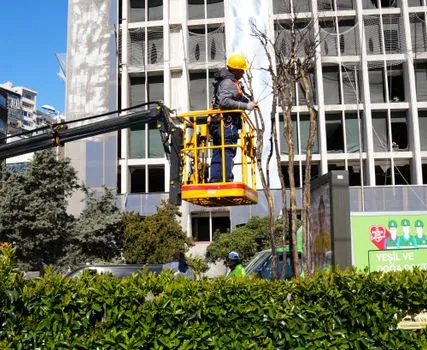
For one-storey residential and light commercial work, a 6 m to 8 m mast lift or compact scissor is the standard spec, with personnel lifts capping out at roughly 8 m (26 ft) for single-worker access [S9]. Two-storey residential facades generally need a working height of 6 m to 7.6 m (20–25 ft roofline), which a 9 m (30 ft) boom clears with margin, and a 12 m (40 ft) model is preferred for steep-pitch gutter and fascia work [S3].
Mid-rise commercial facades, large retail interiors, and industrial facilities with high bays typically need 13.7 m to 15.2 m (45–50 ft) of working height, and 18.3 m (60 ft) is the common next step for warehouse ceilings above 12 m and large industrial spaces [S3][S4]. Construction tasks above 18 m, including structural steel on buildings taller than four storeys and bridge soffit work, are the domain of 24 m to 40 m telescopic booms, with the largest units delivering straight horizontal outreach beyond 20 m at full elevation [S1][S5]. For context on how chassis choice affects this height envelope, the aerial work truck category covers vehicle-mounted platforms that trade raw reach for road-going mobility.
Indoor vs Outdoor Working-Height Considerations
Indoor AWPs are typically lighter and shorter, with indoor scissor and mast models commonly rated from 3.5 m to 6 m of platform height, well below the 12 m+ outdoor scissor and boom range [S2]. Electric drive dominates indoor selections because exhaust is unacceptable inside warehouses and food-grade facilities, and electric articulating booms in the 9 m to 14 m (30–45 ft) band are the default for ceiling heights of 6 m to 12 m; above 12 m (40 ft) of ceiling height, a 18 m (60 ft) electric articulating boom is the typical spec [S3].
Outdoor and rough-terrain construction sites swing toward diesel or dual-fuel articulated and telescopic booms because hydraulic outriggers, four-wheel drive, and higher ground clearance are needed more than maximum reach [S1][S5]. The electric vs diesel aerial work platform decision typically hinges on emission rules, indoor/outdoor split, and whether the unit will tow between sites or run from a single pad. Operating rules also change with height: drive-while-elevated speed limits tighten on most booms above 10 m of platform height, which is covered in the drive-while-elevated speed limits on aerial work platforms reference.
Limitations and Mis-Spec Risks by Height Band

The most common mis-spec is confusing working height with platform height and ending up short by 1.8 m (6 ft) of operator reach [S3]. Scissor lifts have no horizontal outreach, so any task that requires reaching over a parapet, hedge, or structural member needs an articulating or telescopic boom regardless of how modest the height looks on paper [S1][S4].
Units above 18 m (60 ft) typically cannot be towed by a light vehicle and need flatbed transport, which adds delivery cost and lead time, and many jurisdictions require a commercial driver's licence for the transport vehicle even when the operator on the platform needs only OSHA-authorized training [S3]. Larger booms also concentrate load at the outrigger pads, so ground-bearing pressure and slab capacity need checking on indoor slabs and on suspended floors. Floor load ratings and door clearances should always be confirmed before a 12 m+ electric articulating boom is committed to an indoor job, per the manufacturer's rental guidance [S3]. For the broader equipment context, see the construction machinery and equipment reference.
Standards, Safety, and Sourcing Anchors
Height classifications and operator training for AWPs in the U.S. fall under OSHA 29 CFR 1926.453 for aerial lifts, with ANSI A92.20 covering design, calculations, safety requirements, and test methods for elevating work platforms; in Europe the equivalent is EN 280, which most manufacturers self-certify against [S2][S4]. Boom-lift design, testing, and training are commonly third-party verified to ANSI A92.22 (aerial work platform training) and ANSI A92.24 (aerial work platform operator training), which are the figures most U.S. rental providers and site safety officers reference when signing off an operator.
Construction buyers should always confirm the quoted figure is working height, not platform height, and request basket dimensions, safe working load, gradeability, and power source in writing before delivery [S1][S3]. For cost context, the aerial work platform price per meter of working height 2026 cost driver breakdown reference tracks how daily rental rates scale from about USD 250–400 for 9–12 m units up to USD 800–1,500 per day for 24 m+ telescopic booms.
Next trackable signals for specifiers to watch: Haulotte and Genie have published 2026 product-line working-height envelopes topping out near 42 m for production booms, and several manufacturers have confirmed 2026 platform refreshes that push electric articulating boom working heights into the 18 m band without sacrificing indoor maneuverability [S5].