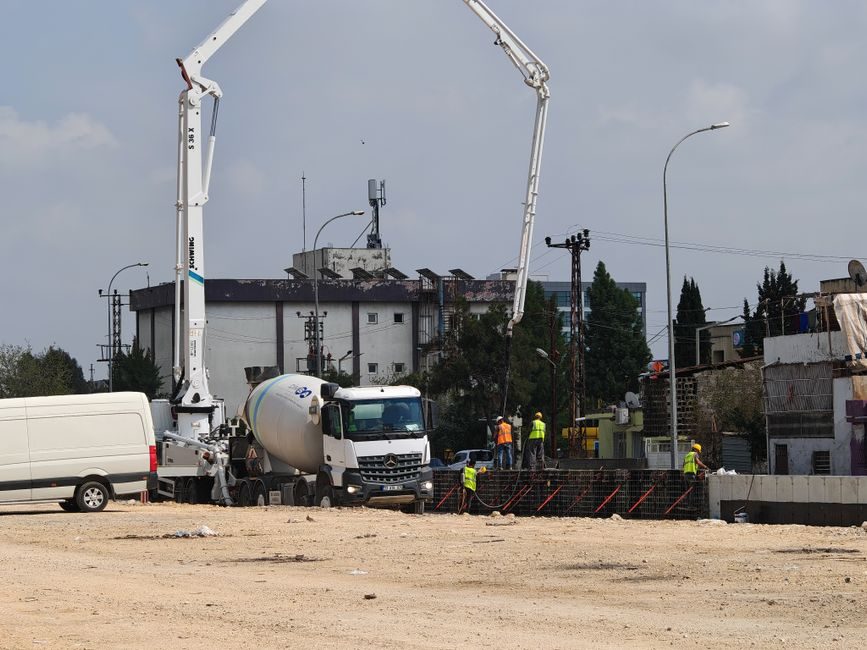
Suizhou, Hubei and Jining, Shandong concentrate the bulk of China's aerial work truck OEM capacity, with 8+ audited manufacturers and 24+ catalogue SKUs visible on Made-in-China.com as of 30 May 2026, primarily truck-mounted platforms in the 12-30 m working-height band [S1][S2].
Across the directory, 1-piece MOQ and FOB unit prices span roughly US$ 9,999-42,000 depending on working height, boom articulation, and chassis brand — with the lowest entry band (US$ 9,999-15,900) sitting in Hubei's Zhuanli and RAYAT listings, and the upper band (US$ 28,290-42,000) covered by Shandong Yitaiwei and Sitrak-head tractor-derived builds [S3][S6]. For buyers unfamiliar with the category, the aerial work truck family covers truck-mounted elevating work platforms designed for one to two operators at height, distinct from self-propelled aerial work platforms that ride on outriggers alone.
Height, Boom Type and Chassis Spec Bands in Active Catalogues
Jining Baoliwei's 12-18 m articulated JGK-series carries a 200 kg / 2-person platform rated load across the full height range (model codes JQ5050JGK-12 / -14 and JQ5060JGK-16 / -18), matching the EN 280 class of 200 kg minimum platform capacity that has become the de-facto export-floor baseline for two-person bucket lifts [S2]. I-Suzu large-platform builds out of Hubei Jiafeng push the working-height envelope to 22-30 m, targeted at exterior-wall renovation and advertising installation crews that need reach beyond the 18 m ceiling of standard articulating booms [S1].
Chassis sourcing is dominated by Isuzu, Dongfeng, Foton, JAC and Sitrak (CNHTC) cabs — typically 4×2 in the 5-6 t GVW class for 12-18 m builds, escalating to 6×4 for the 22-30 m large-platform segment where the extended moment load on outriggers exceeds the lighter truck's payload-reserve margin [S1][S3][S5]. For buyers cross-shopping chassis standards and reach envelopes, the boom type, chassis and insulation spec band guide lays the engineering levers against the same height and payload numbers discussed here.
Price Bands, MOQ Rules and Payment Terms Observed in July 2026 Listings
FOB unit prices in active listings cluster in three tiers: entry US$ 9,999-15,900 (12-16 m builds, basic articulating booms, Isuzu/Dongfeng chassis); mid-tier US$ 15,500-28,860 (16-22 m, telescopic or articulated, larger outrigger span); and upper-tier US$ 28,290-42,000 (22-30 m large-platform, multi-section booms, heavy chassis) [S2][S6]. All sampled listings enforce a 1-piece MOQ, signalling that OEM parent factories are willing to ship single-unit builds to export buyers rather than gate behind container-fill volumes [S1][S2][S5][S6].
Payment terms across Okorder and Made-in-China listings are uniformly T/T (telegraphic transfer) or L/C (letter of credit), with Tianjin and other China-main ports named as standard FOB loading points, and a 500-unit/month stated supply capability on the 12 m suspended-platform SKU [S5]. Lead times are not published in the directory excerpts reviewed, which is normal — most Chinese OEMs quote lead time only against an issued PO with confirmed chassis allocation. For comparison, similar MOQ and tiered pricing logic governs dump truck and concrete mixer truck sourcing from the same Suizhou cluster, where the same trading-company and audited-supplier overlap appears.
OEM Cluster Map: Hubei (Suizhou) vs Shandong (Jining)
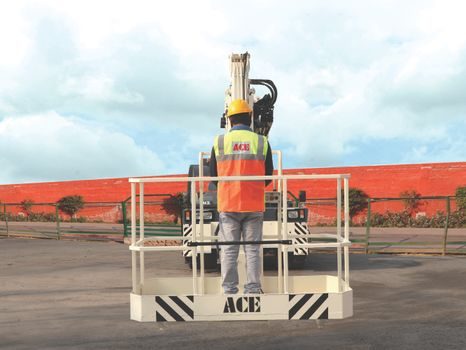
Suizhou, Hubei remains the volume centre for aerial-lift and specialty-truck OEMs, with Hubei Jiafeng (trading company, mixed fleet including wrecker and compactor refuse bodies), Hubei RAYAT (Diamond Member / audited supplier, US$ 29,999-39,999 large-platform range), and Hubei Zhuanli (US$ 9,999-15,900 entry tier) all headquartered in the same prefecture [S1][S6]. Suizhou's adjacency to the Dongfeng, Foton and Chenglong chassis plants in Wuhan and Xiangyang is a direct logistics advantage for buyers wanting short truck-cab lead times.
Jining, Shandong is the secondary cluster, anchored by Jining Baoliwei Construction Machinery Sales (Economic Development Zone, south of Provincial Road 338) and Shandong Yitaiwei Machinery Equipment (Diamond Member, US$ 28,290-28,860 mid-tier range) [S4][S6]. Shandong's cluster skews toward heavy-construction attachments and crawler crane derivatives, and tends to compete on boom-section engineering rather than entry-level price. For buyers also sourcing structural inputs, the China steel plate suppliers 2026 map covers the same Shandong/Hebei mill-to-OEM supply chain that feeds these boom and outrigger fabricators.
Selection Criteria: Audited Supplier Status, Working Height and Chassis
Three decision criteria dominate a first-pass buy: (1) audited-supplier / Diamond-Member status on Made-in-China, which is the directory's only public signal of on-site factory verification; (2) working height and platform capacity (200 kg / 2 persons is the EN 280 baseline; 12 m vs 18 m vs 22-30 m are the three volume price tiers); and (3) chassis brand and GVW class, which determine the maximum allowable outrigger spread and road-legal axle load in the destination market [S1][S3][S4][S6]. For a structured comparison across these axes:
Entry tier (Hubei Zhuanli, US$ 9,999-15,900) — 12-16 m articulating, Isuzu/Dongfeng 4×2 chassis, 200 kg platform, suitable for municipal lighting and signage crews. Mid-tier (Shandong Yitaiwei, US$ 28,290-28,860; Suizhou mid-range at US$ 15,500) — 16-22 m telescopic or articulated, 5-6 t GVW, suitable for utility-line and telecom maintenance. Upper tier (Hubei RAYAT US$ 29,999-39,999; I-Suzu large-platform US$ ~42,000 equivalent) — 22-30 m large-platform, 6×4 heavy chassis, designed for facade renovation and stadium-roof access. Verified factory status (Jining Baoliwei, Hubei RAYAT) should be weighted above price for any buyer who has not visited the OEM site, since unverified trading-company resellers are also active in the same category.
Limitations, Failure Modes and Sourcing Pitfalls
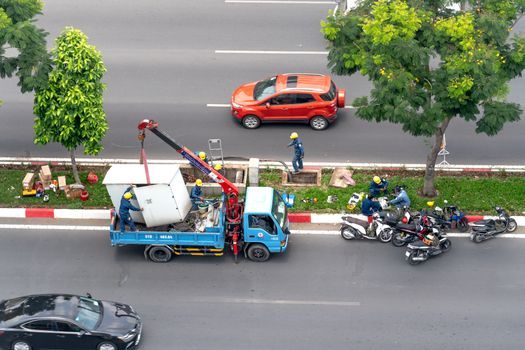
Chinese aerial work truck directories do not publish boom-cycle endurance data, outrigger pad load, or platform-leveling fail-safe behaviour — all of which are mandatory under EN 280 for EU buyers and ANSI A92.20 for US buyers. A 200 kg / 2-person platform rating printed in the SKU title is the entry threshold only; sustained-cycle duty, wind-load rating (typically 12.5 m/s per EN 280), and the interlocks on the upper-control station are not visible in the listing excerpt [S1].
Common sourcing pitfalls: (a) mixing a standard 14 m JGK articulating boom with a chassis whose front-axle reserve payload is below the boom's maximum-moment reaction (the truck will fail road-side weighing or, worse, tip during outrigger deployment on soft ground); (b) specifying a CCC-certified chassis build (mandatory for China-domestic sale) versus an export-only build that omits CCC and instead meets ECE R29 cab-strength or DOT equivalent — the SKU title in [S3] flags this with the literal "CCC certified" tag, which is a domestic-market marker not an export one; (c) payment-term exposure: T/T 30/70 is the default on these listings, and L/C at sight is available but typically raises the unit price 2-5% to cover the OEM's bank charges.
Standards, Compliance Anchors and Cross-Reference to SourceBySpec
The de-facto export standards buyers should request proof of from the OEM: EN 280 (mobile elevating work platforms, the EU reference), ANSI A92.20 (US design), AS/NZS 1418.10 (Australia/NZ), and for chassis, ECE R29 (cab strength) plus the destination-market emissions step (Euro VI / EPA Tier 4f). Boom-steel traceability typically relies on Q355B or Q690 plate per GB/T 1591, which the same Shandong/Hebei mill network feeding the OEM boom fabricators also supplies to other heavy-machinery sectors [S3][S4].
For buyers also evaluating chassis and powertrain alternatives in the same supplier base, the mining dump truck OEM cluster map covers the overlapping Shandong heavy-truck fabricators. The aerial work platform encyclopedia page, distinct from the truck-mounted variant, covers self-propelled scissor and articulating lifts for warehouse and indoor use, which several of the same Hubei OEMs also produce.
Buyers tracking this category should watch three verifiable signals through the rest of 2026: (1) any audit refresh of Diamond-Member status on Made-in-China for Hubei RAYAT and Shandong Yitaiwei (the two highest-visibility audited OEMs in the current dataset); (2) published lead-time quotes on 22-30 m large-platform builds, where chassis allocation is the binding constraint rather than boom fabrication; (3) any EN 280 third-party certification certificates published at the SKU level, which would shift sourcing from a price-based decision to a compliance-based one for European municipal buyers.