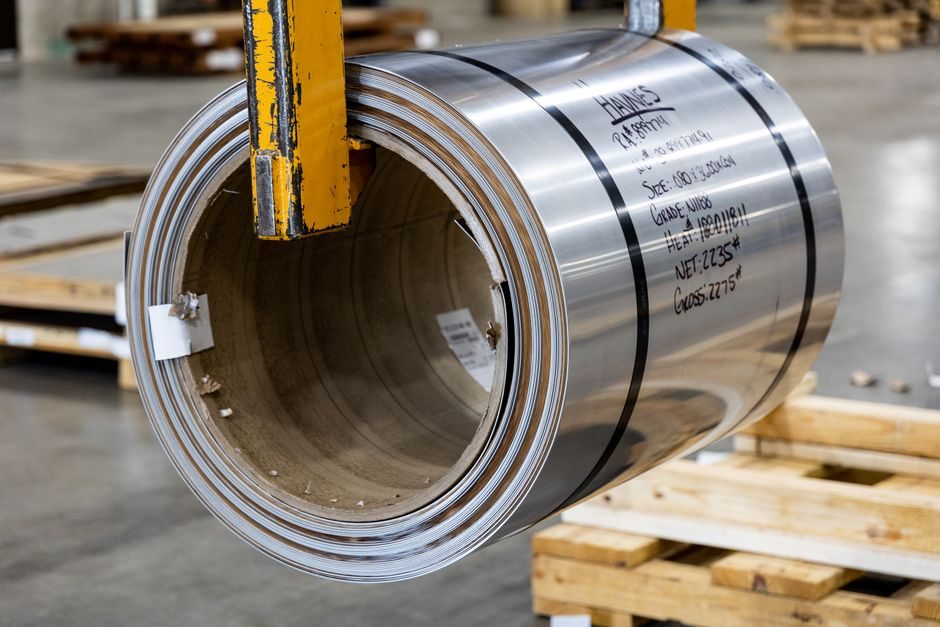
As of 2026-07-09, Chinese steel plate factories remain the dominant sourcing nodes for global buyers, with platform listings on Made-in-China.com alone returning hundreds of verified manufacturers across Tianjin, Wuxi, Shanghai, Shandong, and Henan [S2][S3][S5].
The product mix is unusually broad for a single commodity: hot-rolled carbon structural plate, cold-rolled stainless plate, shipbuilding-grade plate certified to ABS, GL, LR, and RINA class rules, and pre-galvanized plate all sit on the same supplier rosters, with MOQs typically starting at 5 metric tons and FOB China price bands clustering around US$448-466/ton for hot-rolled commodity plate [S5][S6].
Product Type Bands Buyers Should Compare First
Hot-rolled structural carbon steel plate is the entry-level category, typically supplied in thicknesses from 1.8 mm to over 100 mm in Q235B/SS400 grades, with Chinese structural mills pricing 5-ton lots at roughly US$448-466/ton FOB in the July 2026 reference window [S1][S5].
Cold-rolled and 2B/BA finish stainless steel plate sits in a separate price band and a different spec envelope — 304/316/420 grades, thickness 0.5-4 mm classified as "thin plate" and over 4 mm as "thick plate" per the standard Chinese mill taxonomy [S8][S9].
Shipbuilding and pressure-vessel grades are a third distinct lane: ABS, GL, LR, and RINA-certified plate carries its own classification cost, with Gnee Steel (Tianjin) publishing parallel product pages for each society's plate on 2026-07-07 [S6]. Buyers needing a primer on the underlying material families should bookmark the alloy steel reference alongside the silicon steel page for electrical-grade plate that occasionally surfaces in the same supplier catalogs.
Cluster Map: Tianjin, Wuxi, Shanghai, Shandong, Henan
Tianjin is the densest cluster for plate-and-pipe combination mills: Tianjin Tianyingtai operates 8 high-frequency welded lines on a 55,000 m² site and holds ISO 9001 plus BV certification, exporting pre-galvanized plate alongside pipe [S7].
Wuxi (Jiangsu) is the stainless-heavy node, with made-in-china.com page-201 catalogs emphasizing 304/316 plate with smooth 2B surface, high plasticity, and corrosion resistance to acid, alkaline gas, and aqueous media — a description repeated almost verbatim across Wuxi supplier listings [S3].
Shanghai skews toward HVAC heat-exchanger and condenser plate from manufacturers with 15+ years' experience, while Shandong's Hongcheng Steel posts the hot-rolled FOB reference at US$448-466/ton with a 5-ton MOQ [S2][S5]. Zhengzhou (Henan) is the trading-company hub, with Gloria Steel (registered 2009) acting as a Hong Kong-linked export consolidator of plate, coil, and pipe from upstream mills [S4].
Specification and Certification Checklist
Standard Chinese mill thicknesses run 0.5-4 mm for "thin plate" and 4 mm upward for "thick plate," with hot-rolled and cold-rolled subdivisions [S8][S9]. Surface finish is a real cost lever: 2B (cold-rolled, annealed, pickled) is the default for stainless; BA (bright annealed) and No.4/No.8 (brushed/mirror) carry surcharges not visible on catalog price bands [S8].
Certification matters more than price for shipbuilding and pressure-vessel buyers: ABS, GL, LR, and RINA society marks each require separate mill audits, and the four are explicitly listed as distinct product lines by at least one Tianjin exporter [S6]. General exporters like Gloria Steel carry ISO 9001-equivalent documentation at the trading-company level, but the underlying mill certificate is the one that should travel with the plate [S4][S7].
Use-Case Mapping: Which Plate Goes Where
Construction and structural fabrication defaults to Q235B/SS400 hot-rolled steel plate at 6-25 mm — the volume product driving the US$448-466/ton Shandong benchmark [S1][S5]. Pressure vessels, boilers, and bridges step up to ASTM A516 / A572 / A36 equivalents that the same mills will roll on order, though pricing shifts off the published FOB band.
Ship hulls, offshore platforms, and chemical tankers need the society-certified plate (ABS AH36/DH36, LR AH36, GL A, RINA A) — the four society plates Gnee Steel cross-lists on 2026-07-07 are the live sourcing reference [S6]. For buyers cross-shopping adjacent building products, the welded steel mesh sizing and code path article covers the reinforcement mesh that often travels with structural plate orders, while the wire rod grade and end-use levers piece maps the upstream rod feed for mesh and rebar.
Stainless plate serves food-grade equipment, architectural cladding, and chemical tanks, with 304/316/420 as the working grade trio; 420 stainless is the cutlery-and-tooling special with its own mechanical-strength and corrosion profile documented in the Sogou Baike entry [S8][S9].
Limits, Failure Modes, and Sourcing Watch-Outs
Stainless plate is corrosion-resistant, not corrosion-proof — every Chinese mill reference repeats the same caveat that resistance to acid, alkaline gas, and aqueous media does not eliminate rust risk in chloride-rich or low-oxygen service [S8][S9].
Trading-company suppliers like Gloria Steel consolidate plate from multiple upstream mills, which is efficient for mixed-load orders but means the mill test certificate may originate from a mill the buyer never directly audited [S4]. For high-stakes plate — shipbuilding, pressure vessel, nuclear-adjacent — insist on a direct mill order with the society's or customer's mark traced through MTC (mill test certificate) paperwork.
MOQ economics also bite: the US$448-466/ton Shandong price is explicitly a 5-ton MOQ, so buyers needing 1-2 ton sample lots pay pro-rata premiums that erase the FOB advantage [S5]. Tianjin and Wuxi HVAC/stainless specialists run lower MOQs for finished cut-to-size blanks, but list pricing is rarely transparent above the mill-direct commodity plate.
Standards and Sourcing References
Society rules governing shipbuilding plate include ABS, GL, LR, and RINA class rules — each cited individually in current 2026 supplier catalogs rather than bundled under a single generic "marine" mark [S6].
Quality management at the mill and trading level defaults to ISO 9001; Tianjin Tianyingtai publishes ISO 9001 plus BV as its dual attestation, which is the most common pair seen across current 2026 Chinese plate exporter profiles [S7]. For general building-grade plate, GB/T 700 (Q235) and GB/T 1591 (Q345) remain the dominant Chinese national standards, with ASTM A36 / A572 cross-references available on request from the same mills that publish the US$448-466/ton FOB band [S1][S5].
Trackable signals for the next sourcing cycle: any shift in the Shandong FOB price band away from the US$448-466/ton 5-ton MOQ reference, and any new ABS/GL/LR/RINA four-society plate listings from Tianjin or Jiangsu mills beyond the Gnee Steel reference of 2026-07-07.