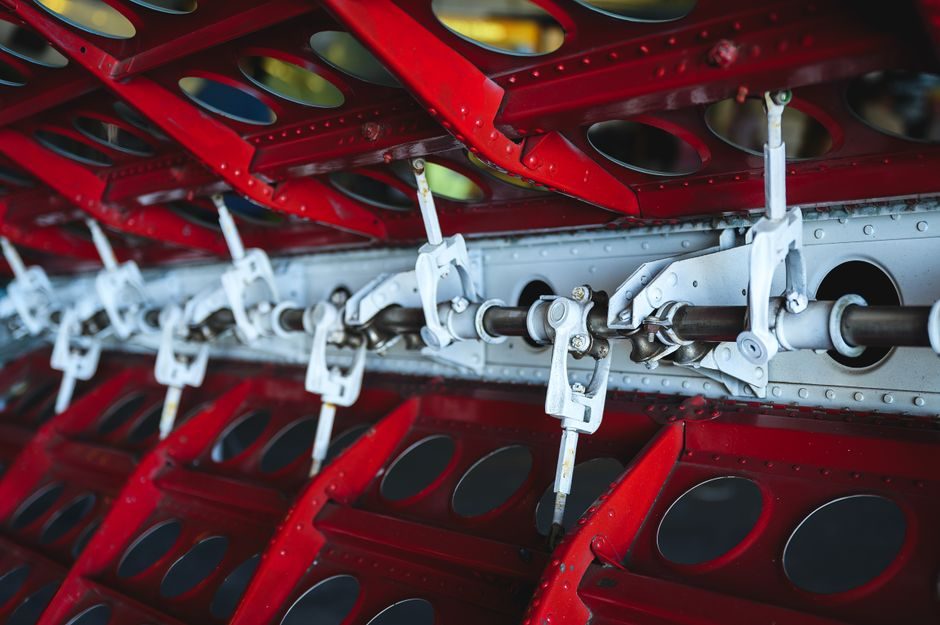
Aerospace manufacturing in 2026 rests on a stack of process routes — five-axis milling of titanium and Invar 36 alloys, autoclave-cured carbon-fibre composites, laser-powder additive repair, and friction-stir welding — that together convert aerospace-grade feedstock into flight hardware [S1][S5][S8].
The buying side is now split between Tier-1 integrators building rate-stable satellite and airframe lines and a long tail of California- and UK-based Tier-2/Tier-3 shops running 25,000 sq. ft. composite and machining cells [S3][S4][S9]. BIS Research frames the sector as a 2024-2034 forecast window where satellite manufacturing and launch systems sit alongside traditional airframe and engine work [S2].
Machining of titanium, Invar 36 and high-temp alloys
OMADA International runs dedicated titanium hot-forming cells paired with five-axis precision machining for engine and structural parts, with the firm publicly listing "Titanium Hot Forming" and "Complex Assemblies" as two of its three core process pillars [S6]. Precise Aerospace Manufacturing (PAM), in business since 1965, integrates injection, compression and transfer moulding of thermoset and thermoplastic engineering resins with multi-axis CNC machining for tight-tolerance moulded and machined details [S4].
Invar 36 — Fe-36Ni with a coefficient of thermal expansion near 1.2 × 10⁻⁶ /K at room temperature — has been studied explicitly for aerospace additive process-parameter selection because that low CTE makes it attractive for satellite bench hardware and optical mounts [S1]. When shops quote Invar versus titanium versus aluminium 7050, the decision usually hinges on three numbers: density (Invar 8.11 g/cm³, Ti-6Al-4V 4.43 g/cm³, Al 7050 2.83 g/cm³), elastic modulus, and CTE stability over the service temperature band.
Titanium hot forming is typically done in the 700-950 °C window on Ti-6Al-4V to drop flow stress without scaling the alpha-case, and is followed by milling in the same cell to avoid re-fixturing distortion [S6]. The additive manufacturing material feed for repair cells is a separate stock — typically NiCrBSi powder for laser cladding of worn engine tooling, as documented in a 2024 feasibility study on aerospace tooling remanufacturing [S5].
Composites layup, autoclave cure and resin systems
Senior Aerospace BWT positions itself as a "world leading" technical-composites supplier and has invested in a scalable Additive Manufacturing Centre, reflecting a shop-floor trend where composite layup and metallic AM share the same plant footprint [S9]. Pacific Aerospace Corp runs 25,000 sq. ft. of composite and machining capacity out of Southern California, split between hand layup, autoclave cure, filament winding, and CNC trim of cured laminates [S3].
A typical aerospace composite detail — a fuselage skin panel, a fan blade root sleeve, a satellite antenna reflector — moves through prepreg layup (often BMS8-276 or equivalent qualified epoxy/carbon prepreg), vacuum bagging, and autoclave cure at 0.3-0.7 MPa and 120-180 °C for 60-180 minutes, with a post-cure free-standing dwell. Tight-tolerance moulded engineering resin parts from shops like PAM are held to ±0.05 mm on critical features, against a 25,000+ flight-hour qualification target [S4].
Composite layup competes with V-process line tooling for prototype panels, but autoclave cure remains the default for primary structure because of the laminate void content (typically <1%) and fibre-volume-fraction (≈55-60%) that vacuum-bag-only routes cannot match [S3][S9]. The two routes — autoclave primary structure and oven-cured secondary structure — remain the workhorse split in 2026, with out-of-autoclave (OOA) prepregs gaining share on small satellites and business-jet panels.
Laser additive manufacturing and tool repair
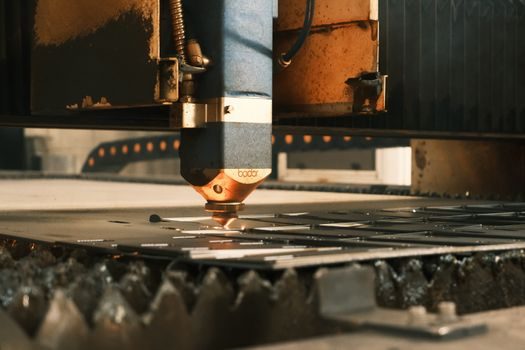
Laser additive manufacturing has been used in aerospace from the beginning of the technology, with applications in prototyping, part repair, and direct manufacture of complex components such as engine and airframe parts [S7]. The 2024 laser-cladding study used NiCrBSi alloy powder fed into a laser deposition head to rebuild worn aerospace tooling, with optimum parameters selected for geometric conformity to the worn substrate [S5].
Additive process selection for an Invar 36 aerospace bracket or fixture is parameter-sensitive: the Springer study in the International Journal of Advanced Manufacturing Technology (2017) explicitly mapped process-window trade-offs for Invar 36 because of its low coefficient of thermal expansion and the cracking risk at high energy density [S1]. Senior Aerospace BWT frames AM as a workflow-revolutionising tool that "enables rapid, on-demand manufacture of components" and lowers production cost for low-volume aerospace parts [S9].
Process parameters that drive the multifunction process calibrator work on an AM cell are laser power (typically 100-400 W for micro-cladding, 1-4 kW for DED), scan speed (200-1500 mm/s), powder feed rate (1-15 g/min), and layer thickness (20-50 µm for SLM, 0.5-2 mm for DED) [S5][S7]. These four knobs — and the melt-pool monitoring camera bolted to them — separate a research-grade AM lab from a qualified aerospace production cell.
Friction stir welding, automation and joining
PAR Systems builds friction-stir welding (FSW) machines specifically for aerospace applications, alongside customised automation for assembly operations, with FSW cited as a "world-leading" technology in their aerospace product line [S8]. FSW is a solid-state joining process: a non-consumable tool plunges into the joint line, softens the material by frictional heat (typically 0.6-0.9 of the alloy's solidus), and traverses the seam, producing a recrystallised fine-grain weld with no liquid-phase defects.
FSW is qualified on aluminium 2xxx/6xxx/7xxx fuselage and wing skins, on aluminium-lithium alloys, and increasingly on titanium for engine and spacecraft structures, where it competes with laser welding and linear friction welding [S8]. Compared with fusion welding, FSW typically delivers lower distortion (because peak temperature is below the solidus), finer grain in the stir zone, and no porosity from gas evolution — at the cost of lower travel speed and a keyhole witness that has to be trimmed off.
For joining selection, the comparison frame in 2026 looks like this: FSW for aluminium airframe skins and tanks (low distortion, no filler wire); laser welding for thin titanium and Invar sections (low heat input, narrow HAZ); resistance spot welding for composite-metal hybrids via embedded fasteners; and mechanical fastening still dominates primary structure because of damage-tolerance and NDT requirements. PAR Systems' automation line packages the FSW spindle with a part-positioner, force-feedback control, and an in-process pressure transmitter on the hydraulic clamp circuit for traceable weld records [S8].
Process comparison frame: cost, tolerance, material, lead time
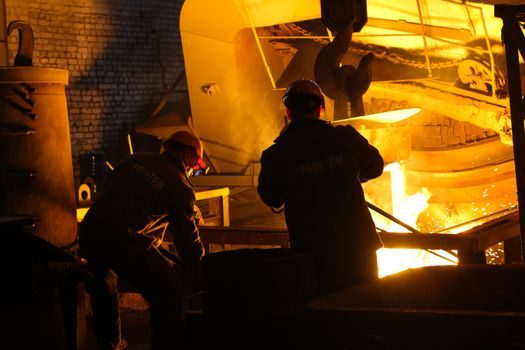
The four process families — five-axis machining, autoclave composites, laser AM/laser cladding, and FSW — line up against four decision criteria as follows. Cost per part: machining is high for titanium and Invar (raw stock + tool wear + cycle time), autoclave composites is moderate for primary structure and low for secondary, laser AM is high for small volumes and falls steeply with batch size, FSW is moderate and dominated by fixture cost. Tolerance: machining ±0.01-0.05 mm, autoclave composites ±0.1-0.3 mm before trimming, laser AM ±0.05-0.2 mm after finish machining, FSW ±0.2-0.5 mm on the as-welded seam. [S1]
Material range: machining covers virtually all aerospace alloys and engineering resins, autoclave composites is locked to qualified prepreg systems, laser AM is locked to weldable powders (Invar 36, Ti-6Al-4V, NiCrBSi, 17-4PH, Scalmalloy), FSW is limited to alloys that can be softened below the solidus without cracking (aluminium 2xxx/5xxx/6xxx/7xxx, aluminium-lithium, magnesium, some titanium grades, some copper) [S5][S6][S7][S8]. Lead time: machining is days for soft tooling, weeks for hard tooling; autoclave composites is weeks; laser AM is days for repair and weeks for new qualification; FSW is weeks for fixture build, days for production [S4][S5][S6][S8].
For Tier-2/Tier-3 shops like Pacific Aerospace Corp (25,000 sq. ft., Southern California) and Precise Aerospace (since 1965), the practical stack is composites + machining + assembly under one roof, with AM added as a repair or rapid-prototype adjunct rather than a primary process [S3][S4][S9]. For Tier-1 satellite and launch-system integrators mapped by BIS Research's 2024-2034 forecast, the same four process families are recombined into a higher-rate line with automation from suppliers such as PAR Systems and friction-stir cells tied directly to a flow meter on the FSW spindle's inert-gas shroud [S2][S8].
Selection criteria and who each process is for
Choose five-axis titanium/Invar machining for structural fittings, brackets, satellite benches, and optical mounts where CTE stability, density, and surface finish are the drivers; the process is well understood, every Tier-2 shop has the capacity, and the post-machining inspection path is short [S1][S6]. Choose autoclave composites for primary aerodynamic structure and large reflectors where stiffness-to-weight and fatigue performance dominate; the process is qualified, the database of allowable defects is mature, and the NDT stack (ultrasonic, thermography, FPI) is standardised [S3][S4][S9].
Choose laser additive (DED or SLM) for repair of high-value engine and tooling components, for low-volume complex-geometry parts that would otherwise require 5+ axis milling and dozens of setups, and for Invar 36 fixtures where the low CTE is the whole point of the part [S1][S5][S7]. Choose friction stir welding for aluminium and aluminium-lithium fuselage/wing skin seams and for tank/cylinder circumferential joints where low distortion and no porosity are non-negotiable [S8].
Do not pick laser AM for high-rate primary structure where the part count is in the thousands per year — the powder-handling, build-chamber, and HIP cycle times cannot match five-axis milling and autoclave cure economically. Do not pick autoclave cure for short-run engineering-resin brackets where injection or compression moulding from a qualified tool delivers a tighter-tolerance part in a single shot [S4]. Do not pick FSW for a closed-section titanium part where the tool cannot reach the weld path; fall back to laser welding or electron-beam welding for those geometries [S8]. The same industrial valve standards that govern chemical-plant service — body rating, seat leakage class, material traceability — also govern the high-pressure gas and hydraulic industrial valve assemblies used inside FSW spindles and autoclave cure lines, and those valves get the same lot-traceable MTR paperwork as the parts they touch [S8].
Standards, qualification and sourcing signals to track
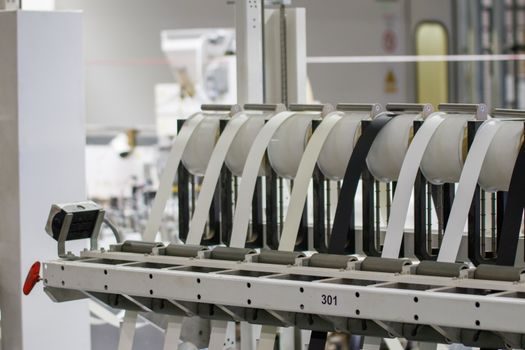
Aerospace process qualification runs on Nadcap for special processes (heat treat, NDT, welding, composites), AS9100 for the quality system, and OEM-specific material/process specifications on top — for example, BMS8-276-class prepreg systems, AMS4911 for titanium sheet, and AMS5643 for 17-4PH. Tool-repair laser cladding studies have to clear the OEM's repair-process spec before they touch flight hardware, which is why the NiCrBSi work in 2024 is positioned as a feasibility study with "optimal parameters selected in terms of the assumed structural requirements" rather than a qualified production process [S5].
Trackable signals through 2026: BIS Research's 2024-2034 aerospace forecast window, which puts satellite manufacturing and launch systems on the same growth curve as commercial airframe and engine MRO [S2]; continued Tier-2 capacity build-out in Southern California composite and machining cells [S3]; long-tail moulding-and-machining suppliers expanding engineering-resin moulding alongside multi-axis CNC [S4]; dedicated titanium hot-forming cells coming online at shops like OMADA [S6]; and FSW machine builders such as PAR Systems scaling aerospace-specific spindles and automation cells [S8]. The satellite smart manufacturing line architecture, IIoT stack and production specs coverage in 2026 maps directly onto how the friction-stir and autoclave cells above are being instrumented for rate production.