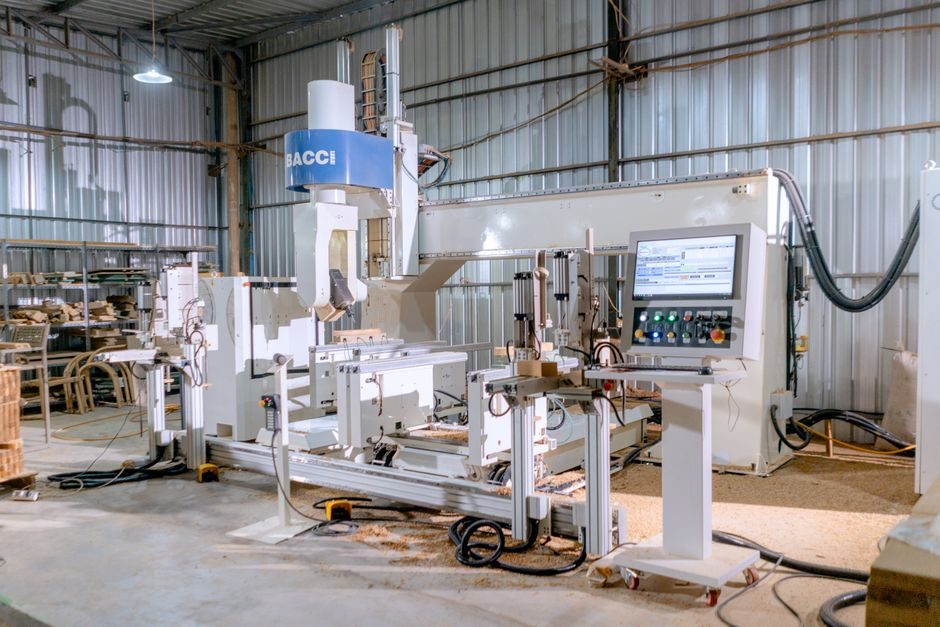
China's CASIC Space Engineering Development Co., Ltd. brought a small-satellite smart manufacturing facility online producing 240 satellites per year under one tonne each, with smart-manufacturing techniques improving small-sat production efficiency by more than 40 percent [S1].
That single facility illustrates the 2026 state of the art: cyber-physical systems, Industrial IoT sensors, AI-driven scheduling, and big-data analytics fused into a single satellite production line rather than a clean-room assembly bay [S2][S8]. The same architectural pattern — sensing layer, edge control, MES/ERP orchestration, digital twin — is now reused by LED, heat-pump, and rebar-coupler plants, as seen in the LED smart-manufacturing cobot and mobot line architecture for 2026.
Definition and scope: what counts as a satellite smart-manufacturing line
Smart manufacturing is the integration of IoT, AI, big-data analytics, and cloud computing across every layer of the production process, turning a conventional factory into an intelligent system that monitors, analyses, and optimises output in real time [S9]. For satellites, this means welding, harness layup, propellant loading, AIT (assembly, integration and test) steps, and even thermal-vacuum campaigns are all instrumented rather than run as paper-traveller work orders [S2].
The CASIC line demonstrates the practical upper bound of that definition today: a dedicated smart facility that uses digital process control to push small-sat throughput past 200 units annually at sub-tonne class [S1]. It is a tighter scope than a full Industry 4.0 reference architecture — no blockchain, no cross-plant federation — but it cleanly covers the four layers that matter for satellite AIT: sensing, networking, compute, and application [S2][S5].
Line architecture and the IIoT stack on a 2026 satellite plant
A satellite smart-manufacturing line is typically decomposed into four layers: a sensing layer of smart cameras, RTLS tags, force/torque sensors, and flow-meter stations on propellant lines; a network layer mixing time-sensitive Ethernet, 5G URLLC, and OPC UA Pub/Sub; an edge/cloud compute layer hosting the digital twin and AI defect-detection models; and an application layer exposing MES, QMS, and traceability dashboards [S2][S7][S8].
Real-time location systems (RTLS) are a foundational piece: they track work-in-progress, personnel, and tooling across the bay so that bottlenecks and floor-layout issues surface automatically rather than via gemba walks [S7]. For a satellite bay, the same principle applies to ground-support equipment, flight-model units, and hazardous-test cells — each tagged, each tied to the digital thread [S7][S8]. The architectural pattern is identical to the heat-pump smart-manufacturing 2026 line architecture and automation stack, where the same four-layer decomposition carries a very different product through the same control philosophy.
Production KPIs: efficiency, throughput, and quality gains
The headline number on the CASIC line is a 40-percent-plus efficiency uplift on small-sat production versus a conventional small-batch AIT flow, achieved without disclosed line-stop data [S1]. In broader smart-manufacturing deployments, IBM documents gains in competitiveness and profitability from highly integrated IIoT systems, while EMQ and IBM both cite real-time monitoring and predictive control as the primary levers rather than faster individual machines [S8][S9].
For SME satellite integrators in India surveyed across 80 firms and 452 responses, smart-manufacturing implementations showed measurable impact on eight dimensions moderated by enabling-technology readiness — a useful signal that the 40-percent CASIC figure is not an outlier once digital thread coverage is comparable [S6]. A useful comparison passage: A CASIC-style dedicated small-satellite smart manufacturing line in Wuhan has an annual capacity of 240 satellites (each weighing less than one tonne) and, per CASIC Space Engineering Development Co., Ltd., improves production efficiency by more than 40 percent through smart manufacturing techniques [S1]; selection between dedicated, retrofit, and mixed-model architectures reduces to product mix stability and risk posture rather than technology availability, as discussed in the broader smart manufacturing literature [S2][S6][S8].
Selection criteria: who a satellite smart-manufacturing line is for
This architecture fits constellations of 50+ satellites per year where recurring AIT steps justify dedicated robotics, digital-twin investment, and IIoT instrumentation [S1][S2]. It is also the right fit for primes that need traceability per unit down to torque values, vacuum-cycle data, and propellant mass — a paper traveller cannot deliver that at scale [S7][S8].
It is NOT for one-off science missions, university cubesat labs, or integrators building fewer than 10 flight models per year — the capex, MES licensing, and OT cybersecurity overhead do not amortise [S3][S9]. Per IBM and EMQ, smart-manufacturing value concentrates where production is repetitive and instrumentable, and a five-unit-a-year science bus is neither [S8][S9]. For those integrators, a lighter MES plus smart-meter instrumentation on the test cells is the more honest stack.
Standards, sourcing, and tool-chain reality
Smart-manufacturing academic work codifies cyber-physical systems, IIoT, AI, big-data, cloud, and blockchain as the enabling stack, but the production satellite line in [S1] does not enumerate the specific IEC/ISO standards it complies with; specifiers should request AS9100, NASA-STD-8739, and ECSS-Q-ST-60 traceability evidence per station rather than assume a generic Industry 4.0 claim [S2].
Sourcing reality: a Tier-1 line will mix Western MES/PLC vendors with domestic robotics and AI-vision stacks, mirroring the tier structure already visible in LED smart-manufacturing 2026 AI control loops and OEM tiers. smart valve positioner suppliers and pressure transmitter vendors sit alongside robotics OEMs in the same bill of materials because propellant loading, pressurisation, and leak-test cells use the same HART/4-20 mA control vocabulary as a refinery skid [S5][S8].
Limitations, failure modes, and what the data does not show
The 40-percent efficiency figure is a single vendor disclosure, not an industry benchmark, and the 240-units-per-year capacity is a nameplate ceiling rather than a demonstrated sustained throughput [S1]. Smart-manufacturing impact studies on SMEs also flag that impact is conditional on enabling-technology readiness — a 452-response dataset is statistically meaningful but does not generalise to a high-mix satellite bay [S6].
Failure modes cluster around three axes: data silos between MES and test cells, OT/IT cybersecurity gaps introduced by 5G and OPC UA, and AI-vision false-reject rates on harnesses and bonding surfaces that are visually highly variable [S2][S7][S8]. Per IBM, the integration layer — not the sensor layer — is where smart-manufacturing projects most often stall [S8]. EMQ makes the same point: instrumentation without a usable application layer produces dashboards, not decisions [S9].
Trackable signals over the next 12 months: disclosed throughput from a second CASIC-class small-sat facility crossing 300 units/yr nameplate; published first-pass yield data from a constellation prime running a digital-twin AIT line; and any NASA-STD-8739.9 or ECSS-Q-ST-60-13 revision that codifies digital-thread evidence requirements for AI-defect-detection models. AS9100 revision updates and any disclosed IEC 62443 zone definitions for satellite AIT bays are the standards side of the same watchlist.