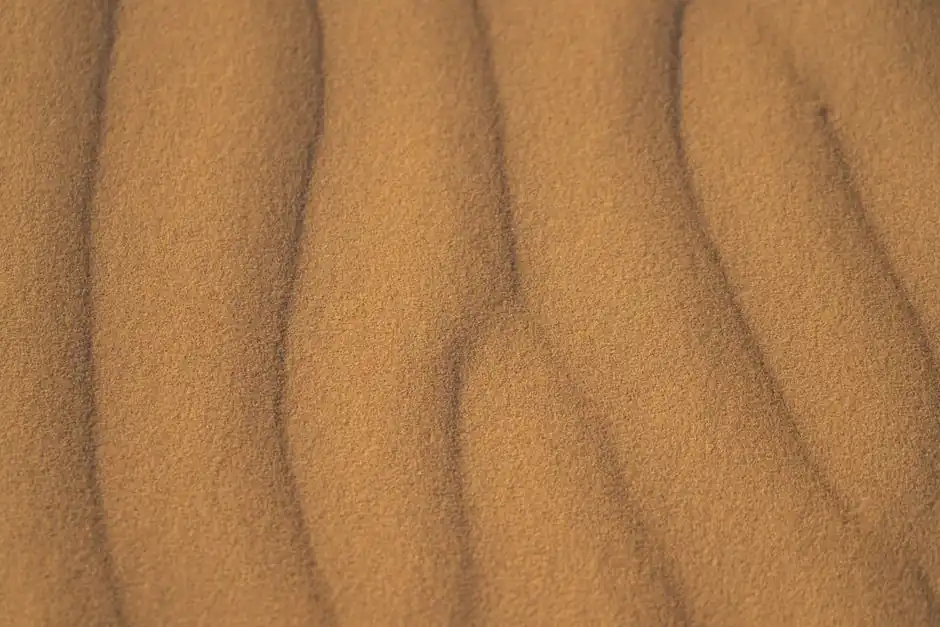
AFS Grain Fineness Number (GFN), defined by the American Foundry Society, is the standard sieve-derived index used to specify silica sand for cores and molds, with higher numbers meaning finer average particles [S2]. The number is calculated by multiplying the percentage of sand retained on each test sieve by its own multiplier and summing, so a screen distribution dominated by small grains yields a high GFN [S5]. For conventional green sand and chemically bonded systems, GFN 50-70 (approximately 0.3-0.6 mm mean grain) is the band most often specified for cores that need to print fine detail into the casting [S3].
For a process engineer picking core sand, GFN is not just a grain-size label; it drives permeability, binder demand, refractoriness, and the final as-cast Ra. Coarse GFN 30-40 sand gives permeability 200-400 PN and dimensional tolerance around +/-0.5-1.5% in green sand, but leaves a visibly rough surface; fine GFN 60-80 sand burns out cleanly, captures sharper features, and produces a smoother cast skin, at the cost of slower gas escape and higher binder consumption [S3][S6].
How AFS GFN is actually measured and reported
AFS GFN is not a single-sieve number; it is a weighted average derived from a stacked-sieve analysis of a representative sand sample, typically run on screens from roughly 6 mesh down to 270 mesh (about 3.35 mm to 0.053 mm openings) [S2]. The retained mass on each sieve is multiplied by a sieve-specific multiplier, summed, and divided by 100 to give a single dimensionless GFN that the foundry uses on the muller batch card [S5]. Two silica sands from different mines with the same nominal mesh can show different GFN if their sub-sieve distribution differs, which is why source consistency, not just nominal mesh, is what foundries audit on incoming lots [S1].
AFS is the dominant reporting convention in North American iron and steel foundries, while AGS (Average Grain Size, expressed in micrometers or mils) is more common in some European and lab-instrument contexts; the two are inversely related, since AFS rises as mean particle size falls [S7]. Practical reporting on a mix typically includes GFN, screen distribution peaks, AFS clay content, and moisture, so a muller operator can spot a drifting lot before it hits the mold line [S3].
GFN bands and what they mean for surface finish
The widely used GFN-to-application mapping for silica core and mold sand runs as follows: GFN 30-40 (around 0.6-0.8 mm) is coarse, high-permeability sand for large iron and steel castings where surface finish is secondary; GFN 50-70 (around 0.3-0.6 mm) is the general-purpose band for iron, ductile iron, and non-ferrous castings that need a clean skin; GFN 80-100+ (sub-0.2 mm) is reserved for specialty applications such as thin-wall aluminum and investment-style finishes [S3]. Empirical work on A356-T6 cast in binder-jetted 3D-printed sand molds shows the same trend from the other side: as printed-layer grain size drops, both Ra and Rq on the cast surface fall measurably, with the 5-20 deg downskin surfaces also producing characteristic stair-step features tied to layer thickness rather than GFN alone [S4][S5].
Standard sand-cast skin on conventional green sand typically lands in the 300-560 microinches RMS (about 7.6-14.2 micrometers Ra) range, which is rougher than investment or die castings but acceptable for most machined-iron components, and finer GFN shifts that band toward the low end without changing the fundamental sand-cast character of the surface [S8].
Comparison: GFN 30-40 vs GFN 50-70 vs GFN 80+ core sand
For a process engineer choosing core sand, three GFN bands cover the bulk of decisions and can be lined up against four decision criteria. GFN 30-40 (coarse, 0.6-0.8 mm) scores best on permeability and gas venting, with permeability in the upper part of the 200-400 PN range and the lowest binder demand per ton, but it gives the roughest as-cast surface and the poorest fine-feature reproduction [S3]. GFN 50-70 (medium, 0.3-0.6 mm) is the balanced default, delivering intermediate permeability, moderate binder demand, and a visibly smoother cast skin that is acceptable for most machined castings; it is the band most commonly specified for general iron and non-ferrous cores [S3][S6]. GFN 80+ (fine, sub-0.2 mm) gives the smoothest cast surfaces and the sharpest detail, but permeability drops, gas-defect risk rises, binder demand per ton climbs, and shakeout can be harder because the finer grain packs tighter [S3][S6].
The practical decision rule on a shop floor: specify GFN 50-70 unless the part is a thin-wall aluminum casting that must read clean off the mold, in which case step up to GFN 70-90, or a heavy steel casting that needs venting, in which case hold at GFN 30-40 and accept the rougher skin that downstream machining will remove [S3].
Where GFN stops being the controlling variable
GFN is a necessary but not sufficient control on surface finish; once the sand is in the 50-70 GFN band, binder chemistry, molding method, and post-print processing start to dominate the Ra number. In binder-jetted 3D-printed sand cores, the dominant surface features on the casting are stair-stepping on downskin surfaces and layer-line artifacts from the print, not raw grain size, so finer GFN alone will not eliminate them; recoater spread and binder saturation have to be tuned in parallel [S4][S5]. For chemically bonded cores, phenolic systems produce lower gas evolution (under 0.2 L/kg sand) and cleaner surfaces than furan at the same GFN, and epoxy at 300-400 psi bench strength with under 0.1 L/kg gas output gives the cleanest skin of the common resin families on fine sand [S3].
Refractory coatings applied to the core or mold surface also override GFN effects: a zircon or chromite coating on a GFN 50 sand core will routinely out-surface an uncoated GFN 80 core, at the cost of coating drying time and the risk of coating-related gas defects if permeability is not preserved. The general rule in modern practice is to pick the coarsest GFN that still meets the surface requirement, then control the rest with binder, coating, and process [S1][S6].
Standards, sourcing, and what to verify on incoming sand
The AFS GFN test method is part of the AFS Mold and Core Test Handbook, with companion sieve procedures, and the practical reporting format (GFN plus screen distribution plus clay plus moisture) is what most North American iron and steel foundries audit on incoming lots [S2][S5]. AFS itself does not fix a single "correct" GFN for a given casting; the value is foundry- and part-specific, and what gets controlled is consistency of the sieve distribution and the clay/moisture envelope around the target GFN [S1]. Independent comparison work on furan no-bake versus 3D-printed cores at matched sieve distributions confirms that GFN measured by the AFS method is a reproducible input variable across both process routes, so the same GFN target can be carried from a conventional line to an additive line without re-defining the spec [S5].
For procurement, the verifiable spec on a core-sand certificate should include AFS GFN, the percentage retained on the 3 most heavily loaded sieves, AFS clay, moisture, pH, and acid demand value (ADV) for resin-bonded systems; GFN alone on a certificate is not enough to catch a drifting lot [S1][S3]. Trackable next signals for any foundry running a GFN tightening program are: a documented muller-side GFN trend chart with upper and lower action limits tied to the as-cast Ra audit, and a periodic sieve-distribution cross-check on at least one trusted additive-manufactured core supplier to confirm the GFN number is being read the same way on both sides [S4][S5].
How AFS Grain Fineness Number is calculated for foundry silica sand sits in the same grain-size conversation and is a useful cross-reference for the steel-versus-aluminum sand choice that drives most GFN spec sheets. For the broader casting economics that justify a GFN-50 spec over a GFN-70 spec, the Mold Base Price Per Kg of Steel: 2026 Cost Breakdown page lines up sand-system cost against pattern cost. A sand casting mold reference closes the loop on how the GFN-controlled sand ends up printing geometry into a real part.
For the relevant spec sheets and selection criteria, see surface roughness tester, and checking and testing apparatus.