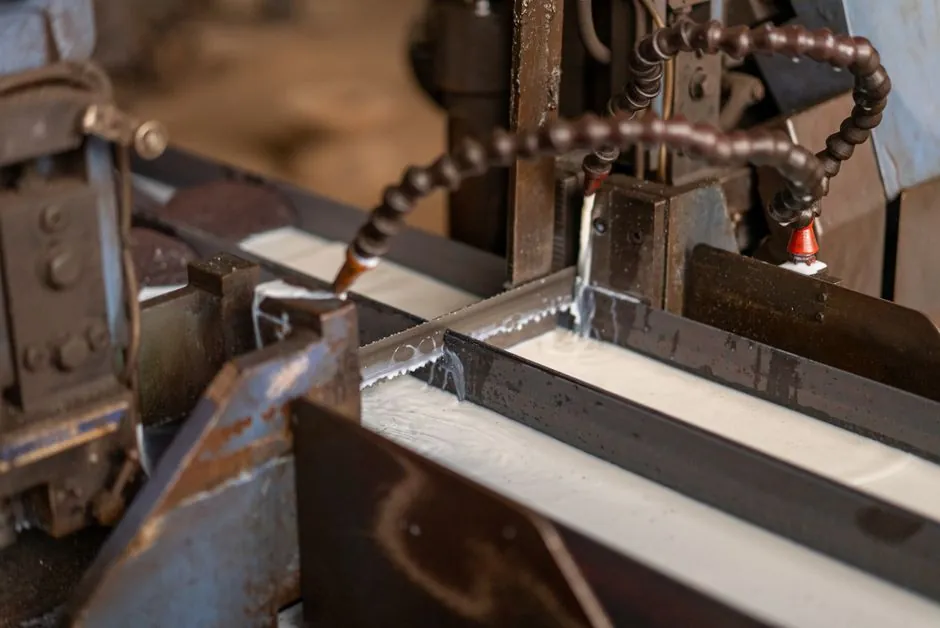
A standard 7-plate A-Series mold base in D-M-E #3 steel (P20-equivalent) is sold with a 30-40% price advantage over custom-built equivalents, and the base steel itself typically prices between $2.00 and $12.00 per kg depending on grade [S1][S6][S7].
The user's real question is not the spot commodity price of a steel billet, but what a finished, machined, ready-to-cut mold base costs per kg of steel, and which variables most move that number. That distinction is where most procurement mistakes happen.
Raw Steel Cost Per Kg by Grade
VolksMolds' 2024-06-05 bar chart comparison groups mold steel by application: base steel (the mold base frames, plates, supports) versus core/cavity steel (the higher-purity inserts that form the part) [S7]. For base applications the per-kg ladder runs roughly S50C/S55C at the low end, P20 (1.2311, 1.2738) in the mid range, and H13 (1.2344) or pre-hardened H13 variants at the top, with 420 stainless commanding a premium for corrosive resins like PVC and flame-retardant grades [S7].
MoldMaking Technology's 2013-08-01 material selection article, still widely cited, flags that the cheapest "per kg" steel is rarely the cheapest mold once machining, polishing, and weld-repair hours are added to the ledger [S4].
From Kg Price to Finished Mold Base Price
A completed DME A-Series mold base (7 plates, No.1/No.3/No.7 steel options, sizes 7.875" x 7.875" up to 23.75" x 35.5", 9 plate thicknesses from 7/8" to 5-7/8") is sold as a pre-engineered assembly, not as loose steel [S2]. Pricing is per assembly, not per kg, because the value is in the matched-plate tolerances, ejector housing machining, and rail fit-up.
The May 2, 2025 CKMold cost-economics piece sizes the finished standard mold base at roughly $4,000-$15,000 for typical injection-mold frame sizes in P20, with a 29-7/16" x 12-7/8" used DME A-Series in No.1 steel recently listed at $14,999.99 on the secondary market as a reference point [S6][S8]. Translating that back: a 200-400 kg mold base assembly at $4,000-$15,000 implies a finished, machined, drilled-and-tapped all-in cost of $20-$75 per kg of steel in the assembly, which is roughly 3-10x the raw bar-stock price [S6][S8].
What Actually Moves the Price

Four variables dominate the per-kg cost of a finished mold base, in order of leverage: steel grade selection, plate count and feature count, frame size and plate thickness, and tolerance/finish specification [S2][S6].
Steel grade is the largest single lever. A swap from P20 to H13 for hot-work or high-pressure applications can double the steel input cost per kg, because H13 is sold in smaller mill volumes and requires pre-hardening or through-hardening to 48-52 HRC [S4][S7]. Plate count is second: the 7-plate A-Series carries a structural premium over the 5-plate B-Series, even though both occupy the same mold space, because the A-Series adds a top clamp plate, support plate, and 3-piece housing that the B-Series consolidates [S2]. The DME A-Series is described as "the world's most frequently ordered standard assembly," and B-Series is positioned as the economy version that does not sacrifice quality [S2].
Comparison: Common Mold Base Steel Grades
The table below ranks the four most common base-steel grades against four decision criteria a process engineer or buyer weighs at quote time [S4][S7]:
S50C/S55C (1.1730): lowest raw cost per kg, ships as-rolled, requires through-hardening after machining, best for prototype and short-run tools where lead time matters more than dimensional stability. P20 (1.2311 / 1.2738): mid-range cost, pre-hardened to 30-36 HRC, the default for 80% of injection mold bases, good polishability, limited corrosion resistance. H13 (1.2344): 2-3x P20 cost, hot-work grade for die casting and high-pressure injection, requires hardening to 48-52 HRC, excellent toughness but longer lead time. 420 stainless / P20+Ni: highest per-kg cost, selected only for PVC, flame-retardant, and corrosive-resin applications where rust contamination would scrap parts [S4][S7].
Size, Tolerance, and Lead Time as Hidden Cost Drivers

Frame size scales cost non-linearly.
Tolerance is the third quiet driver. Standard DME mold bases ship with production-proven tolerances that allow mold makers to focus on cavity and core work, and DME claims this interchangeability can increase shop productivity by as much as 40% [S2]. Custom tolerances below the DME standard typically add 15-30% to the assembly price, even when the steel grade is unchanged [S2][S6]. Lead time is the fourth: same-day-ship stocked aluminum mold bases from PCS Company in 9 frame sizes (08/08 to 12/16, A/B thicknesses 1.94" to 3.44") trade material cost (aluminum is cheaper per kg than P20) for rigidity limits, and are only viable for prototype and quick-change applications [S3].
For Whom Each Option Is and Is Not Appropriate
Standard DME/PCS A-Series or B-Series mold bases in P20 are correct for: production injection molds in the 7.875" x 7.875" to 23.75" x 35.5" frame range, molders who need interchangeable components, and shops that want to keep cavity and core work in-house while outsourcing the matched-plate assembly [S2][S3].
They are not appropriate for: micro-molds below 7.875" frame size where custom mini-bases are required, die-cast tooling above 200 tons clamp force where H13 or copper-beryllium inserts become necessary, medical or optical parts requiring 420 stainless or S136 throughout, and high-cavitation stack molds where a non-standard plate sequence is the rule rather than the exception [S2][S4]. The PCS F.I.T.S. (Fast Interchangeable Tooling System) line exists for the prototype and quick-change corner where standard frames are overkill and full custom tooling is too slow [S3].
Total Cost of Ownership Beyond the Per-Kg Number
Buying on raw kg price ignores the dominant lifecycle costs. P20 in the 30-36 HRC pre-hardened condition eliminates a $1.50-$3.00/kg heat-treat step and roughly 5-10 days of lead time per build, which at typical shop rates of $80-$150/hour for mold-making labor dominates the steel delta [S4][S6].
Specifying the wrong grade forces weld-repair hours that compound across thousands of cycles: a base steel that cannot be welded without cracking pushes every design change into a re-machined plate, and the per-kg saving is consumed by the first engineering change order. For a related engineering-economic analysis on tooling cost, the breakdown of custom aluminum extrusion die cost and lead time in 2026 follows the same kg-versus-finished-part logic and is a useful cross-reference for sourcing teams that buy both mold bases and extrusion tooling. DME's claim that standard mold bases can raise productivity "as much as 40%" by freeing the shop to focus on cavities and cores is the most concrete TCO figure in the public material [S2].
Track the Q1 2026 P20 and H13 spot price moves on domestic steel indexes and watch for any D-M-E or PCS configurator pricing refresh, since both vendors publish per-assembly list prices that flow directly from per-kg steel contracts and frame-size tiering [S1][S2][S3][S7].
Component reference pages worth checking: casting mold, and sand casting mold.