
Opportunity charging fits the dominant 2026 AGV deployment pattern: lithium-ion packs recharged in short, frequent bursts during natural idle windows, with wireless pads at up to 95% efficiency and contact-pole systems as the lower-cost baseline [S1][S2].
Battery swap remains the right answer for high-throughput, heavy-payload fleets where any charge window is unacceptable, but it costs more in hardware, spares, and floor space, and it shifts complexity from the vehicle to the swap cell [S3][S4].
What each strategy actually does on the floor
Opportunity charging is in-process top-up energy transfer: the vehicle docks at a contact-pole or wireless pad for tens of seconds to a few minutes while it waits for the next mission, never taking a long dedicated charge break [S2][S5]. On a typical 6%-of-capacity-per-mission workload, the AGV only needs to recover that 6% between runs, which keeps packs inside a stable mid-state-of-charge band rather than cycling them down to a low SoC every shift [S1][S5].
Battery swap, in contrast, removes the depleted pack at a base station and bolts in a fully charged spare in a few minutes; the swapped-out pack goes to a dedicated rack and recharges at its own optimal slow rate, off the critical path [S3][S4]. A third option, auto-dock charging, sits between the two: the AGV drives itself to a fixed dock and sits there through a scheduled charge window, then returns to traffic [S3].
Decision matrix: opportunity vs auto-dock vs battery swap
Industry sources rank the three options consistently on the same axes, with battery swap taking the top uptime slot and opportunity charging winning on infrastructure and battery health [S3].
On uptime potential, the rating order is battery swap (5/5) over opportunity charging (4/5) over auto-dock (3/5), because swap returns the vehicle to service at 100% SoC in minutes while opportunity and auto-dock still leave the vehicle mid-charge for part of the cycle [S3].
On infrastructure cost, the order inverts: auto-dock is the cheapest to install, opportunity charging is medium (more distributed pads, more fleet software), and battery swap is the most expensive because of the swap mechanism, the spare-pack inventory, and the dedicated charging racks [S3][S8]. On battery health, opportunity charging rates excellent because the pack stays in a narrow 20% to 80% SoC window that maximises Li-ion cycle life, while auto-dock and swap are rated good, with swap gaining the extra caveat that packs can be slow-charged optimally on the rack [S3].
On operational complexity, opportunity charging is medium (it depends on smart fleet software and station placement), auto-dock is low (scheduled, predictable), and battery swap is high (spare batteries, swap cell maintenance, inventory tracking) [S3]. Labor required is effectively zero for both opportunity and auto-dock; for swap it ranges from manual hand-offs in smaller fleets to fully robotic swap cells in the largest hubs [S3][S4].
Where opportunity charging clearly wins
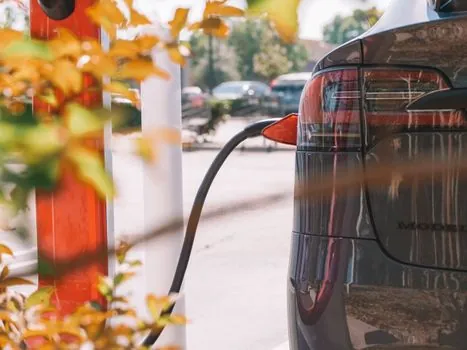
Multi-shift operations with fixed or semi-fixed routes are the textbook case: hospitals, hotels, e-commerce aisles, cleanroom logistics, and high-availability production lines where the vehicle can grab a micro top-up at a conveyor transfer, a loading point, a parking area, or a route checkpoint [S2][S3][S5].
Lithium-ion and lithium-titanate chemistries tolerate partial state-of-charge cycling without the capacity loss that lead-acid suffers under the same regime, which is why the opportunity-charging playbook is built around Li-ion packs rather than legacy lead-acid [S2]. Contact-pole systems remain the cheapest hardware path; contactless (inductive) pads add mechanical simplicity and eliminate exposed contacts at the cost of a few efficiency points, with current industrial wireless systems quoted in the 93% to 95% efficiency range [S1][S2][S5].
For a deeper look at how the surrounding fleet components interact with a 24/7 mobile-robot workflow, see this spec map of AGV safety laser scanner field range, FOV, and protective zone sizing, which sets the layout rules a charging-station placement plan has to respect.
Where battery swap still earns its place
Heavy autonomous forklifts and large-battery AGVs in high-throughput distribution centers, ports, and cross-dock operations are where swap wins: the battery pack is too large to fast-charge inside a useful window, so the only way to keep the vehicle on the floor is to exchange the pack [S3][S4].
Swap also reduces per-station civil and electrical work compared with rolling out a forest of fast chargers across a large site, and a swap station can be cheaper to install and maintain than a comparable network of fast-charge points, a trade that gets sharper the more vehicles a site runs [S8]. The cost you pay is inventory: a swap cell is only as available as the number of fully charged packs waiting in the rack, and those packs need their own BMS, fire-safety clearances, and replacement cycle.
Selecting the battery chemistry that matches the strategy
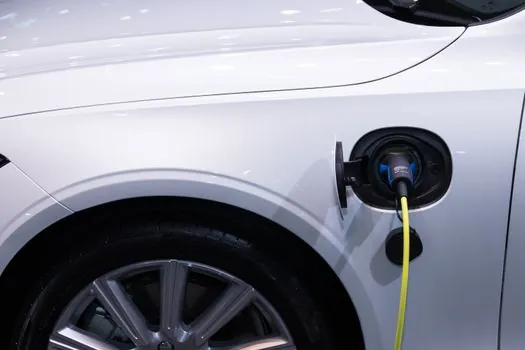
Opportunity charging only really pays off if the pack chemistry accepts partial SoC operation. Lithium-ion and lithium-titanate are the default picks; pure-lead thin-plate is the next-best option for higher charge acceptance, while flooded lead-acid degrades quickly under repeated shallow cycles and is a poor match [S1][S2]. Dry-gel packs sit in the middle: maintenance-free, gas-free in normal use, fast-charge capable, and mountable in any orientation, which makes them a reasonable consumer or cyclic-use option for moderate opportunity-charging duty [S4].
For a related decision where the same trade-off between chemistry, duty cycle, and maintenance appears in a different format, this comparison of AC induction vs DC motor on a hydraulic power unit follows the same decision logic of matching hardware to duty profile rather than buying the headline specification.
Selection criteria an integrator can actually score
Five questions separate opportunity from swap on a real project. First, what is the peak duty cycle: if the average mission draw is low and idle windows between missions are available, opportunity charging covers it; if draw is high per mission with no usable idle, battery swap is the alternative to consider [S1][S3].
Second, what is the fleet size: opportunity charging scales from a single pilot vehicle to a large fleet, while swap only becomes economic past roughly a dozen vehicles, where the spare-pack inventory starts to amortise [S3]. Third, what is the payload and pack weight: above roughly 200 kg of battery, manual or even robotic swap is faster than any realistic opportunity charge window, which is why heavy forklift AGVs default to swap or auto-dock [S3][S4].
Fourth, what does the electrical infrastructure allow: opportunity charging wants distributed lower-power pads (often 1 kW to 30 kW per pad depending on chemistry), while swap wants a few high-power rack chargers fed from a single substation [S1][S3]. Fifth, what does the building allow: swap cells need floor area, a battery room with appropriate ventilation or fire suppression, and aisle access for pack handling, whereas wireless opportunity pads can sit inside normal traffic lanes if the safety-rated AGV safety laser scanner zoning is correct.
Limitations and failure modes engineers should price in

Opportunity charging has one hard constraint: the vehicle must stand still to charge, so any layout that does not give the AGV a usable idle window at a powered point will collapse into either a starved fleet or a charging queue [S1]. It also needs distributed power drops and a fleet manager that understands SoC-aware dispatch, not just a charge-when-low rule.
Battery swap's failure modes are different: a swap cell that jams, a rack that runs out of fully charged packs, a BMS that flags a pack out of service, or a cell that fails in the middle of a shift. Each of these is a single point of failure for the whole fleet, which is why large swap deployments pair the swap station with on-board telemetry and a second redundant charger for the rack [S3][S4]. Wireless opportunity pads add their own constraints: pad alignment tolerance, foreign-object heating risk, and a small but real efficiency penalty versus contact-pole systems [S1][S2].
Sourcing and standards to pin in the spec
At the spec level, the relevant references are the battery and charger product standards (IEC 62619 for industrial lithium cells, IEC 61851 for conductive charging systems, and ISO 3691-4 for driverless industrial truck safety), all of which any integrator should be able to name against the AGV, charger, and battery subassemblies in the bill of materials. The wireless opportunity-charging suppliers publicly quote 93% to 95% end-to-end efficiency on current-generation industrial pads, which is the concrete efficiency band to write into a specification rather than a generic "high-efficiency wireless" line [S1][S2].
For a related spec-driven comparison on the sensing side of an AGV, the engineering trade-offs in 0.5-4.5 V ratiometric vs 4-20 mA pressure transmitter output follow the same logic of pinning a concrete electrical interface to a duty profile, which is the discipline a good opportunity-charging or battery-swap spec should mirror.
Component reference pages worth checking: agv robot, pressure transmitter, and flow meter.