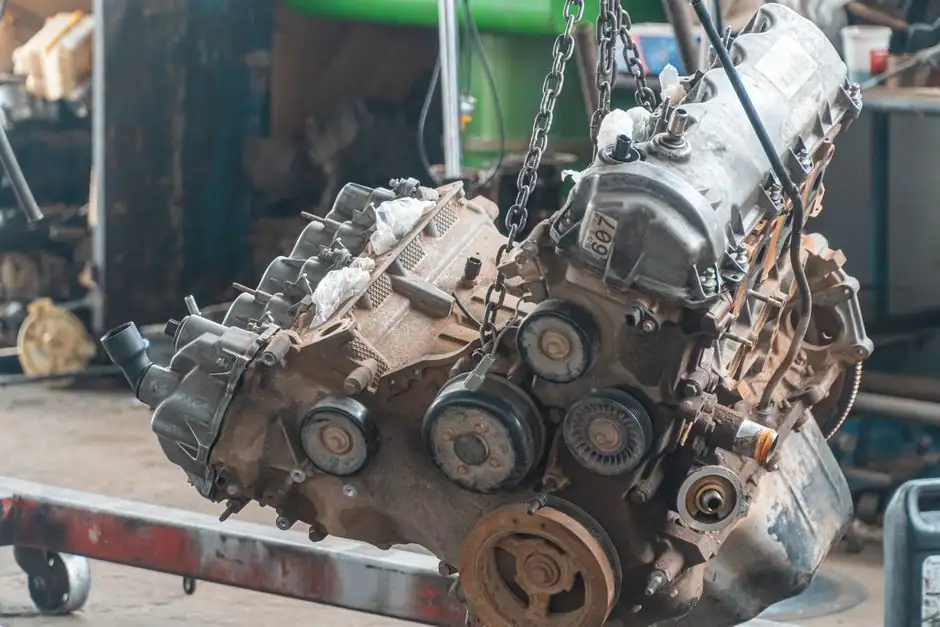
On a hydraulic power unit, the motor choice is set by three physical facts: available supply (AC mains vs DC battery), duty cycle (intermittent vs continuous), and starting torque demand of the pump [S6].
Industrial guidance now in circulation converges on a clean split: DC for mobile or battery-driven hydraulic power units, AC induction for stationary mains-fed units running continuous or high-load duty [S1][S2][S6]. Three-phase AC induction sits on top of the efficiency and power-density stack [S3].
Decision rule: supply, duty, and torque in that order
The fast version: choose DC (12 V or 24 V) for mobile, battery-powered work, and AC (115 V or 230 V) for stationary gear on wall power [S6]. That single line does most of the work because it pins motor topology to the supply that already exists on the machine.
Inside the AC family, three-phase induction motors offer greater efficiency and power than single-phase units, and are the preferred choice for industrial applications including large machinery, conveyor systems, and elevators [S3]. For an AC motor driving a fixed pump, the induction variant is the default: fewer moving parts than a DC machine and therefore lower maintenance [S4].
For a hydraulic power unit spec, the next gate is duty cycle. AC units are described as rugged, efficient, and built for continuous duty, while DC units (12 V, 24 V, or 48 V) are compact, simple to control, and aimed at shorter, intermittent runs [S7]. The third gate is starting torque: AC motors can deliver quite high stall torques compared with a similarly rated DC machine of the same frame, and hydraulic pumps present a near-constant torque load at dead-head pressure [S5].
AC vs DC on four concrete criteria
Comparing the two families head-to-head on the criteria a spec sheet actually measures, the trade-off is sharp and predictable. AC induction wins on continuous-duty efficiency, peak sustained power, and service interval; DC wins on supply flexibility, speed-control simplicity, and initial integration cost for low-power packs. [S3]
First, supply class. AC units need a fixed mains feed (115 V / 230 V single-phase or 400 V three-phase) and a starter or VFD; DC units accept 12 V, 24 V, or 48 V direct from a battery or rectified supply with no phase-rotation or power-factor concerns [S6][S7].
Second, efficiency and power. AC motors can handle higher power demands and are generally more efficient for sustained use than DC hydraulic power units, which are typically better suited to mobile or intermittent loads [S2]. Three-phase AC induction specifically is framed as the higher-efficiency, higher-power industrial choice [S3].
Third, maintenance and parts count. AC induction has fewer moving parts than brushed DC, which directly lowers maintenance requirements [S4]. The trade-off is that brushed DC needs brush and commutator service over life; brushless DC removes that but adds an electronic controller.
Fourth, speed control. DC motors achieve simple speed control by adjusting the supply voltage, with easy methods for starting, stopping, accelerating, and reversing [S3]. AC induction needs a VFD or pole-changing wiring to vary speed, which adds cabinet space and EMC filtering, but in return holds synchronous-grade speed stability once running [S3].
Use-case map: which motor goes on which HPU
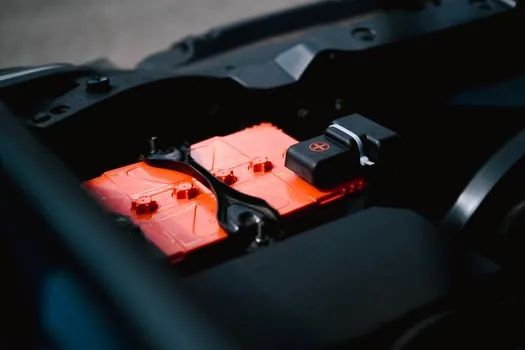
Stationary industrial HPU on a factory floor: three-phase AC induction, continuous duty, paired with a fixed displacement gear or piston pump, sized for the system working pressure covered in the 350 bar vs 210 bar HPU: spec-driven design trade-offs reference. For higher-voltage drive electronics on the same line, the 230 VAC vs 400 VAC servo drive for small axes comparison carries the same logic upstream of the motor. [S3]
Mobile HPU on a truck, trailer, or service vehicle: 12 V or 24 V DC, because the only DC source on board is the battery and the duty is intermittent (tipping, lifting, clamping). Commercial-vehicle fitment is the canonical DC use case [S1].
Light commercial / workshop bench HPU: 115 V or 230 V single-phase AC, fractional to a few kW, intermittent duty, used where three-phase is unavailable. Single-phase AC fills this slot at lower efficiency than three-phase but with simpler supply [S3].
High-cycle production HPU (press, injection moulding clamp, test rig): three-phase AC induction, continuous duty, often VFD-driven for soft start and energy saving on partial-load cycles. Continuous-duty is explicitly the AC strength [S7].
What DC is, and is not, good for on an HPU
DC motors suit applications where the supply is already DC, the duty is intermittent, and the spec calls for compact, simple control: tipper trucks, horseboxes, recovery trucks, small balers, and trailer packs [S1][S7]. The defining advantage of a DC motor in this context is that it runs from a battery without an inverter; the defining limitation is that brushed DC maintenance cost rises significantly for larger, more powerful models [S3].
DC is not the right pick for a continuously running, fixed industrial HPU above a few kW, because efficiency and brush life both fall away faster than on an equivalent AC induction frame. Nor is it the right pick where the site only has three-phase AC and no DC bus, because rectifying and smoothing three-phase for a high-power DC motor loses the efficiency advantage that justified DC in the first place [S2][S7].
Integration pitfalls on the motor-pump interface
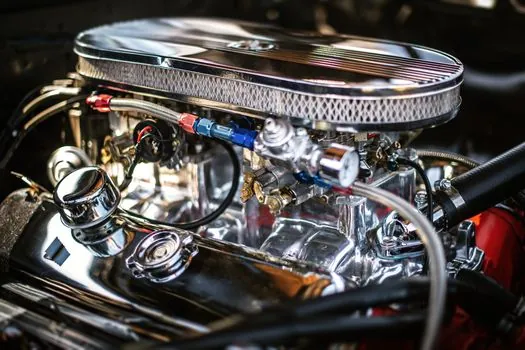
Bellhousing and coupling alignment is the same for both motor types, but the electrical side differs. A three-phase AC motor needs correct phase rotation (reversing any two leads reverses pump rotation), correct rotation direction relative to the pump shaft, and thermal protection wired into the starter. A DC motor needs correct polarity, a fuse or DC-rated breaker sized to the inrush current, and a means to dissipate the brushed-motor heat at rated load [S1].
For higher-power AC drives, upstream servo-drive selection follows the same 230 V vs 400 V logic detailed in the small-axis reference [S3] and the dedicated 230 VAC vs 400 VAC servo drive for small axes article. A typical spec-driven wiring of the DC power supply for a DC motor branch should also follow the same upstream trade-off logic covered in the DC supply reference.
Verifiable signals to track before you spec
Three facts are worth pinning to a purchase order before signing off: the available supply voltage and phase count at the install point, the duty cycle in cycles per hour and percent ED, and the pump's dead-head torque at working pressure. The first decides AC vs DC outright, the second decides single-phase vs three-phase within AC, the third sizes the motor frame and starter [S6][S7].
For a deep comparison of how higher working pressure (350 bar) changes the motor-pump matching problem versus a 210 bar unit, see the 350 bar vs 210 bar HPU: spec-driven design trade-offs reference. The motor decision then falls out as a function of those three pinned facts, not of brand preference.