Global AI chip demand in 2026 is projected at roughly $70 billion, up from $8 billion in 2019, an 8–9× expansion that has outpaced every credible ramp plan on the supply side [S2].
The shortage is no longer a wafer problem. Foundry capacity has been added; the choke point has migrated to advanced packaging, HBM3/HBM3E memory, and high-speed substrate output, which together gate the throughput of every flagship AI accelerator shipping in 2026 [S1].
Where the 2026 Shortage Actually Sits: Advanced Packaging and HBM
The leading-edge node capacity (3 nm/2 nm class) is no longer the binding constraint; CoWoS-S, CoWoS-L and similar 2.5D/3D packaging lines are, and HBM3E stack allocation is rationed per accelerator [S1].
Each H100/H200-class GPU consumes multiple HBM3 stacks; the implied ratio of HBM bit-growth to logic die demand explains why memory makers (SK hynix, Micron, Samsung) have moved to long-term take-or-pay contracts through 2027.
Buyers specifying industrial AI compute should treat packaging and HBM as first-class bill-of-materials lines, not afterthoughts, and require vendors to disclose substrate source and HBM tier in the quote [S1].
Forecast Magnitude: $70B Market, 8.75× in Seven Years
The 2026 supply gap is therefore a demand-pull problem first: fab output can be added on a 24–36 month lead time, but AI workload growth keeps re-pricing the demand curve faster than fabs can be qualified [S1][S2].
Operationally this means industrial buyers should plan for 40–60 week lead times on flagship AI accelerators, with allocation, not price, as the primary negotiation lever.
Selection Criteria Under Tight Supply: TCO, Not Unit Price

With allocation rationing, the cheapest unit on paper is rarely the cheapest in service: a longer-lead higher-throughput part can outperform a short-lead low-throughput part on cost-per-inference and cost-per-training-token [S1].
Engineers should score accelerators on four axes: peak FLOPs (FP8/BF16/FP16), HBM capacity per device, interconnect bandwidth (NVLink/UALoE/PCIe Gen5), and software-stack maturity (CUDA, ROCm, vendor SDK).
For embedded/edge use cases, the relevant axes flip to TOPS/W, supported model formats (ONNX, TensorRT, TFLite), and operating-temperature grade; industrial buyers should match these to the enclosure's thermal budget, since AI edge modules behave thermally like a high-wattage dc power supply load.
Architecture Map: Datacenter GPU, Edge SoC, NPU, and FPGA
Four architectures are competing for the 2026 budget dollar, and the right pick is workload-driven. [S1]
Datacenter GPUs dominate training and large-scale inference, with HBM3E capacity (80–141 GB per device class) and NVLink-tier interconnect as the gating specs; they are the most allocation-constrained [S1].
Edge AI SoCs (NVIDIA Jetson Orin class, Qualcomm RB, Apple-class custom) target 15–100 W envelopes with 40–275 TOPS and integrated switching power supply rails; these remain the most available.
Discrete NPUs and accelerator cards sit in between, often PCIe Gen5 add-ins with 70–200 W TDP; useful for retrofitting existing servers but constrained by the same HBM/substrate pipeline.
FPGAs (AMD Versal, Intel Agilex, Lattice NX) win on latency-deterministic inference and reconfigurability; their supply path is separate from GPU/NPU and is a useful hedge when GPU allocation is denied.
Comparison Frame: Four AI Compute Classes Against Four Decision Criteria
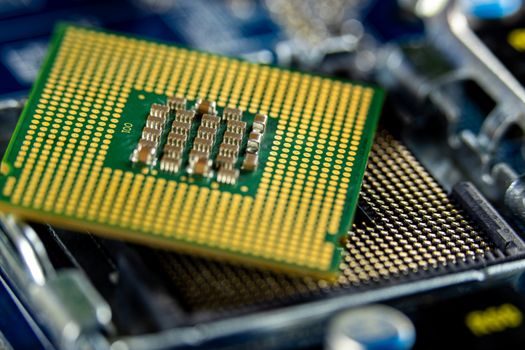
Use this matrix as a quick filter before opening a vendor RFQ. [S2]
Datacenter GPU: TOPS/W = lowest (≈1–2 FP8); HBM per device = 80–141 GB; lead time = 40–60 weeks; software maturity = highest (CUDA). Best for training and LLM serving.
Edge AI SoC: TOPS/W = highest (5–15); HBM per device = 8–64 GB LPDDR5/5X; lead time = 12–24 weeks; software maturity = medium (vendor SDK + ONNX). Best for vision, robotics, predictive maintenance.
Discrete NPU/PCIe card: TOPS/W = medium (2–4); HBM per device = 16–48 GB; lead time = 24–40 weeks; software maturity = medium-high. Best for server retrofit and mid-size inference.
FPGA (Versal/Agilex): TOPS/W = medium (1–3 INT8); HBM per device = 4–16 GB; lead time = 16–30 weeks; software maturity = specialised (Vitis, oneAPI). Best for deterministic-latency inference and protocol-offload.
Who This Shortage Is For — and Who Should Walk Away
The allocation regime is FOR buyers who can commit to multi-quarter purchase agreements, accept reference designs over bespoke configs, and pre-qualify second-source silicon (e.g. AMD MI300/MI325 as a hedge to NVIDIA H100/H200) [S1].
It is NOT for buyers chasing last-week's lowest spot price, who need small volumes under 100 units, or who refuse to lock software stacks early; those buyers will pay 30–80% above contract and still wait 6+ months [S1].
Industrial process buyers should also remember that an AI compute module is useless without the instrumentation layer feeding it: flow meter, pressure transmitter, and industrial valve signals must be time-synchronised to PTP or IEEE 1588 before ML is layered on, or the model is hallucinating on stale data.
Failure Modes and Constraints Buyers Underestimate
Three failure modes repeat across 2025–2026 industrial AI deployments and are rarely priced into the BOM. [S3]
Power: a single 700 W H-class GPU pulls more than a small dc power supply rack, with 48 V distribution and hold-up sized for the actual transient profile, not the nameplate.
Cooling: 40–60°C coolant loops at 1–2 L/min per kW; air cooling caps practical density near 50 kW per rack before derating.
Networking: RoCEv2 or InfiniBand fabric with adaptive routing is no longer optional; an Ethernet-only fabric will cap cluster efficiency below 60% of theoretical FLOPs, eroding the unit-cost advantage.
Risk-Mitigation Playbook for 2026 Procurement
Lock allocation Q1 of the prior year. Tier-1 OEMs allocate HBM and substrate roughly 12 months ahead; buyers who arrive in the same quarter they need delivery see price premia of 20–50% [S1].
Dual-source silicon. Qualify a CUDA-class primary and a ROCm-class secondary on the same reference workload; most inference graphs port in 1–2 engineering weeks.
Decouple software from hardware. Pin model weights to ONNX or a vendor-neutral format so the silicon swap is a recompile, not a rewrite; this is the single highest-leverage move a buyer controls.
Track two public signals: TSMC monthly revenue (proxy for CoWoS utilisation) and HBM maker capex guidance (12-month forward indicator of bit supply) [S1].
Industrial sites in oil-and-gas, chemicals, and water should align the AI compute refresh to the next planned shutdown, since installing a 10–30 kW edge cluster alongside new pressure sensor and analyser runs saves one full mobilisation cost.
Track the next two nodes on the supply curve: the SK hynix HBM4 ramp in 2H 2026, which will relax the HBM constraint, and the CoWoS-L capacity addition at TSMC, which will loosen packaging through 2027 [S1].
For related coverage, see Ball Bearing Buying Guide 2026: Type, Spec, Price and Channel.