
Specifying an order picker for an air-cargo break-bulk aisle comes down to three numbers first: platform capacity, platform lift height, and aisle width, because those define every downstream ergonomic and pallet-jack decision [S3].
Across open North-American warehouse postings in mid-2026, the same operator baseline keeps repeating: one year of shipping or picking experience, RF scanner fluency, pallet jack operation, and a 30 to 50 lb manual lift threshold for non-equipment picking steps [S1][S2]. The equipment layer above that baseline is what makes air-cargo level-2 picking productive.
What "order picker" actually means in an air-cargo hub
In air-cargo operations, an order picker is the truck that drives the operator up to a single SKU slot on a multi-level rack face, not the person walking the aisle [S3]. The BlueCo 138" Lift Electric Order Picker is a representative mid-tier unit: 138 inch platform lift height, 210 inch working height, and 500 lb platform capacity, sized for a single operator plus one or two totes per lift cycle [S3].
For parcel hubs handling ecommerce air freight, the order picker class usually sits below a turret truck and above a walkie stacker in both capital cost and pick height. Platform heights in this class commonly run 90 to 190 inches, so the 138 inch figure is mid-range, not the ceiling. Working height, the operator's fingertip reach, lands at 210 inches for that unit, which is the number that drives rack-aisle layout, not the platform figure [S3].
Air-cargo specific selection criteria
Air-cargo hubs separate from general warehousing on three axes: pick frequency per SKU face, dwell time on the lift, and the mix of piece-pick versus full-pallet moves. The first two push selection toward a narrower-aisle, higher-lift electric order picker with a 24 V or 36 V drive system; the third pushes toward a separate pallet-jack workflow layered on top [S1][S2].
For a unit like the 138" Lift Electric Order Picker, the limiting parameters on a typical air-cargo spec sheet are 500 lb platform capacity, a 210 inch working height, and battery voltage, since the unit is electric and will run 1 to 2 shifts on a single charge in most ecommerce break-bulk layouts [S3]. Floor condition matters as much as spec sheet: a flat, sealed concrete aisle below 0.25 inch deviation over 10 ft is the practical limit for small-wheel electric pickers.
Operator-side numbers: what the job postings say
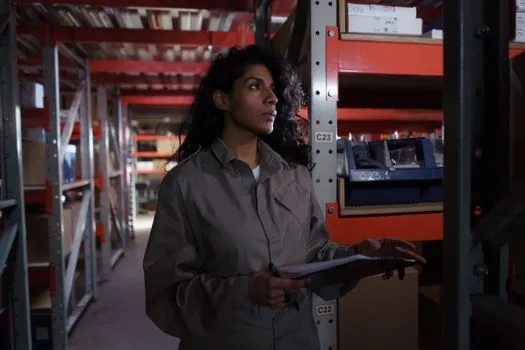
Two recent US warehouse postings set the operator floor for any picker fleet investment. The Morton Grove, IL order picker role lists 1+ year shipping and packing experience, RF scanner use, pallet jack operation, and a 30 lb regular manual lift [S1]. The FilterEasy Picker/Order Selector I role lists RF scanners, WMS transactions, pallet jacks, and a 50 lb occasional lift, with 1st shift 7:30 a.m. to 4:00 p.m. and 3rd shift 5:00 p.m. to 3:30 a.m. Monday through Thursday [S2].
Pay for the Morton Grove contract-to-hire role is $18.00 per hour [S1]. For an air-cargo hub that wants to amortize a $5,000 to $10,000 class-3 electric order picker in under 18 months, that labor rate frames how many productive picks per shift the truck has to deliver, typically 80 to 120 picks per operator-hour in a well-laid-out level-2 aisle.
Type comparison: low-level picker vs alternatives
Three truck classes compete for air-cargo piece-pick work. The low-level electric order picker, exemplified by the 138" Lift unit, fits 500 lb platforms and 138 to 190 inch platform lifts. A walkie stacker covers ground-level pallet moves and is what the job postings actually require for non-picking transport [S1][S2]. A turret truck or order selector with a ride-on platform covers 240+ inch lifts and 2,000+ lb capacity, but only pays back at very high SKU density.
For break-bulk air-cargo operations with mixed ecommerce and small-parcel freight, the typical split is one low-level electric order picker per 8 to 12 pickers, supported by a 2:1 ratio of pallet jacks to order pickers, since the pallet-jack workload is what the postings actually call out [S1][S2]. Choosing a turret truck for sub-200 inch lift work is over-spec and burns aisle width that the parcel flow needs.
Standards, training, and compliance notes

Operator training on a powered industrial truck in the US falls under OSHA 1910.178, which mandates classroom, hands-on, and performance evaluation before solo operation. The job postings reinforce this by requiring documented prior experience or willingness to certify on the specific truck class [S1][S2].
For air-cargo hubs operating under TSA or IATA regulated agent schemes, the picker is also a controlled-access role, since the operator handles cargo that may be loaded onto passenger aircraft, which means the truck selection should support, not complicate, badge-in and seal-check workflows. The BlueCo 138" Lift Electric Order Picker is sold as a stock unit with US shipping and dealer support, which matters when a hub needs a replacement truck in under 30 days [S3].
Failure modes and constraints to spec against
The three most common order-picker problems in air-cargo service are: battery undersizing on a 2-shift operation, wheel wear on poorly finished concrete, and platform deflection under off-center loads above 400 lb. The 500 lb platform capacity figure on the BlueCo unit is a static, centered rating, so operators loading two full totes on one side of the platform should derate that figure by 15 to 20 percent in practice [S3].
Aisle width is the silent constraint. A 138 inch platform lift unit typically needs a 60 to 72 inch clear aisle, and any spec that puts the truck into a 48 inch narrow-aisle rack row is a misapplication. Lift cylinder duty cycle is the second silent constraint: a continuous up-down cycle every 90 seconds will exceed the rated cycle life of most class-3 electric order picker hydraulics inside 24 months.
Procurement signals to track

Track two numbers on the next quarterly review: operator-to-truck ratio, where the 8:1 to 12:1 band is the healthy range for level-2 picking, and picks-per-operator-hour, where 80 to 120 is the target band. A drift above 12:1 on truck ratio or below 80 picks per hour is the leading indicator that the next order picker purchase is six months out, not twelve. For related fleet decisions, the industrial ceramic selection for oil and gas spec map covers a very different wear environment but uses the same capacity-versus-lift decision logic. [S2]
Component reference pages worth checking: air pick, and air impact wrench.