Alumina (Al2O3), zirconia (ZrO2), silicon carbide (SiC) and aluminum nitride (AlN) are the four advanced ceramics most commonly quoted for upstream, midstream and downstream oil and gas components, with selection driven by abrasive fluid exposure, pressure, temperature cycling and sealing surface geometry [S1][S2].
Pump seats, valve trim, downhole sensor insulators, protective sleeves and high-temperature furnace parts are the dominant use cases, and the material shortlist above is the same one most OEM review engineers screen against before requesting drawings and operating data [S2].
What "Technical Ceramic" Means in Oil and Gas Specification
Technical ceramics in oil and gas are dense, sintered oxide and non-oxide parts (alumina, zirconia, silicon carbide, aluminum nitride, silicon nitride) that replace metal or polymer at wear, sealing, insulating and high-temperature contact points [S1][S2]. Compared with metals and polymers, ceramics offer significantly longer service life in high-wear pump, valve and nozzle service, and they retain electrical insulation strength where metal would short [S1].
The industrial ceramic family splits into two practical branches for oil and gas work: oxide ceramics (alumina, zirconia) for general wear, sealing and electrical insulation, and non-oxide ceramics (silicon carbide, silicon nitride) for abrasive, high-temperature and thermally conductive duty [S1][S2]. Each branch is selected against a defined list of failure modes (abrasion, corrosion, leakage, cracking, loss of insulation) rather than a generic "harsh service" label [S2].
Selection Criteria: Match Material to the Actual Failure Mode
The four design variables an oil and gas review engineer must fix before choosing a ceramic are: media composition and abrasive particle loading, peak and cyclic temperature, peak and cyclic pressure, and the geometry of the sealing or sliding contact [S2]. Each variable rules materials in or out independently: alumina is metallisable for hermetic seals, AlN is the go-to where high thermal conductivity and electrical insulation are both required, and SiC/Si3N4 are reserved for the most abrasive, high-temperature contact points [S1].
Drawings, dimensions, target performance and operating environment should be submitted for an RFQ review, because oil and gas equipment often fails at wear, sealing, corrosion and pressure-loaded contact points where ceramic materials can extend service life when geometry, surface finish and operating media are reviewed together [S2]. For wear and abrasion resistance specifically, ceramic pump seats, liners, guides, valve parts, bearing and spacer components, nozzles, flow-control parts, and protective wear sleeves and inserts are the standard scope [S1].
Alumina vs. Zirconia: Direct Comparison
Both alumina and zirconia resist most acids and alkalis, but in oil and gas work zirconia exhibits superior longevity in particle-laden service, while alumina wins on cost-to-performance ratio for less aggressive sealing and insulating duty [S3]. Alumina is a hard-wearing advanced technical ceramic with strong electrical, mechanical and thermal properties, and it is also suitable for metallising and joining to provide hermetic seals, which is why it dominates ultra-high-vacuum and sealed-atmosphere feedthroughs and sensor housings [S1].
A side-by-side criteria comparison, drawn from current supplier guidance:
1) Abrasive particle service life: zirconia higher than alumina in oil and gas work [S3].<br>2) Cost-to-performance ratio: alumina generally more favourable than zirconia for less severe service [S3].<br>3) Hermetic metallising and brazed joining: alumina readily metallisable; zirconia requires more controlled surface prep [S1].<br>4) Electrical insulation in downhole tools: both are insulators, alumina being the default [S1].
Where the service is moderate-temperature sealing or sensor insulation and the budget is tight, alumina is the baseline pick; where the fluid carries sand, proppant or scale and the part is a valve seat, sleeve or nozzle, zirconia is the upgrade that pays back in extended mean time between replacements [S1][S3].
Non-Oxide Ceramics: Silicon Carbide and Silicon Nitride
Silicon carbide and silicon nitride enter the shortlist when service temperature and thermal conductivity push oxide ceramics past their comfort zone; they are quoted for valve parts, sleeves and bearings in abrasive, high-thermal-load service [S2]. Aluminum nitride is the specialist pick where high thermal conductivity and electrical insulation must coexist, such as thermal management of downhole power electronics and high-temperature control electronics [S1].
For upstream downhole tools specifically, the documented ceramic applications are sensor housings and insulators, electrical feedthroughs for logging and measurement tools, wear-resistant sleeves and spacers in abrasive drilling fluids, high-pressure sealing components, and thermal/electrical isolation for electronics operating deep underground [S1]. In midstream pipeline and compressor stations, ceramics contribute to pipeline monitoring and sensor systems, electrical insulation for compressors and pumping stations, sealing and isolation components for high-pressure transport, and instrumentation housings exposed to weather, chemicals and vibration [S1].
Downstream Refining and Petrochemical Use
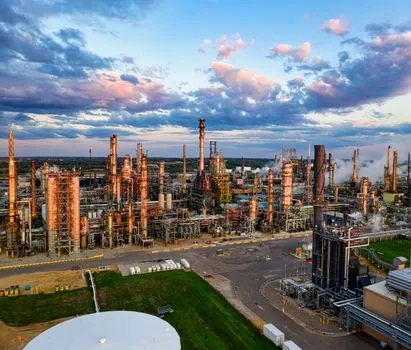
Refining and petrochemical plants operate at high temperatures with corrosive chemicals and gases, and ceramics are routinely specified for high-temperature insulation in furnaces and reactors, thermal management components in control and power electronics, corrosion-resistant parts in chemical processing equipment, and analytical instrumentation components that require purity and stability [S1]. These downstream applications are where silicon carbide and aluminum nitride typically replace alumina, because the steady-state temperature and the demand for thermal conductivity climb beyond alumina's comfortable envelope [S1][S2].
Material sustainability is now part of the downstream conversation: a 2026 study fired clay-based ceramic specimens containing 0%, 5% and 10% refinery oily sludge (ROS) at 950°C and 1050°C, and showed that intensified firing (1050°C) improved matrix consolidation, thermal conductivity and contaminant immobilization for several heavy metals, but the extra thermal energy demand did not always deliver proportional environmental or structural benefit, captured in a thermo-environmental index (TEI) that balances stabilization efficiency against thermodynamic burden [S4]. The practical takeaway is that pushing firing temperature is not a free upgrade; the optimum is a balanced thermal regime, not the maximum [S4].
Who Industrial Ceramics Are For, and Who Should Stay on Metal
Technical ceramics are specified for upstream pump and valve components exposed to abrasive fluid, downhole sensor housings and electrical feedthroughs, midstream pipeline monitoring and compressor-station insulation, and downstream high-temperature furnace and reactor insulation [S1].
Ceramics are not a universal substitute for metal: they are brittle, they are not tolerant of large point loads on unsupported sections, and they require controlled surface finish, roundness, flatness and edge protection to be specified before quoting [S2]. For very high impact or shock loading, large unsupported spans, or applications where catastrophic brittle failure is unacceptable, metal or composite solutions remain the default; ceramics enter only when the wear, corrosion, sealing or insulation benefit clearly outweighs the fracture-toughness penalty [S1][S2].
Sourcing, Standards and What to Send the Supplier

Before requesting a quote on a ceramic oil and gas part, an engineer should send equipment type, media composition, abrasive particle loading, pressure, temperature and operating cycle; drawings with sealing surface, sliding contact area, wall thickness and tolerance; the current failure mode (wear, leakage, corrosion, cracking, loss of insulation); quantity, replacement schedule, inspection method, and whether the part is a retrofit or a new design [S2]. With that package, the supplier can review zirconia, alumina, silicon carbide and silicon nitride against the actual service and flag whether surface finish, roundness, flatness or edge protection needs to be added to the drawing before manufacturing [S2].
For context on the broader equipment class these parts sit inside, the oil seal and industrial gas encyclopedia pages cover the elastomer and process-fluid side of the same sealing and fluid-handling problems, while the lamps and light fittings and lighting equipment and electric lamps entries cover the explosion-protected lighting that typically surrounds downstream inspection access points.
Two trackable signals to watch for the rest of 2026: further peer-reviewed data on ROS-derived ceramic bodies at 10% loading and 1050°C firing, where the 2026 TEI study flagged the steepest trade-off between contaminant immobilization and energy demand [S4]; and continued supplier guidance shifting toward zirconia for particle-laden pump and valve trim in long-life sand-management chemical programs [S3]. For adjacent material selection work in parallel industries, the automotive ceramic selection map covers the same alumina/zirconia/SiC decision logic under different duty cycles, and the industrial ceramic selection for medical devices spec map covers the biocompatibility-driven variant of the same shortlist.