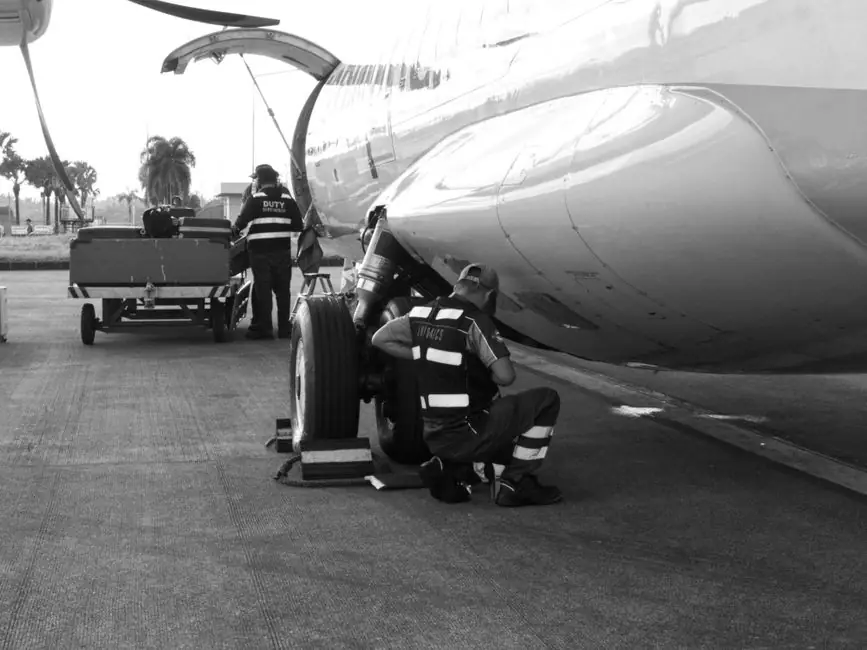
Air-cargo strapping differs from road-freight strapping in three measurable ways: tighter tension repeatability to survive 8-12 m/s climb-out loads, lighter band weight to stay inside airline unit-load device (ULD) mass budgets, and tool portability because ramp operations cannot rely on a fixed packing station [S1][S5].
Typical 2026 specification targets for a single air-cargo pallet run between 30 and 60 strapped pallets per hour for semi-automatic and automatic vertical strapping machines, with PP (polypropylene) and PET (polyester) bands as the dominant choices and steel reserved for heavy or military ULDs [S2][S3].
Strap Material Selection for Air-Freight Pallets
PP band (typically 9-15.5 mm width) heat-seals at 160-200 deg C and is the lowest-cost option for sub-500 kg air-cargo pallets where unit weight matters more than retained tension [S3][S4]. PET band (typically 12-16 mm width, 0.5-1.0 mm gauge) friction-welds and retains 70-80% of applied tension after a 24-hour settling test, making it the common spec for intercontinental commercial ULDs [S3][S4].
Steel strapping (regular duty 1/2 in or high-tensile 5/8 in) is restricted in air cargo because of cut-hazard and tool-weight issues, and is generally reserved for engine, aerospace-component, or military crating where a single failed strap would breach an IATA packing instruction [S3]. Strap width, thickness, and material must match the machine seal plate or friction-weld head, or the seal will fail at the joint first, not on the pallet [S3][S4].
Machine Class: Table-Top, Automatic, or Battery Tool
Table-top semi-automatic strapping machines handle single boxes or small ULDs at roughly 8-15 cycles per minute, with the operator placing the load and the machine automatically tensioning, heat-sealing, and cutting the band [S3][S5]. These are the most common entry point for e-commerce and small-parcel air-cargo operations and dominate the rental fleet at ground-handling agents [S5].
Automatic strapping machines integrate with conveyors and pallet-handling lines, sustaining 30-60 pallets per hour with minimal operator intervention and a uniform seal on every cycle [S1][S2][S5]. For air cargo, this class is normally specified for hub operations with a fixed build-up table and overhead arch, not for ramp-side use where the load sits on a roller conveyor outside a controlled environment [S1][S2].
Battery-operated strapping tools (friction-weld PET or heat-seal PP) are the dominant ramp-side choice because they remove the air-compressor, power-cord, and fixed-anchor constraints that disqualify stationary machines on the apron [S5]. A 14.4-18 V Li-ion battery tool with 2,500-4,000 N tension capacity covers most air-cargo pallet sizes; pneumatic tools remain specified where spark risk rules out battery chargers, for example near fuel hydrants [S5].
Tension, Seal Integrity, and IATA Packing Instruction Compliance
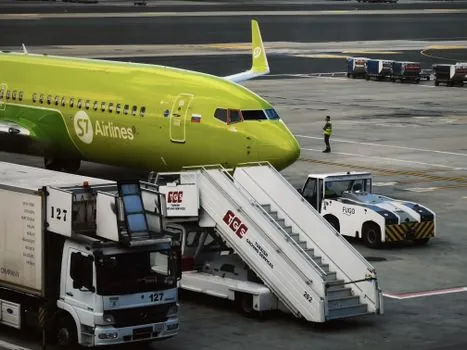
Air-cargo pallets are constrained by IATA ULD regulations (e.g., PAG, PMC, AKE container mass limits of around 1,500-3,175 kg) and airline-specific packing instructions that govern minimum strap count and strap placement rather than strap material [S1][S2].
Seal integrity is the first thing to fail in air cargo because vibration at altitude plus a 1.5-2.0 g descent load is harder on a heat-seal joint than a road-transport cycle. PP heat-seal settings must be checked against ambient temperature, since a 5-10 deg C drop on a winter ramp can under-seal a strap that works perfectly in the warehouse [S3][S4]. Friction-weld PET seals are less ambient-sensitive but require clean weld surfaces; dust, oil, or a burred strap edge will cause a partial weld that holds for an hour and fails on climb-out [S4].
Decision Comparison: PP vs PET vs Steel for Air Cargo
PET band: higher retained tension, better vibration resistance, friction-weld seal with no heater element, recommended for intercontinental commercial ULDs and most 2026 air-cargo specs [S3][S4]. Steel band: highest break strength, no relaxation, but heavy, tool-heavy, and a cut hazard near loaders, so it stays in the military and aerospace-crating corner of air cargo [S3].
On selection criteria: PET wins on weight-vs-tension retention, PP wins on cost and ramp-side simplicity, steel wins only on absolute break strength. For battery-tool compatibility, both PP and PET are standard; steel needs a separate pneumatic or manual steel-strapping tool line [S3][S5].
Failure Modes and Troubleshooting Priorities
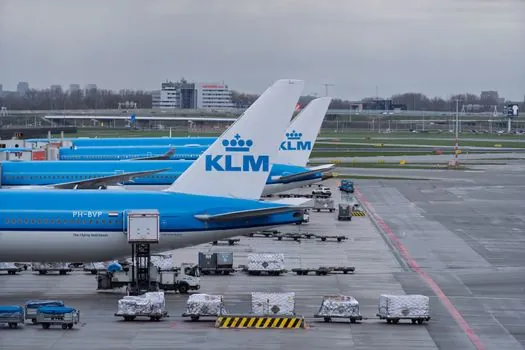
Strap feeding problems on an air-cargo line usually trace to a damaged roll, a tight dispenser brake, or apron dust contaminating the arch, not to a machine defect [S4]. Strap that feeds partway and then jams is almost always a warped roll, a burred edge from a poor cut at the supplier, or a damaged pallet opening, and the first action is to swap the roll before any tension or seal change [S4].
Seal or weld breaks come from wrong strap material for the seal method, contamination on the heater or friction plate, or a worn sealing surface; the operator's instinct to raise heat usually creates a second problem on a PP band before the first one is understood [S4]. Loose strap after a cycle is most often PP relaxation on a compressible load or a tension setting that is too low for the load family, and is not a machine fault [S4].
Port and Hub Operational Context
Air-cargo strapping sits at the intersection of ramp operations, ULD build-up, and airline ground-handling contracts, so the same machine class used for port and warehouse pallet strapping is common across hubs. A spec map for port logistics strapping machines shows the same 30-60 pallets/hour range and the same PP/PET decision tree, which means a hub can pool tooling across air and surface cargo with minimal retraining. [S2]
For pharmaceutical and GDP-controlled air freight, the pharma pallet strapping spec map emphasises PET friction-weld for repeatability and clean-room compatibility, a constraint that also applies to some premium air-cargo customers even when GDP is not formally required.
Two trackable signals to watch over the next quarter: airline IATA packing-instruction revisions around minimum strap count for new ULD types, and the ramp-side rollout of 18 V cordless friction-weld tools that close the cycle-time gap between portable battery tools and fixed arch machines.
The underlying component specifications are covered under strapping machine, strapping band, and air pick.