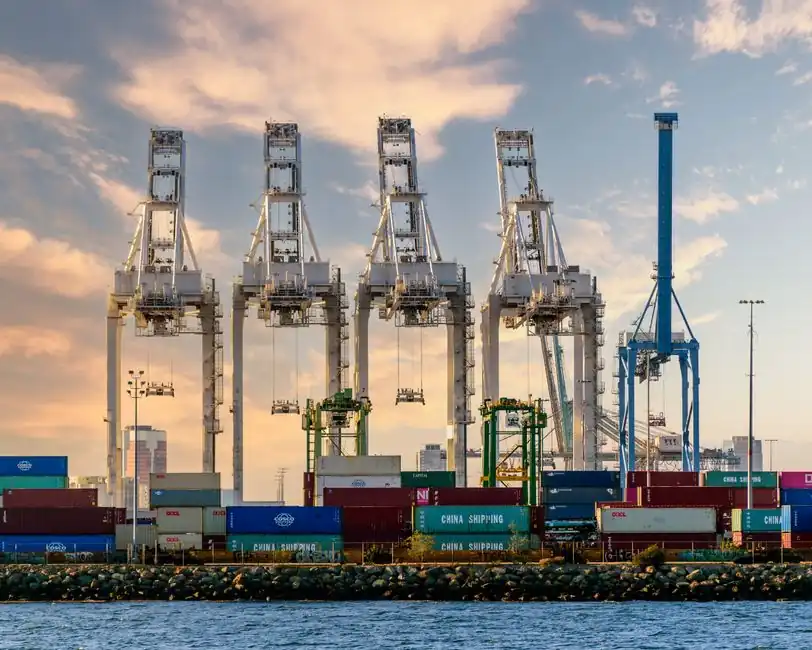
A port-facing strapping line in 2026 is selected by load profile, not by machine brand: PET at 12-19 mm with 0.7-1.0 mm thickness replaces steel for most palletized export loads, while steel ribbon and high-tensile rope-wound strap retain a role for heavy break-bulk and steel-coil cargo [S1][S4]. Cordless 18V Li-Ion strapping tools delivering 250-400 cycles per charge are the default for yard and quayside mobility, displacing pneumatic systems on most new port builds [S5].
Selection must also absorb the realities of port duty: salt-air corrosion on stainless heads, dust ingress in bulk-cargo zones, and throughput targets of one pallet strapped in under 40 seconds on high-volume export lanes [S2][S3]. Indian export hubs (Mundra, Kandla, JNPT/Nhava Sheva, Visakhapatnam, Krishnapatnam, Cochin) now run explicit machine-versus-pallet-volume match-ups, treating the strapping machine as a tied system with the strapping band, not a stand-alone appliance [S2].
Strap material matrix for port loads
PET polyester strap in 12 mm x 0.7 mm x 1900 m, 16 mm x 0.9 mm x 1100 m, and 19 mm x 1.0 mm x 800 m roll formats is stocked as the primary export-pallet band, embossed green or black, 100% recyclable, and rated as a direct steel alternative in port environments [S1]. PET keeps low elongation under sustained tension, absorbs forklift and container-vibration shock, and holds stability across port temperature and humidity swings, which is why it is the default for warehouse, port, and distribution-center duty in 2026 [S4].
PP polypropylene is the second-tier port band: 12 mm and 15 mm x 1000 m hand strap in dispenser boxes, plus 12 mm x 3000 m machine strap, in blue or clear, feeds semi-auto and auto strapping heads on lower-tension export pallet lines [S1]. Polywoven PP (16-19 mm, 500-1000 m rolls) is reused, re-tensionable, and printed, fitting returnable export dunnage where the band is the asset, not the consumable [S1]. Steel ribbon at 19 mm x 0.50 mm, 19 mm x 0.63 mm high tensile, 19 mm x 0.80 mm high tensile, and 32 mm x 0.80 mm high tensile (15-45 kg rolls) remains specified for hot-rolled coil, plate, and bundling where PET elongation is unacceptable [S1].
Power source and tool class
Cordless battery strapping tools have moved from option to default in 2026 port specification: 18V Li-Ion drive eliminates air hoses, lowers energy draw, and frees the operator to walk the pallet face, which is critical when strapping points are not on a fixed conveyor [S5]. Tool suppliers in the 2026 cordless segment publish 250-400 strapping cycles per charge as the minimum qualifying runtime for port duty, and they pair the tool only with PP and PET plastic strap, not steel [S5].
Friction-weld sealing has become the standard seal method on 2026 cordless PET/PP tools, melting strap layers through rapid mechanical friction and removing the need for separate metal seals, buckles, or clips on most pallet lines [S5]. For steel strap and the highest-tension PET applications, semi-auto and fully automatic strapping machine heads still apply, with stainless-steel contact parts specified for seafood, fertilizer, and chemical berths where chloride exposure is routine [S3].
Port-zone layout and machine form factor
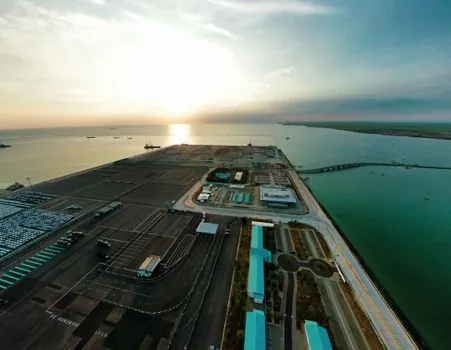
Port-logistics buyers in 2026 sort machines by three form factors: fixed automatic strapping heads on a conveyorized export line, mobile battery-powered units that walk to the pallet, and high-throughput mobile units capable of completing a full pallet strap pattern in under 40 seconds [S2]. Indian export-hub pages for Mundra, Kandla, JNPT, Visakhapatnam, and Cochin explicitly contrast these form factors, recommending the cordless mobile class for multi-bay yards and the fixed automatic class for single-lane export dispatch [S2].
On seafood and cold-chain berths, stainless-steel strapping machines with sealed heads are the 2026 default, built to survive wash-down, salt spray, and sub-zero plate temperatures while keeping seal consistency on iced carton pallets [S3]. For break-bulk, steel-coil, and project-cargo berths, steel-strap compatible heads with 32 mm high-tensile path and 45 kg roll handling are kept on standby, even when PET is the day-to-day band [S1].
Compliance, transport, and battery safety
Lithium-ion battery transport into and across port zones is governed by UN38.3 in 2026, and customs agencies at destination ports reject battery-powered strapping machine shipments without a verified UN38.3 test summary per battery model [S5]. UN38.3 covers thermal stress, vibration, impact, external short circuit, and forced overcharge, which mirrors the vibration, shock, and thermal load a cordless tool sees on a quayside pallet line [S5].
Buyers importing cordless tools into the US, EU, and major Asian ports are advised to confirm UN38.3 documentation before shipment, because re-export from a bonded port zone to a third country re-triggers the same test-summary check at the next customs gate [S5]. For the strap itself, PET and PP are not classed as dangerous goods, while steel strap adds weight-based handling rules under standard port safe-lift practice but no chemical transport code [S1][S4].
Selection criteria for port buyers
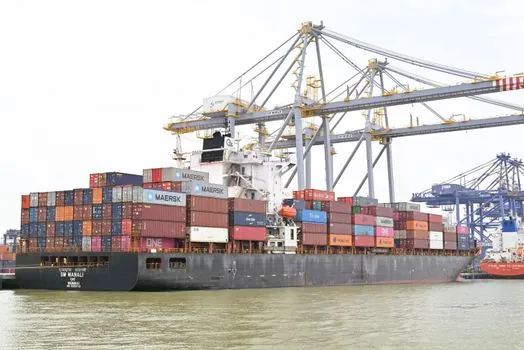
Port-logistics strapping selection in 2026 can be reduced to a four-criteria comparison. (1) Load weight and break-bulk risk: steel at 19 mm x 0.80 mm high tensile for hot coil and plate; PET at 19 mm x 1.0 mm for general export pallets; PP at 12-15 mm for light cartons and intra-port moves [S1][S4]. (2) Environment: stainless heads and sealed electrics for seafood, fertilizer, and chemical berths; standard heads for dry general-cargo berths [S3]. (3) Mobility: cordless 18V Li-Ion with 250-400 cycles per charge for yard and quayside; fixed auto heads for single-lane export conveyors [S2][S5]. (4) Throughput: under 40 seconds per full pallet strap pattern on high-volume export hubs like Mundra, JNPT, and Kandla [S2].
For shippers asking what to specify first, start with the strapping band material and width, then match the tool tension range, then confirm UN38.3 documentation if the tool is cordless, then confirm the head material against the berth environment [S1][S4][S5]. Buyers running chemical export through the same ports should cross-check against the strapping machine selection map for chemical shipping, because PET-versus-steel and seal-method decisions overlap directly with port specification [S1].
Where PET, PP, polywoven, and steel split in 2026
PET dominates new 2026 port specification for export pallets: 12-19 mm widths, 0.7-1.0 mm thickness, 800-1900 m roll lengths, embossed green or black, recyclable, and tension-stable over long container voyages [S1][S4]. PP keeps the low-cost, low-tension niche: 12-15 mm hand strap and 12 mm machine strap, 1000-3000 m rolls, blue or clear, fed to semi-auto and auto heads on light-carton and intra-port moves [S1]. Polywoven PP (16-19 mm, 500-1000 m) is the reusable returnable band, with custom print and re-tensioning capability that suits closed-loop export dunnage [S1]. Steel (12-32 mm, 0.50-0.80 mm, 10-45 kg rolls, high-tensile options) is retained only where heat, sharp edges, or extreme break-bulk load rules out plastic [S1].
The same split shows up on a berth-by-berth basis: PET on container and general-cargo berths, PP on lighter domestic-cargo berths, polywoven on closed-loop automotive and white-goods export loops, and steel on steel-product, project-cargo, and heavy break-bulk berths [S1][S2][S4].
Trackable signals for the next 6-12 months: cordless tool cycle-count claims above 400 per charge, broader UN38.3 documentation at Indian port customs, and continued displacement of pneumatic by Li-Ion on new 2026 port builds [S5]. Buyers should also watch for stainless-head strapping machine variants entering mainstream port catalogues beyond seafood, as cold-chain and chemical berth demand converges on the same corrosion-resistant spec [S3].
For component-level specifications, see logistics packaging.